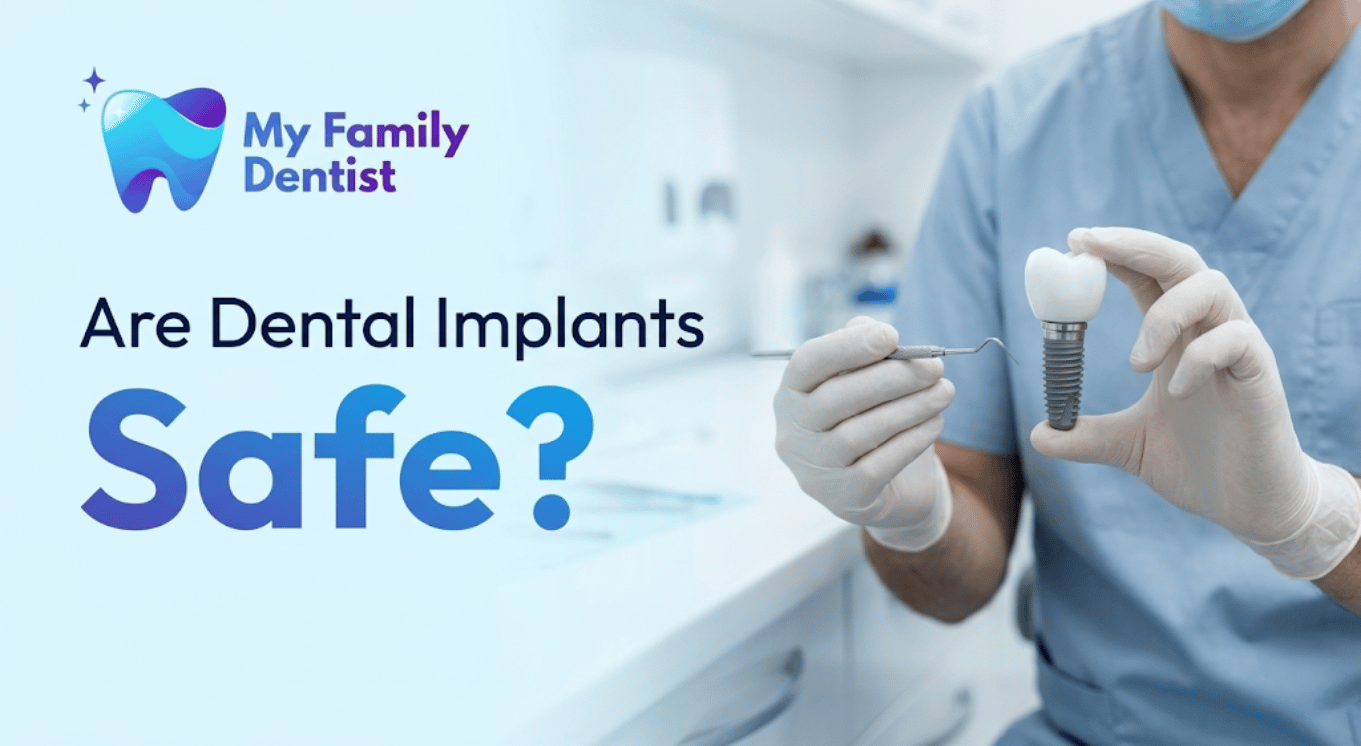
Dental implants are widely used for replacing missing teeth, but many patients ask: are dental implants safe? Understanding the safety, risks, and long-term outcomes can help you make an informed decision.
In modern dentistry, dental implants are considered a reliable and well-researched treatment, but like any surgical procedure, they require proper evaluation and planning.
What Are Dental Implants?
Dental implants are titanium posts placed into the jawbone to replace missing tooth roots. Over time, they fuse with the bone through a process called osseointegration, creating a stable base for crowns or bridges.
They are commonly used for:
- Single tooth replacement
- Multiple missing teeth
- Full-mouth rehabilitation
Are Dental Implants Safe?
For most healthy individuals, dental implants are considered safe when performed by a qualified dental professional.
Studies show a high success rate (around 90–95%) when proper protocols are followed. Safety depends on:
- Patient’s overall health
- Bone quality and density
- Oral hygiene practices
- Experience of the dentist
Implants are not “risk-free,” but complications are relatively uncommon when treatment is properly planned.
How Dental Implant Procedure Works
The implant process usually involves:
- Clinical examination and imaging (X-rays or scans)
- Placement of the implant into the jawbone
- Healing period for bone integration
- Placement of crown or prosthetic tooth
The procedure is performed under local anesthesia and is generally well tolerated by patients.
Benefits of Dental Implants
Dental implants offer several advantages over other tooth replacement options.
Key benefits include:
- Stable and long-lasting solution
- Improved chewing ability
- Natural appearance
- Preservation of jawbone structure
- No impact on adjacent teeth
Risks and Limitations of Dental Implants
While implants are generally safe, it is important to understand potential risks.
Possible risks include:
- Infection at the implant site
- Implant failure (rare but possible)
- Nerve injury (uncommon)
- Sinus complications (for upper jaw implants)
- Delayed healing
These risks are minimized with proper planning and aftercare.
Who Is Suitable for Dental Implants?
Dental implants are suitable for many patients, but not everyone.
Ideal candidates:
- Healthy gums
- Adequate bone support
- Good oral hygiene habits
- Non-smokers or controlled smoking habits
Patients requiring careful evaluation:
- Individuals with uncontrolled diabetes
- Heavy smokers
- Patients with bone loss
- Certain medical conditions
A dentist will assess eligibility before recommending implants.
What Affects the Success Rate of Implants?
Several factors influence implant success.
Key factors:
- Bone quality and density
- Oral hygiene
- Smoking habits
- Systemic health conditions
- Proper implant placement
Following post-treatment instructions is essential for long-term success.
What to Expect After Implant Surgery
After the procedure, mild symptoms are common.
Normal experiences:
- Slight swelling
- Minor discomfort
- Temporary difficulty in chewing
Recovery time varies but generally ranges from a few days to a few weeks for initial healing.
Patients are advised to:
- Maintain oral hygiene
- Avoid hard foods initially
- Follow dentist instructions
Safety Considerations and Long-Term Outlook
Dental implants are designed to last for many years.
Long-term safety depends on:
- Regular dental check-ups
- Proper cleaning and maintenance
- Monitoring for early signs of complications
With good care, implants can function effectively for many years or even decades.
When to Consult a Dentist
If you are considering dental implants or experiencing tooth loss, a dental consultation can help determine the best treatment option.
A dentist will evaluate:
- Bone condition
- Oral health
- Medical history
- Treatment goals