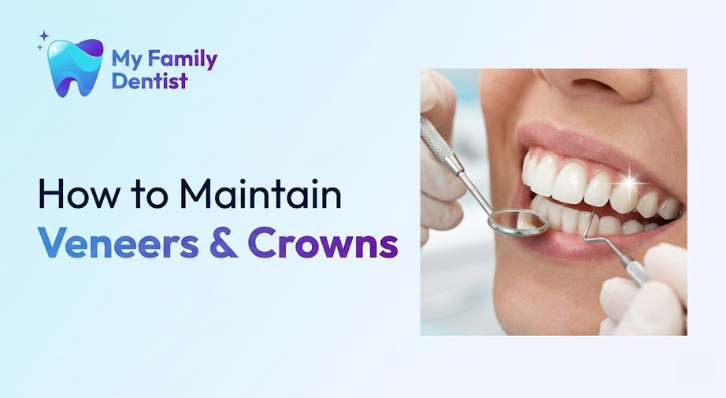
Dental veneers and crowns are designed to improve both function and appearance of teeth. However, proper care is essential to ensure they last as long as possible. Understanding how to maintain veneers and crowns can help protect your investment and prevent complications.
With good oral hygiene and regular dental care, these restorations can remain functional and aesthetic for many years.
What Are Veneers and Crowns?
Veneers and crowns are common dental restorations used in cosmetic and restorative dentistry.
- Veneers are thin shells placed on the front surface of teeth to improve appearance.
- Crowns cover the entire tooth to restore strength, shape, and function.
Both require ongoing care similar to natural teeth, but with additional precautions.
Why Maintenance Is Important
Even though veneers and crowns are durable, they are not immune to damage.
Proper maintenance helps:
- Prevent plaque buildup around restorations
- Avoid staining or discoloration
- Reduce risk of decay under crowns
- Extend lifespan of dental work
Neglecting care may lead to gum problems, loosening, or restoration failure.
Daily Care Routine for Veneers and Crowns
Maintaining a consistent oral hygiene routine is essential.
Recommended daily practices:
- Brush twice daily using a soft-bristled toothbrush
- Use non-abrasive toothpaste to avoid surface damage
- Floss gently to clean around the edges
- Rinse with an alcohol-free mouthwash
Cleaning helps prevent plaque accumulation, which can affect both gum health and restoration longevity.
Foods and Habits to Avoid
Certain habits can damage veneers and crowns over time.
Foods to limit:
- Hard foods (ice, nuts, hard candies)
- Sticky foods (caramel, chewing gum)
- Highly pigmented foods (coffee, tea, red wine)
Habits to avoid:
- Nail biting
- Using teeth as tools
- Teeth grinding (bruxism)
Dentists may recommend a night guard if grinding is present.
Common Problems and How to Prevent Them
1. Staining of Veneers
Although veneers resist stains, they can still discolor over time.
Prevention tips:
- Limit staining foods
- Maintain regular cleaning
- Avoid tobacco use
2. Decay Under Crowns
Crowns cover the tooth but do not prevent decay at the margins.
Prevention tips:
- Maintain proper oral hygiene
- Attend regular dental checkups
3. Chipping or Damage
Strong impact or pressure can damage restorations.
Prevention tips:
- Avoid biting hard objects
- Use protective appliances if needed
4. Loose Crown or Veneer
Restorations may loosen due to wear or bonding issues.
What to do:
- Avoid chewing on that side
- Consult a dentist promptly
Professional Dental Care and Follow-Ups
Regular dental visits play a key role in maintenance.
Dentists may recommend:
- Checkups every 6 months
- Professional cleaning
- Evaluation of restoration condition
Professional care helps detect early issues before they become serious.
Signs Your Veneers or Crowns Need Attention
It is important to recognize early warning signs.
Consult a dentist if you notice:
- Sensitivity or discomfort
- Visible cracks or chips
- Gum irritation around the restoration
- Loose or shifting crown
- Changes in bite alignment
Early evaluation can help prevent further complications.
Safety Considerations and Limitations
Safety
- Veneers and crowns are safe when properly maintained
- Materials used are designed for durability and compatibility
Limitations
- They are not permanent and may require replacement
- Poor oral hygiene can reduce lifespan
- Habits like grinding can cause damage
Long-term success depends on patient care and regular monitoring.
When to Visit a Dentist
You should consult a dentist for:
- Routine follow-ups
- Cleaning and polishing
- Repair or replacement of damaged restorations
- Any discomfort or unusual symptoms
Medical Disclaimer
This article is for informational purposes only and does not replace professional dental advice. Always consult a qualified dentist for personalized care.