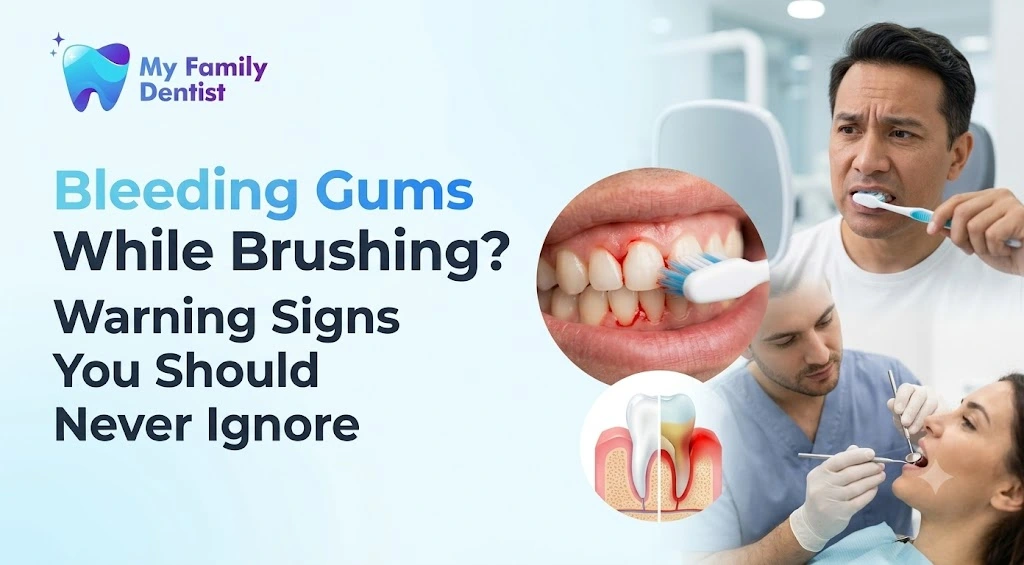
Seeing blood on your toothbrush or in the sink after brushing can be concerning. While occasional gum bleeding may happen due to temporary irritation, bleeding gums while brushing should not be ignored if it happens repeatedly. In many cases, it is one of the earliest warning signs of gum disease or poor gum health.
Healthy gums usually do not bleed during normal brushing or flossing. Persistent bleeding may indicate plaque buildup, gingivitis, or other oral health conditions that require professional evaluation. Understanding the possible causes and knowing when to seek dental care can help protect your teeth and gums.
Is It Normal for Gums to Bleed While Brushing?
Occasional bleeding can occur if you have recently started flossing, changed your brushing routine, or accidentally brushed too aggressively.
However, gums that bleed frequently are not considered normal.
If your gums bleed every time you brush, or if the bleeding continues for several days, it may be a sign of inflammation caused by bacteria accumulating around the gumline.
Rather than stopping brushing because of bleeding, it is generally important to maintain good oral hygiene while seeking advice from a dental professional if the problem persists.
Why Do Gums Bleed While Brushing?
Several conditions can contribute to gum bleeding.
1. Plaque Buildup
Plaque is a soft, sticky film of bacteria that forms on teeth throughout the day.
If plaque is not removed effectively through brushing and flossing, it irritates the gums and causes inflammation.
This is one of the most common reasons for bleeding gums.
2. Tartar Formation
When plaque remains on the teeth, it hardens into tartar (dental calculus).
Unlike plaque, tartar cannot be removed with brushing alone.
The rough surface of tartar allows more bacteria to accumulate, increasing irritation around the gums.
Professional dental scaling is usually required to remove tartar safely.
3. Gingivitis
Gingivitis is the earliest stage of gum disease.
Common symptoms include:
- Bleeding while brushing
- Swollen gums
- Red gums
- Tender gums
- Bad breath
At this stage, the supporting bone around the teeth is generally not affected, and gum health often improves with professional cleaning and good oral hygiene.
4. Periodontitis
If gingivitis is left untreated, inflammation may progress deeper into the tissues supporting the teeth.
Periodontitis can affect the gums, ligaments, and bone that hold teeth in place.
Symptoms may include:
- Persistent gum bleeding
- Gum recession
- Loose teeth
- Bad breath
- Pus around the gums
- Changes in bite
Treatment depends on the severity of the condition and should be planned by a dental professional.
5. Brushing Too Hard
Using excessive force while brushing or using a hard-bristled toothbrush may irritate the gums.
Dentists generally recommend:
- Soft-bristled toothbrushes
- Gentle circular brushing motions
- Brushing twice daily for about two minutes
6. Other Contributing Factors
Bleeding gums may also occur due to:
- Smoking or tobacco use
- Diabetes
- Hormonal changes during pregnancy
- Certain medications, such as blood thinners
- Vitamin deficiencies in some individuals
- Dry mouth
- Poorly fitting dental appliances
A dental examination helps determine whether gum bleeding is related to oral hygiene or another contributing factor.
Warning Signs You Should Never Ignore
Bleeding gums are often an early warning sign rather than the only symptom.
Seek dental evaluation if you notice any of the following:
- Bleeding every time you brush
- Swollen or puffy gums
- Bright red or dark red gums
- Persistent bad breath
- Gum tenderness
- Gum recession
- Loose teeth
- Pain while chewing
- Pus around the gums
- Tartar deposits near the gumline
These signs may indicate gingivitis or a more advanced gum condition requiring professional care.
How Plaque and Tartar Affect Gum Health
Healthy gums fit snugly around the teeth, creating a protective seal.
When plaque accumulates:
- Bacteria release toxins.
- The gums become inflamed.
- Bleeding begins.
- Plaque hardens into tartar.
- More bacteria accumulate.
- Gum disease may gradually progress.
Because tartar cannot be removed with regular brushing, professional scaling and polishing play an important role in maintaining gum health.
Can Bleeding Gums Lead to Gum Disease?
Bleeding gums do not always mean advanced gum disease, but they are frequently one of the earliest signs that the gums are inflamed.
Without appropriate oral hygiene and professional care, inflammation may worsen over time.
Potential complications include:
- Progressive gum disease
- Gum recession
- Bone loss around teeth
- Persistent bad breath
- Increased tooth mobility
- Tooth loss in severe cases
Early recognition allows the dentist to determine the cause and recommend suitable treatment.
Professional Treatment for Bleeding Gums
Treatment depends on the underlying cause.
A dentist may recommend one or more of the following:
Professional Teeth Cleaning
Routine professional cleaning removes plaque and tartar that cannot be removed at home.
Scaling and Polishing
Scaling removes hardened deposits from the teeth and below the gumline, while polishing smooths the tooth surfaces to reduce future plaque accumulation.
Periodontal Therapy
If gum disease has progressed beyond gingivitis, additional periodontal treatment may be recommended depending on the extent of tissue involvement.
Personalized Oral Hygiene Advice
Patients may receive guidance regarding:
- Proper brushing technique
- Daily flossing
- Interdental brushes where appropriate
- Toothbrush selection
- Recommended cleaning intervals
Daily Habits That Help Keep Your Gums Healthy
Healthy gums depend on consistent daily care.
Good oral hygiene habits include:
- Brush twice daily using fluoride toothpaste.
- Use a soft-bristled toothbrush.
- Clean between teeth every day with floss or interdental brushes.
- Replace your toothbrush approximately every three months or sooner if the bristles become worn.
- Limit tobacco use.
- Maintain a balanced diet.
- Attend routine dental examinations and professional cleanings as recommended.
When Should You Visit a Dentist?
Arrange a dental examination if:
- Bleeding continues for more than a few days.
- Your gums bleed every time you brush.
- You notice swelling or redness.
- Bad breath persists despite brushing.
- Your teeth feel loose.
- Gum recession develops.
- You experience pain around the gums.
- You have visible tartar deposits.
A dentist can examine your gums, assess plaque and tartar buildup, and determine whether additional investigations or treatment are necessary.
Medical Disclaimer
This article is intended for educational purposes only and should not replace professional dental advice, diagnosis, or treatment. If you experience persistent bleeding gums, swelling, severe pain, or other concerning symptoms, consult a qualified dental professional for an individual assessment.
Conclusion
Bleeding gums while brushing should not be dismissed as a routine occurrence. Although temporary irritation may occasionally cause minor bleeding, persistent bleeding often indicates inflammation that deserves professional attention. Plaque buildup, tartar, gingivitis, and periodontal disease are among the most common causes.
Maintaining good oral hygiene, attending regular dental checkups, and seeking professional evaluation when bleeding continues can help support healthier gums and reduce the risk of more advanced dental problems.
Frequently Asked Questions
1. Why do my gums bleed when I brush my teeth?
Bleeding gums while brushing are commonly caused by plaque buildup along the gumline, which leads to inflammation (gingivitis). Other possible causes include tartar accumulation, brushing too hard, smoking, diabetes, hormonal changes, certain medications, or more advanced gum disease. If bleeding occurs frequently, a dental examination is recommended.
2. Is it normal for gums to bleed while brushing?
No. Healthy gums generally should not bleed during routine brushing or flossing. Occasional bleeding may occur if you have recently started flossing or accidentally brushed too hard, but persistent bleeding is usually a sign that your gums need professional attention.
3. Can bleeding gums heal on their own?
Mild gum inflammation may improve with better oral hygiene if plaque is removed effectively. However, if tartar has formed or gum disease has developed, brushing alone cannot resolve the problem. Professional dental cleaning may be necessary.
4. Should I continue brushing if my gums bleed?
Yes. Stopping brushing allows more plaque to accumulate, which can worsen gum inflammation. Use a soft-bristled toothbrush, brush gently, and continue cleaning your teeth while arranging a dental consultation if the bleeding persists.
5. Can professional teeth cleaning stop bleeding gums?
Professional teeth cleaning removes plaque and tartar that cannot be removed at home. In many cases of early gingivitis, reducing bacterial buildup helps improve gum health and decreases bleeding when combined with good daily oral hygiene.
6. When should I visit a dentist for bleeding gums?
You should schedule a dental visit if:
- Your gums bleed every time you brush.
- Bleeding lasts longer than one week.
- Your gums appear swollen or red.
- You have persistent bad breath.
- You notice loose teeth or gum recession.
- You experience pain or pus around the gums.