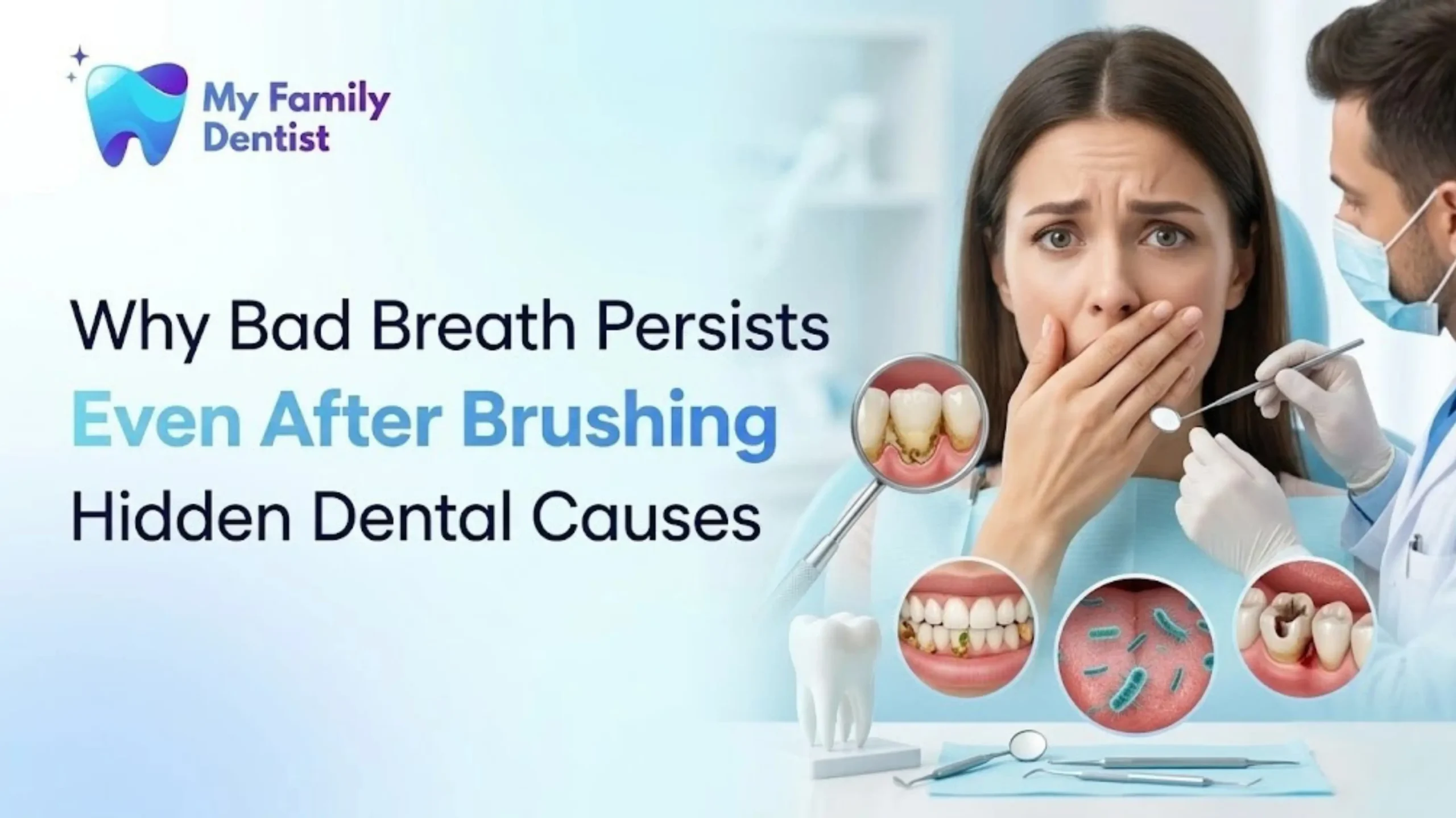
Many people feel frustrated when bad breath persists even after brushing regularly. They may brush twice daily, use mouthwash, and maintain good oral hygiene, yet the unpleasant mouth odor keeps returning.
While poor brushing habits can contribute to bad breath, persistent mouth odor is often linked to hidden dental causes such as plaque buildup, tartar, gum disease, cavities, dry mouth, or bacterial activity inside the mouth.
Understanding the actual reason behind recurring bad breath is important because temporary solutions may only mask the smell without addressing the underlying problem.
This article explains the common dental causes of chronic bad breath, how dentists identify the cause, and what steps can help maintain better oral health.
Why Does Bad Breath Continue Even After Brushing?
Brushing removes food particles and some bacteria from the teeth surface, but it may not completely clean every area of the mouth.
Some reasons why mouth odor can continue include:
- Bacteria present on the tongue, gums, and between teeth
- Hardened plaque (tartar) that cannot be removed by normal brushing
- Gum inflammation or infection
- Hidden cavities
- Dry mouth reducing natural cleansing of the mouth
- Poor cleaning between teeth
Persistent bad breath is different from occasional morning breath or temporary odor after eating strong-smelling foods. When the smell returns repeatedly despite good oral hygiene, it may indicate an underlying oral health issue.
Common Hidden Dental Causes of Persistent Bad Breath
1. Plaque Buildup on Teeth
Plaque is a sticky layer of bacteria that continuously forms on teeth. If it is not removed properly, it can contribute to gum irritation, tooth decay, and unpleasant mouth odor.
Bacteria in plaque can produce sulfur-containing compounds that create a foul smell.
Plaque buildup may occur because of:
- Incomplete brushing technique
- Not cleaning between teeth
- Skipping regular dental cleanings
- Poor tongue cleaning habits
Regular brushing helps control plaque, but areas that are difficult to reach may still collect bacteria.
2. Tartar Formation and Hardened Deposits
When plaque remains on teeth for a longer period, it can harden into tartar (calculus).
Unlike plaque, tartar cannot usually be removed with a toothbrush at home.
Tartar can:
- Trap harmful bacteria
- Irritate gum tissues
- Increase gum bleeding
- Contribute to persistent mouth odor
Professional dental cleaning procedures such as scaling help remove hardened deposits that daily brushing cannot eliminate.
How Gum Disease Can Cause Bad Breath
Gum disease is one of the common dental causes of chronic bad breath.
In the early stage, gum disease is called gingivitis. It occurs when plaque buildup causes inflammation of the gums.
Common signs include:
- Red or swollen gums
- Bleeding while brushing
- Gum tenderness
- Bad taste in the mouth
- Persistent mouth odor
If gum inflammation progresses, it may affect deeper tissues supporting the teeth.
People often search whether bad breath is a sign of gum disease because gum problems can allow more bacteria to accumulate around the gums and produce unpleasant odors.
The Connection Between Bleeding Gums and Bad Breath
Bleeding gums with bad breath should not be ignored.
Healthy gums generally do not bleed during normal brushing. Repeated bleeding may indicate irritation caused by plaque buildup or gum inflammation.
Signs that may suggest gum-related causes include:
- Bleeding gums while brushing
- Swollen gums
- Persistent bad breath
- Loose teeth
- Gum recession
- Sensitivity around gums
A dental examination can help determine whether symptoms are related to simple gum inflammation or a more advanced periodontal condition.
Can Cavities Cause Bad Breath?
Yes, cavities can contribute to unpleasant mouth odor.
When tooth decay progresses, bacteria can collect inside damaged areas of the tooth. Food particles may also become trapped, leading to bacterial activity and bad smell.
Cavities associated with bad breath may occur with symptoms such as:
- Tooth sensitivity
- Tooth pain
- Visible holes or damage
- Food getting stuck around a tooth
- Bad taste in the mouth
However, not every case of bad breath is caused by cavities. A dentist can identify whether tooth decay is contributing to the problem.
Dry Mouth: An Often Overlooked Cause of Bad Breath
Saliva plays an important role in maintaining oral health. It helps wash away food particles, control bacteria, and maintain a balanced environment inside the mouth.
When saliva production decreases, bacteria can multiply more easily, leading to persistent mouth odor.
Dry mouth (xerostomia) may occur due to:
- Certain medications
- Dehydration
- Mouth breathing
- Some medical conditions
- Reduced saliva production
People with dry mouth may notice:
- Sticky feeling in the mouth
- Difficulty swallowing
- Bad taste
- Increased plaque buildup
- Persistent bad breath
Managing hydration and maintaining good oral hygiene can help, but persistent dry mouth should be discussed with a dental professional.
Why Mouthwash Alone May Not Solve Persistent Bad Breath
Many people use mouthwash as a quick solution for bad breath. While mouthwash may temporarily reduce odor, it may not address the actual cause.
For example:
- Mouthwash cannot remove hardened tartar
- It cannot treat cavities
- It cannot reverse gum infection
- It may only mask odor temporarily
If bad breath continues despite regular brushing and mouthwash use, the cause may be related to plaque, gum problems, or other dental conditions.
A proper dental evaluation focuses on identifying and treating the reason behind the odor rather than only covering it.
How Dentists Diagnose the Cause of Bad Breath
Finding the exact cause of persistent bad breath requires a complete oral examination.
During a dental checkup, a dentist may evaluate:
Gum Health
The dentist checks for:
- Gum inflammation
- Bleeding
- Gum pockets
- Signs of periodontal disease
Teeth Condition
The examination may include checking for:
- Cavities
- Broken fillings
- Tooth infections
- Areas where food gets trapped
Plaque and Tartar Levels
The dentist assesses whether bacterial deposits are contributing to mouth odor.
Oral Hygiene Habits
Your brushing technique, flossing routine, tongue cleaning habits, and diet may also be reviewed.
A professional assessment helps distinguish between temporary mouth odor and chronic bad breath linked to dental problems.
Professional Dental Treatments That May Help Persistent Bad Breath
Treatment depends on the underlying cause.
Professional Teeth Cleaning and Scaling
Scaling removes plaque and tartar deposits that cannot be eliminated through regular brushing.
It may help patients experiencing:
- Tartar buildup
- Gum irritation
- Bad breath associated with plaque
- Early gum problems
Gum Disease Treatment
If bad breath is linked to gingivitis or periodontal disease, treatment may include professional cleaning, improved oral hygiene guidance, and periodontal care.
Cavity Treatment
If tooth decay contributes to mouth odor, appropriate restorative treatment may be recommended.
Management of Dry Mouth
Dentists may suggest strategies to improve moisture levels and reduce bacterial buildup depending on the cause.
Daily Habits to Maintain Fresh Breath and Healthy Teeth
Maintaining fresh breath requires consistent oral care.
Helpful habits include:
Brush Properly Twice Daily
Use gentle brushing techniques and clean all tooth surfaces.
Clean Your Tongue
The tongue can collect bacteria responsible for unpleasant odors.
Floss Regularly
Flossing helps remove trapped food particles and plaque between teeth.
Stay Hydrated
Adequate water intake supports saliva production and natural cleansing.
Avoid Frequent Sugary Snacks
Frequent sugar exposure increases bacterial activity and cavity risk.
Do Not Ignore Gum Bleeding
Bleeding gums, swelling, or persistent odor should not be considered normal.
When Should You Visit a Dentist for Bad Breath?
Occasional bad breath is common, but professional dental advice may be needed when:
- Bad breath continues despite regular brushing
- Mouth odor returns repeatedly
- There is bleeding from gums
- Gums appear swollen or painful
- There is tooth pain or sensitivity
- You notice loose teeth
- There is a persistent bad taste in your mouth
Persistent bad breath may sometimes be the first noticeable sign of an underlying dental concern.
Conclusion
Bad breath that continues even after brushing is not always caused by poor oral hygiene. Hidden dental causes such as plaque buildup, tartar, gum disease, cavities, and dry mouth can contribute to recurring mouth odor.
Maintaining daily oral hygiene, cleaning between teeth, and following preventive dental care practices can support better oral health. If bad breath continues despite proper care, a dental consultation at a clinic such as one located in Phase – 01, HIG-183, Patia Rd, Kanan Vihar, Chandrasekharpur, Bhubaneswar, Odisha 751031 can help identify the possible cause and suitable management approach.
Medical Disclaimer
This blog is intended for general educational and informational purposes only and should not be considered a substitute for professional dental advice, diagnosis, or treatment. Persistent bad breath can have different causes, including oral hygiene issues, gum problems, tooth decay, dry mouth, or other health conditions.
The information provided here does not replace a clinical examination by a qualified dental professional. The appropriate treatment depends on individual oral health conditions, medical history, and examination findings. If you experience ongoing bad breath, gum bleeding, tooth pain, swelling, or other dental concerns, consult a dentist for proper evaluation and personalized guidance.
Do not delay professional dental care based only on information found online.
FAQs
1. Why does my bad breath continue even after brushing?
Bad breath can continue after brushing due to hidden causes like plaque buildup, tartar, gum disease, cavities, dry mouth, or bacteria on the tongue.
2. Can gum disease cause persistent bad breath?
Yes. Gum inflammation and periodontal disease can increase bacterial activity, which may contribute to chronic mouth odor.
3. Can professional teeth cleaning help with bad breath?
Professional cleaning can help remove plaque and tartar deposits that may contribute to bad breath, especially when buildup cannot be removed through regular brushing.
4. Can cavities cause bad breath?
Yes, cavities and tooth infections can sometimes contribute to unpleasant mouth odor due to bacterial activity and trapped food particles.
5. Is mouthwash enough to treat chronic bad breath?
Mouthwash may temporarily reduce odor, but it does not treat causes such as tartar, cavities, or gum disease.
6. When should I see a dentist for bad breath?
You should consider a dental evaluation if bad breath persists despite good oral hygiene or occurs with gum bleeding, swelling, pain, or tooth problems.