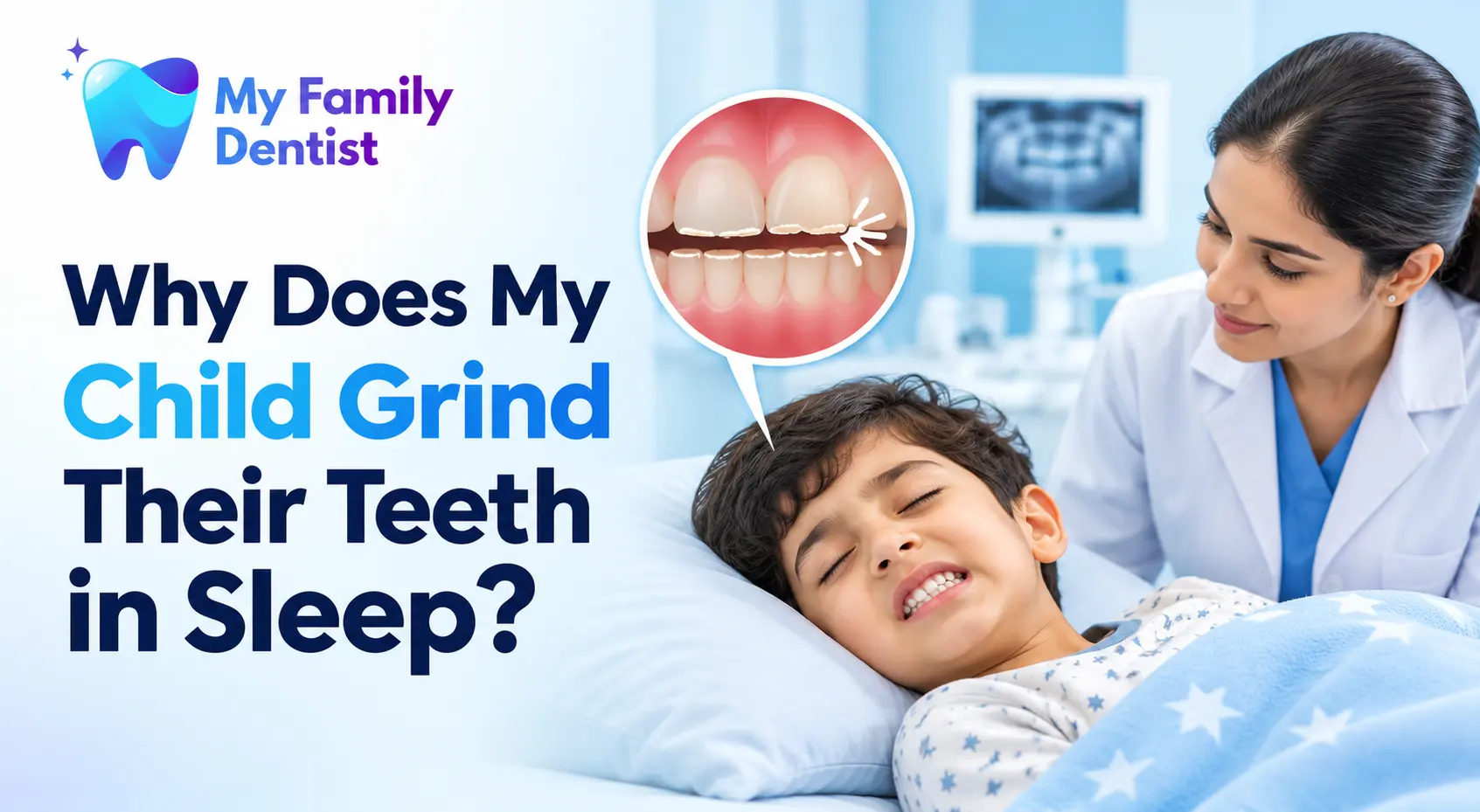
Many parents are startled the first time they hear it: a harsh scraping or clicking sound coming from their child’s bed in the middle of the night. If you have noticed your child grinding teeth in sleep, please do not panic. It is common in children, and in many cases it settles with time.
This guide explains why it happens, which signs to watch for and when it is worth getting your child checked. The medical name for teeth grinding is bruxism.
What Is Teeth Grinding in Children?
Teeth grinding means clenching the jaw and rubbing the upper and lower teeth together, usually without realising it. When it happens during sleep, it is called sleep bruxism. Children are often completely unaware of it, and many parents only find out because they hear it at night.
It can happen in toddlers, school-going children and teenagers. Many children grow out of it, but some need a little help.
Why Does My Child Grind Their Teeth While Sleeping?
There is rarely one single reason. Here are the most common ones.
1. Changes in the Growing Mouth
When baby teeth are coming in or falling out, the upper and lower teeth may not meet comfortably. Children sometimes grind to “settle” their bite. This is a normal part of growth for many kids and often stops once the adult teeth are in place.
2. Stress and Worry
Children feel stress too. A new school, exams, fights with friends, a new sibling or changes at home can all make a child tense. This tension can show up as clenching or grinding at night.
3. Blocked Nose, Allergies or Breathing Problems
A child who has a blocked nose, allergies or large tonsils may breathe through the mouth and sleep restlessly. Snoring, mouth breathing and pauses in breathing during sleep are sometimes linked with grinding. If you notice these, it is a good idea to mention them to your doctor.
4. Pain or Discomfort
An earache, teething pain or a sore tooth can make a child grind or clench. Sometimes grinding is the body’s way of reacting to discomfort in the mouth or jaw.
5. Bite or Alignment Issues
If the teeth are crowded or the bite is uneven, a child may grind more. Your dentist can check the bite and tell you whether any orthodontic care may be useful as your child grows. You can read about the options in our guide to braces and aligners.
6. Hyperactivity, Poor Sleep or Certain Medicines
Children who are very active, sleep lightly or go to bed overstimulated may grind more. Some medicines can also increase the habit. If your child takes any regular medicine, please tell your dentist and doctor.
7. Family Pattern
Teeth grinding often runs in families. If you or your partner ground your teeth as a child, your little one may be more likely to do it too.
Signs Your Child May Be Grinding Their Teeth
Because it happens during sleep, look out for these clues:
- A scraping or grinding sound at night
- Teeth that look flat, short or worn down
- Complaints of tooth sensitivity to hot or cold
- Jaw pain or soreness, especially in the morning
- Morning headaches or tiredness
- Chipped teeth without any injury
- Restless or disturbed sleep
If you notice more than one of these, a dental check-up is a good idea.
Is Teeth Grinding Harmful for Children?
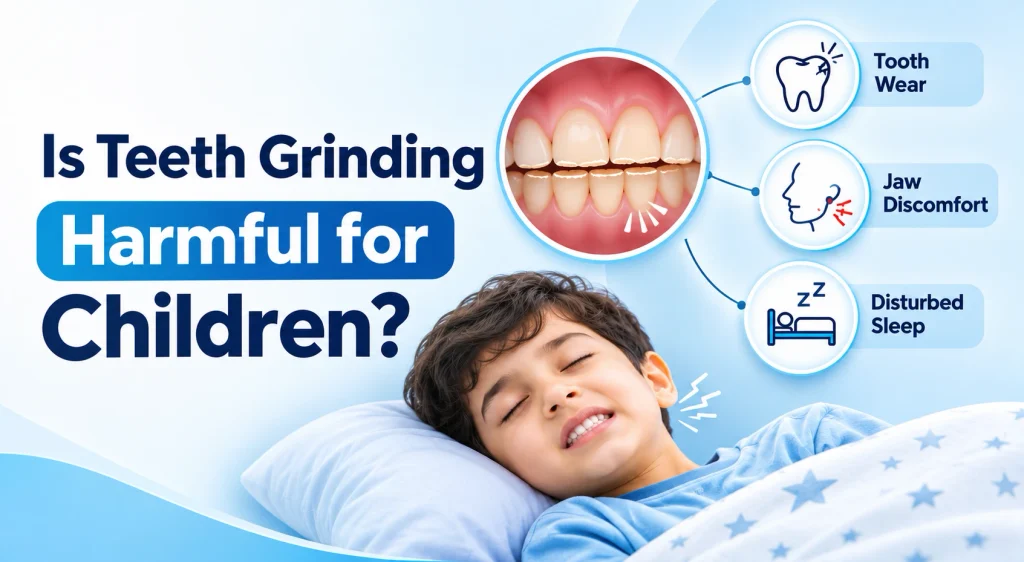
Mild grinding is usually not a serious problem, and many children outgrow it. But frequent or strong grinding over a long time can wear down the tooth surface, cause sensitivity, and strain the jaw muscles. Baby teeth also protect the space for adult teeth, so keeping them healthy matters. Your dentist can check how much wear has happened and whether anything needs to be done.
When Should You See a Dentist?
It is a good idea to book a visit if:
- The grinding happens most nights or is getting louder
- Your child complains of tooth or jaw pain
- You see worn, chipped or sensitive teeth
- Your child snores loudly, breathes through the mouth or seems tired in the daytime
- You are simply unsure and want peace of mind
Our paediatric dentistry team is used to caring for young patients and can examine your child gently and explain what is going on in simple words.
How Can Parents Help at Home?
Many cases improve with small changes:
- Set a calm bedtime routine. A warm bath, a story and no screens for an hour before bed can help your child relax.
- Talk about the day. Ask gently about school or friends. Children often feel better just by sharing worries.
- Limit sugary and caffeinated drinks in the evening. Cold drinks, chocolate and energy drinks can make it harder for kids to settle.
- Keep bedtime consistent. Enough sleep at fixed times helps reduce restless nights.
- Treat nasal blockage and allergies. Speak to your doctor if your child often has a stuffy nose or snores.
- Discourage chewing on pencils, nails or ice. These habits can strain the jaw muscles.
- Keep up regular dental care. Brushing twice a day and regular professional teeth cleaning help keep worn or sensitive teeth healthy.
Please avoid scolding your child for grinding. It is not done on purpose, and extra pressure can add to the stress.
What Treatment Options Are Available?
Treatment depends on the cause and your child’s age. Your dentist may suggest:
- Watchful monitoring: If the grinding is mild, regular check-ups to see whether it settles on its own.
- Treating the cause: Managing stress, sleep habits or allergies, or referring you to a doctor if breathing problems are suspected.
- Dental care for worn or sensitive teeth: Protecting the surface of teeth that have started to wear down.
- A night guard: In some older children, a custom-made guard may be advised to protect the teeth. This is not suitable for every child, especially while many baby teeth are still changing, so it is always the dentist’s decision.
- Orthodontic care: If the bite or crowding is a factor, your dentist can guide you on the right time to start treatment.
Worried About Your Child’s Teeth?
If you have noticed grinding, worn teeth or complaints of jaw pain, a gentle check-up can give you clear answers. Meet our team of dentists at our Patia clinic in Bhubaneswar, or contact us to book an appointment for your child.
Disclaimer: This article is for general education and is not a substitute for professional dental or medical advice. Please consult a qualified dentist or doctor for a diagnosis and treatment plan suited to your child.
Frequently Asked Questions
Is it normal for a child to grind their teeth at night?
Yes, it is fairly common, especially in younger children. Many outgrow it, but it is still worth mentioning to your dentist.
At what age do children usually stop grinding?
Many children grow out of it as their adult teeth come in or as stress and sleep patterns settle. This varies from child to child.
Can worms cause teeth grinding?
This is a common belief, but grinding has several other well-known causes such as stress, bite changes and breathing issues. If you are concerned about your child’s health, please speak to your paediatrician.
Should I wake my child when they grind?
No. Waking them will not stop the habit and can disturb their sleep. Focus on a calm bedtime routine instead.
Can teeth grinding damage my child’s teeth?
Heavy grinding over a long time can wear down enamel and cause sensitivity. A dental check-up helps you catch any wear early.