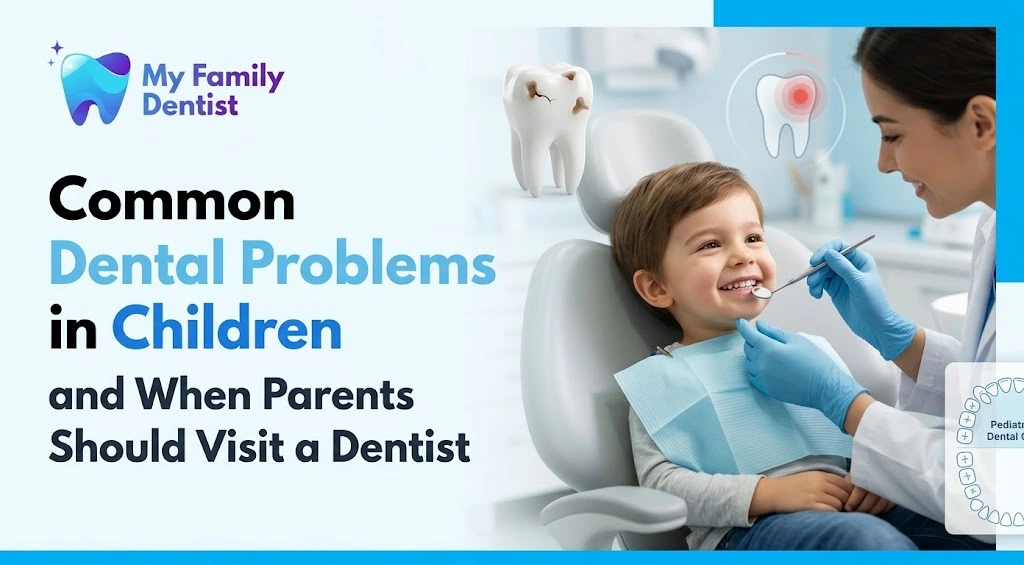
Children can develop dental problems even when parents encourage regular brushing. Cavities, tooth sensitivity, gum problems, dental injuries, and problems with tooth eruption are among the concerns parents may notice as children grow.
Some dental issues cause obvious pain, while others may develop quietly. Knowing the common dental problems in children and understanding when to visit a dentist can help parents respond appropriately without waiting for symptoms to become severe.
Why Children’s Dental Health Matters
Healthy teeth help children chew food, speak clearly, and maintain normal oral development. Primary or baby teeth also help preserve space for permanent teeth developing underneath.
Although baby teeth eventually fall out, they still need proper care. Untreated decay or infection in a primary tooth can cause pain and may affect eating, sleep, school activities, or the surrounding tissues.
Regular dental care also allows a dentist to monitor tooth eruption, oral hygiene, bite development, and other changes as a child grows.
Common Dental Problems in Children
1. Dental Cavities
Tooth decay is one of the most common dental problems in childhood. It develops when bacteria in dental plaque interact with sugars and starches in food and drinks, producing acids that can damage tooth enamel.
Children may not always complain when a cavity begins. Parents may notice:
- White, brown, or dark spots on teeth
- Food getting stuck in a particular area
- Tooth sensitivity
- Pain while eating or drinking
- A visible hole or rough area on a tooth
- Avoiding certain foods because of discomfort
A dentist can determine whether a tooth has early decay or a more advanced cavity and recommend appropriate treatment.
2. Toothache and Dental Sensitivity
A child’s toothache should not automatically be assumed to be caused by a cavity. Pain can have several causes, including decay, dental trauma, gum problems, eruption of teeth, or infection.
Children may describe dental pain differently. Younger children may simply become irritable, stop eating, or have difficulty sleeping.
Persistent or unexplained tooth pain deserves a dental evaluation rather than repeated use of pain medicine without identifying the cause.
3. Gum Problems
Healthy gums generally appear firm and pink, although normal gum appearance can vary.
Plaque buildup around the gumline can cause inflammation. Parents may notice:
- Red or swollen gums
- Bleeding during brushing
- Gum tenderness
- Persistent bad breath
- Plaque or deposits around teeth
Good brushing and cleaning between teeth are important, but persistent gum symptoms should be assessed by a dentist.
4. Tooth Eruption Problems
Children go through several stages of tooth eruption. Sometimes teeth may erupt later, earlier, or in an unusual position.
Parents may notice:
- A permanent tooth appearing before a baby tooth falls out
- A baby tooth remaining for longer than expected
- Crowding
- Teeth erupting at an unusual angle
- A visible gap where a permanent tooth has not appeared
Not every variation means there is a serious problem. However, a dentist can monitor tooth development and identify when further assessment may be appropriate.
5. Crowded or Misaligned Teeth
Crowding occurs when there is not enough space for teeth to align normally. Other alignment concerns can include excessive spacing, protruding teeth, crossbite, overbite, or underbite.
Some alignment problems are noticed early, while others become clearer as permanent teeth erupt.
A dentist may monitor the child’s growth and dental development and refer the child to an orthodontist when appropriate.
6. Dental Injuries
Children are active, and falls, sports injuries, and accidents can damage teeth.
A dental injury may involve:
- A chipped tooth
- A cracked tooth
- A loosened tooth
- A tooth pushed into the gum
- A knocked-out permanent tooth
- Injury to the lips or gums
Even when a damaged tooth does not hurt significantly, a dental examination may be necessary because some injuries are not obvious from the outside.
7. Tooth Discoloration
Children can develop changes in tooth colour for different reasons.
A tooth may appear darker after an injury. White spots may sometimes be associated with changes in enamel, while yellow or brown areas can occur with plaque, staining, or tooth decay.
Because the cause matters, parents should avoid assuming that every discoloured tooth is simply a cosmetic stain.
8. Bad Breath
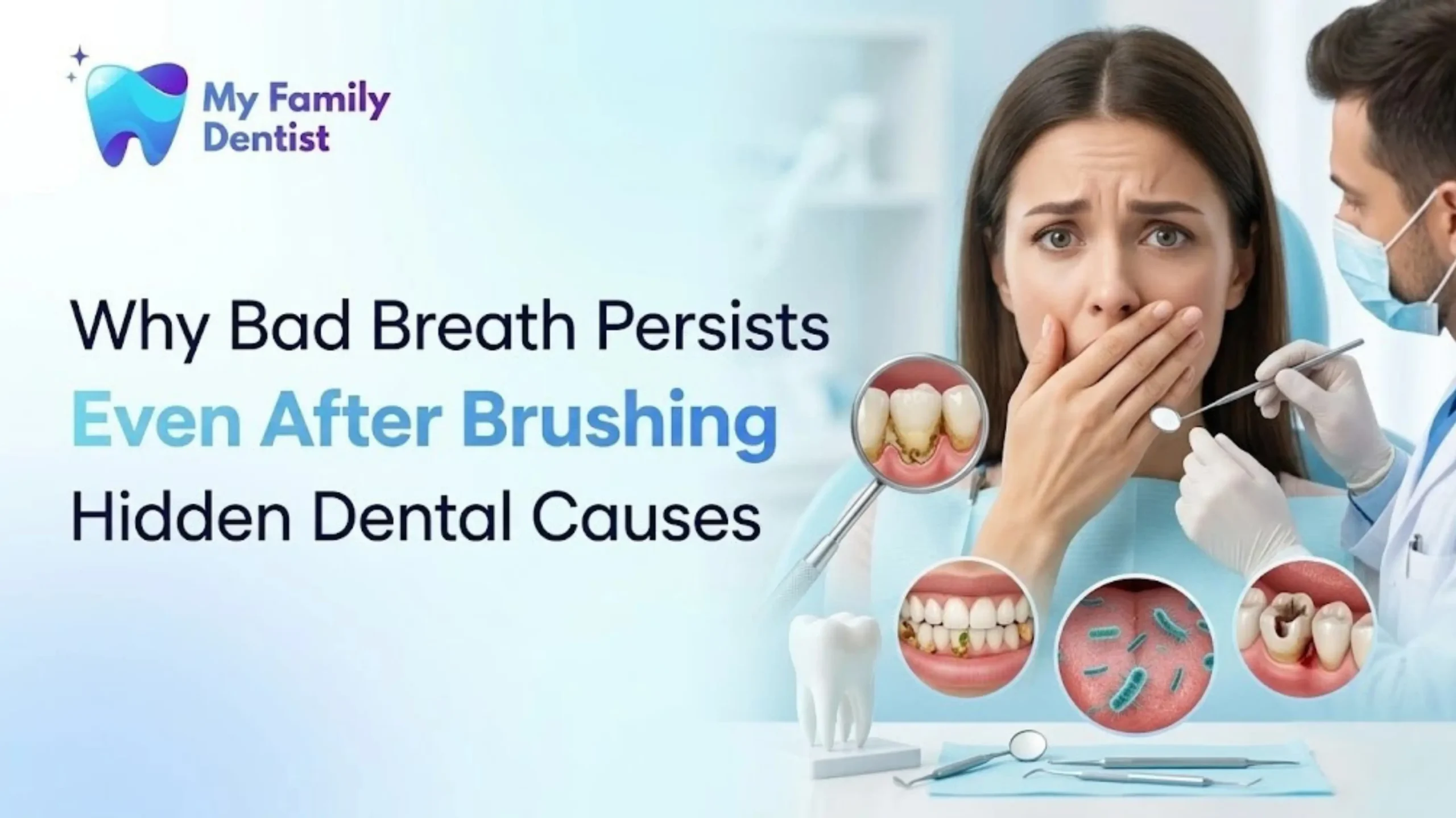
Occasional morning breath is common. Persistent bad breath, however, can sometimes be associated with oral hygiene problems, plaque accumulation, gum inflammation, cavities, dry mouth, or other causes.
If a child continues to have noticeable bad breath despite appropriate daily oral hygiene, a dental evaluation can help identify the possible source.
When Should Parents Take a Child to the Dentist?
Parents should consider arranging a dental visit when a child develops symptoms such as:
- Persistent toothache
- Facial or gum swelling
- Bleeding or swollen gums
- Sensitivity that continues or worsens
- Visible cavities or dark spots
- Persistent bad breath
- Difficulty chewing
- A loose or damaged permanent tooth
- A tooth that has been knocked out
- Abnormal tooth eruption
- Significant crowding or bite concerns
- Pain that interferes with sleep or eating
A child does not need to wait until there is severe pain before seeing a dentist.
Signs That Need Prompt Dental Attention
Some symptoms deserve more urgent attention.
Facial or Jaw Swelling
Swelling around the face, jaw, or gums can sometimes occur with a dental infection. If swelling is significant or is accompanied by fever or difficulty swallowing or breathing, urgent medical or dental care is appropriate.
Severe or Persistent Dental Pain
Strong pain that continues, returns frequently, or interferes with sleep and eating should be evaluated.
Dental Trauma
A knocked-out or significantly damaged permanent tooth requires prompt professional assessment. Parents should seek dental guidance immediately after the injury.
Pus or Significant Gum Swelling
Pus, a bad taste, or localized swelling around a tooth can be associated with infection and should not be ignored.
How Can Parents Help Prevent Common Dental Problems?
Daily habits play an important role in children’s oral health.
Encourage Twice-Daily Brushing
Children should brush their teeth regularly using fluoride toothpaste appropriate for their age. Younger children may need parental help or supervision because they may not clean every surface effectively.
Clean Between Teeth
When children’s teeth touch each other, cleaning between them becomes important. Parents can help younger children with flossing or other dentist-recommended interdental cleaning methods.
Limit Frequent Sugary Snacks and Drinks
The frequency of sugar exposure matters for cavity risk. Frequent sugary foods and drinks can give oral bacteria repeated opportunities to produce acids that affect enamel.
Water is generally a good choice between meals.
Avoid Putting a Child to Bed With a Sugary Drink
Repeated exposure to milk, juice, sweetened drinks, or other sugary liquids during sleep can contribute to early childhood tooth decay.
Use Protective Equipment During Sports
A properly fitted mouthguard can help reduce the risk of dental injuries during activities where impacts to the mouth are possible.
What Happens During a Child’s Dental Visit?
A pediatric dental visit is not simply about looking for cavities.
Depending on the child’s age and dental history, the dentist may assess:
- Teeth and existing restorations
- Plaque and oral hygiene
- Gums and surrounding tissues
- Tooth eruption
- Bite and alignment
- Signs of decay or enamel problems
- Previous dental injuries
- Oral habits that may affect development
Dental X-rays are not automatically required for every child. When imaging is considered, the dentist determines whether it is clinically appropriate based on the child’s individual situation.
Treatment recommendations should also consider the child’s age, cooperation, dental development, symptoms, and overall oral health.
How Often Should Children Visit a Dentist?
There is no single appointment schedule that is appropriate for every child.
The frequency of dental visits can depend on factors such as:
- Previous cavities
- Oral hygiene
- Fluoride exposure
- Dietary habits
- Gum health
- Tooth eruption and alignment
- Previous dental treatment
- Individual risk of tooth decay
A dentist can recommend an appropriate recall interval based on the child’s needs.
Risks and Limitations
Not every childhood dental problem can be identified from symptoms alone. Similar symptoms may have different causes, and treatment depends on clinical findings.
Online information cannot replace an examination by a qualified dental professional. Parents should not use this article to diagnose a child’s condition or delay urgent care.
When Should Parents Schedule a Dental Visit?
Parents should arrange a dental evaluation if a child has ongoing tooth pain, visible decay, persistent gum symptoms, unusual tooth eruption, dental trauma, swelling, or other changes that concern them.
A dentist can examine the child’s teeth and gums, explain what may be happening, and discuss whether observation, preventive care, or treatment is appropriate.
Conclusion
Common dental problems in children can range from cavities and toothache to gum problems, dental injuries, and changes in tooth eruption or alignment. Some issues may be easy to notice, while others can develop without obvious symptoms.
Parents should pay attention to persistent pain, swelling, bleeding gums, visible tooth damage, unusual tooth eruption, or changes that affect eating, sleeping, or daily activities. These signs do not always indicate a serious condition, but they are reasons to have the child evaluated by a qualified dental professional.
Regular brushing with fluoride toothpaste, cleaning between teeth, limiting frequent sugary foods and drinks, and routine dental visits can support good oral health as children grow.
Medical Disclaimer
This article provides general oral-health information for educational purposes. It does not diagnose or treat a specific child. Dental problems can have different causes, so children with persistent, severe, or concerning symptoms should be evaluated by a qualified dental professional.
FAQs
1. What are the most common dental problems in children?
Common problems include tooth decay, toothache, gum inflammation, dental injuries, tooth eruption problems, crowded teeth, and enamel or tooth-colour changes.
2. When should a child visit a dentist for a toothache?
A child with persistent, recurring, or significant tooth pain should be evaluated by a dentist. Pain that affects sleep, eating, or normal activities deserves particular attention.
3. Are cavities common in children?
Yes. Tooth decay is common in childhood and can develop when plaque bacteria interact with sugars and starches to produce acids that damage tooth enamel.
4. Should parents worry if a child’s gums bleed while brushing?
Bleeding gums can occur with plaque-related gum inflammation, among other causes. If bleeding is persistent or accompanied by swelling, redness, tenderness, or bad breath, a dental evaluation is appropriate.
5. What should parents do if a child’s permanent tooth is knocked out?
A knocked-out permanent tooth is a dental emergency. Parents should seek professional dental care promptly and follow the dentist’s instructions for handling the tooth and getting urgent treatment.
6. How often should children see a dentist?
The appropriate interval depends on the child’s dental health, cavity risk, oral hygiene, tooth development, and previous treatment. The dentist can recommend an individualized schedule.
7. Can baby teeth get cavities?
Yes. Baby teeth can develop cavities and may require treatment. They also play important roles in chewing, speech, and maintaining space for developing permanent teeth.
8. When should parents worry about swelling around a child’s tooth?
Gum, facial, or jaw swelling can indicate a dental problem that needs professional assessment. Significant swelling, especially with fever or difficulty swallowing or breathing, requires prompt care.