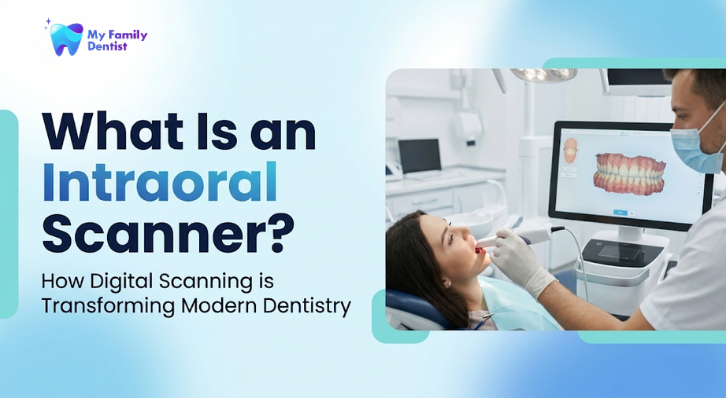
An intraoral scanner is a modern dental device used to capture high-resolution digital images of teeth and gums. Instead of traditional dental molds or impression materials, dentists use a handheld scanner to create a 3D digital model of the patient’s mouth.
This technology is part of digital dentistry, which improves the accuracy, comfort, and efficiency of many dental procedures. The digital scan can help dentists plan treatments such as crowns, dental implants, orthodontic aligners, and restorative dentistry procedures.
Many patients prefer intraoral scanning because it avoids the uncomfortable impression trays traditionally used for dental molds.
How an Intraoral Scanner Works
An intraoral scanner uses optical technology and advanced imaging software to capture thousands of images of the teeth and gums in seconds.
The scanning process typically includes:
- A dentist gently moves a small wand-like scanner inside the mouth.
- The scanner captures detailed images of the teeth and gum structure.
- Software combines the images to create a 3D digital model of the mouth.
- The digital model appears instantly on a computer screen.
The scan can then be used for treatment planning, digital impressions, and dental restorations.
In most cases, the process takes only a few minutes.
Why Dentists Use Intraoral Scanners
Dentists use intraoral scanners because they provide high accuracy and detailed visualization of the patient’s oral structures.
Traditional dental impressions can sometimes distort due to material movement. Digital scanning helps reduce such issues by capturing precise digital data.
Common reasons dentists use intraoral scanners include:
- More accurate dental impressions
- Faster treatment planning
- Improved communication with dental laboratories
- Enhanced visualization of oral structures
- Better patient comfort
Digital scanning also allows dentists to show patients real-time images of their teeth, helping them understand their dental condition more clearly.
Benefits of Intraoral Scanning for Patients
One of the biggest advantages of digital scanning is improved patient comfort during dental procedures.
Traditional dental impressions use trays filled with impression material, which can cause discomfort or gag reflex in some patients. Intraoral scanning eliminates the need for these molds.
Benefits for patients include:
- More comfortable dental impressions
- Reduced gag reflex
- Faster dental procedures
- Improved treatment accuracy
- Better visualization of dental problems
- Reduced need for repeated impressions
Digital scans can also be stored electronically, making it easier to monitor changes in oral health over time.
Dental Treatments That Use Intraoral Scanners
Intraoral scanners are used in many modern dental procedures.
Common treatments that use digital scanning include:
Crowns and Bridges
Digital impressions help design precise dental crowns and bridges, ensuring a better fit.
Dental Implants
Digital scans assist dentists in planning implant placement and restoration design.
Braces and Clear Aligners
Orthodontic treatments such as clear aligners use digital scans to create customized treatment plans.
Cosmetic Dentistry
Digital scanning may be used for smile design and cosmetic dental treatments.
Restorative Dentistry
Procedures such as veneers or fillings can benefit from accurate digital impressions.
Intraoral Scanner vs Traditional Dental Impressions
Digital scanning is often compared to traditional dental impressions.
Traditional Dental Impressions
Traditional impressions involve:
- Impression trays
- Putty-like materials
- Waiting time for molds to set
Some patients find these molds uncomfortable, especially if they have a sensitive gag reflex.
Digital Intraoral Scanning
Intraoral scanning offers:
- Digital 3D images
- Faster scanning process
- Greater comfort
- Immediate results
However, dentists may still use traditional impressions in certain situations depending on the procedure.
What to Expect During an Intraoral Scan
Patients often ask whether dental scanning is uncomfortable or painful.
In most cases, intraoral scanning is painless and quick.
During the scan:
- A dentist or dental professional moves a small scanning device across the teeth.
- The scanner captures images without touching soft tissues aggressively.
- The images appear on a monitor in real time.
Most scans are completed in two to five minutes, depending on the complexity of the case.
Safety and Limitations of Intraoral Scanners
Intraoral scanners are generally considered safe and widely used in modern dental practice.
Safety considerations
- The scanning process uses light-based imaging technology, not radiation.
- The device does not damage teeth or gums.
- The procedure is non-invasive.
Possible limitations
Although highly effective, intraoral scanners may have limitations in certain cases:
- Complex restorative cases may require additional impressions.
- Moisture control is important during scanning.
- Some dental laboratories may still require traditional molds for specific treatments.
Dentists evaluate each case individually to determine the most appropriate method.
When to Visit a Dentist for Digital Dental Scanning
Digital scanning may be recommended when planning treatments such as crowns, implants, aligners, or cosmetic dental procedures.
Patients interested in modern digital dentistry can consult a dentist to determine whether intraoral scanning is suitable for their treatment needs.
Dental clinics using advanced technology may offer digital dental impressions as part of comprehensive dental care.
Patients in Patia and KIIT Road areas of Bhubaneswar can consult a dentist for evaluation and discussion of available treatment options.