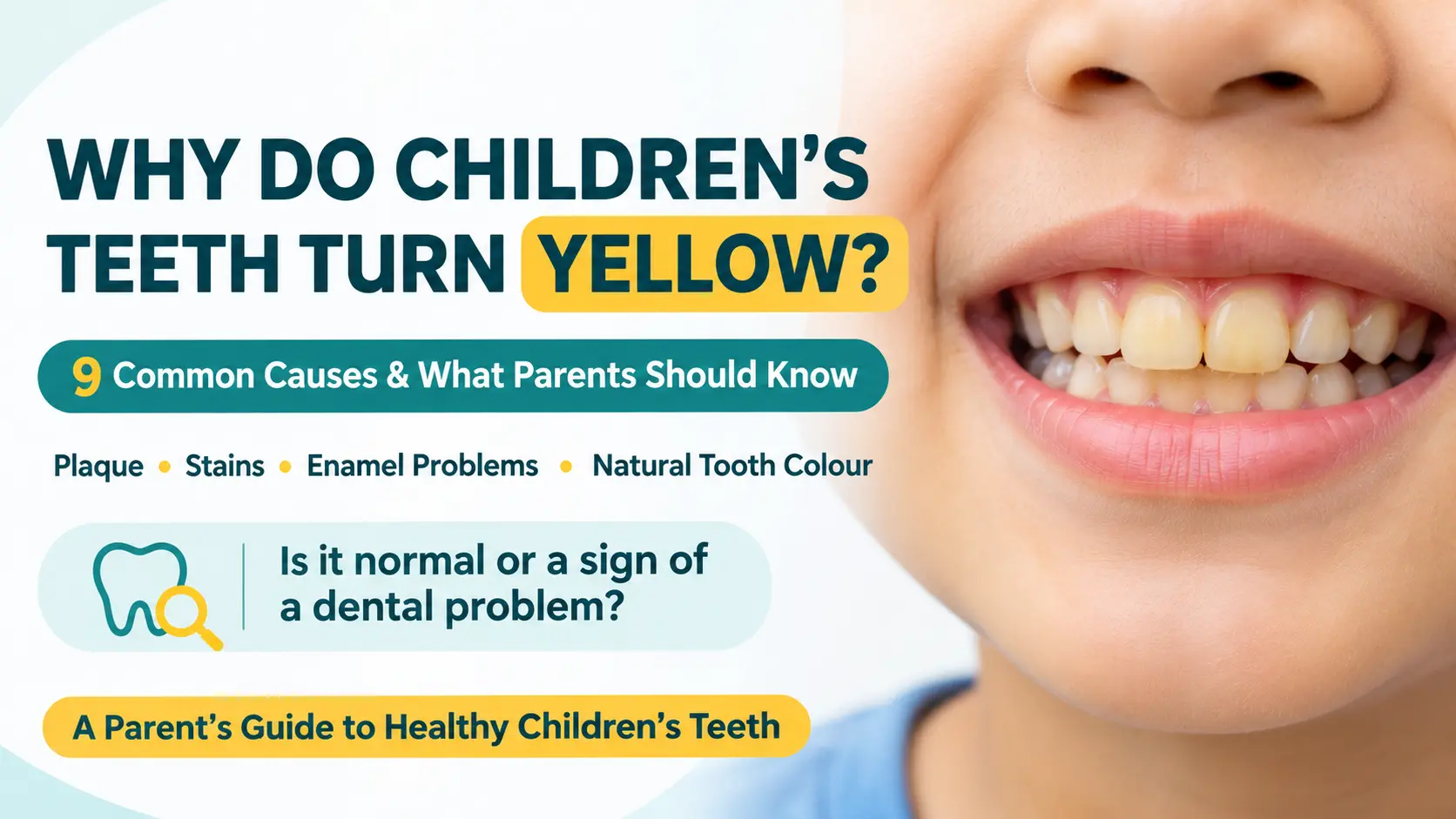
It can be worrying when you look at your child’s smile and notice that the teeth no longer look white. Many parents ask, “Did I do something wrong?” The answer is usually no. Yellow teeth in children are common, and the cause can be as simple as plaque or as natural as the tooth’s own colour.
This guide explains why children’s teeth turn yellow, when it is normal, when it needs attention and what your dentist can do. A check-up with a paediatric dentist is the best way to find out the exact reason for your child.
Why Do Teeth Look Yellow?
A tooth has a hard outer layer called enamel and a softer, naturally yellowish layer underneath called dentin. Enamel is slightly see-through, so when it becomes thin, stained or damaged, the yellow dentin shows more. That is why many yellow-looking teeth are not “dirty” at all. The colour comes from what is happening inside or on the surface of the tooth.
Common Causes of Yellow Teeth in Children
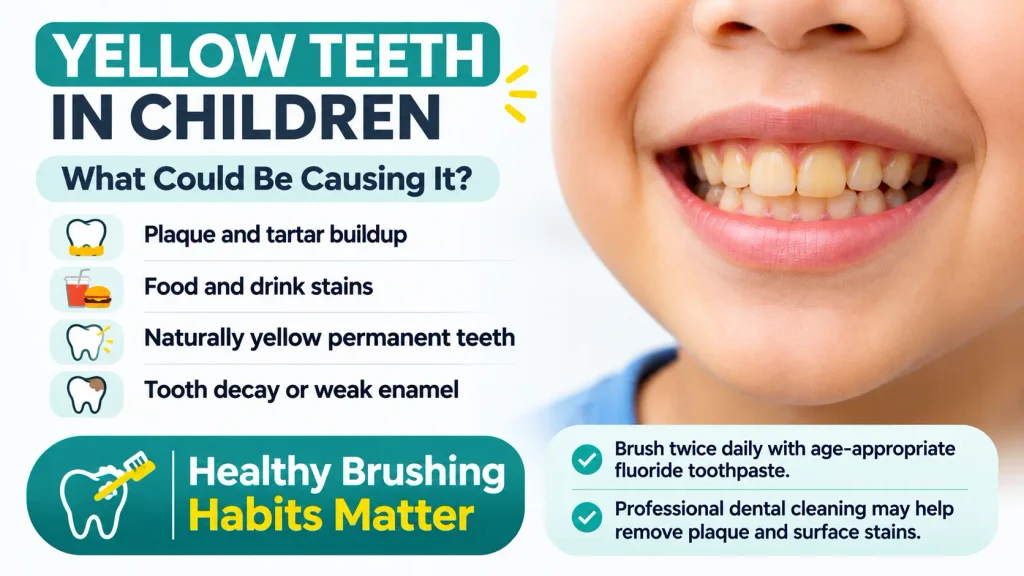
1. Plaque and Poor Brushing
This is the most common reason. When food and bacteria are not cleaned properly, a soft sticky layer called plaque builds up on the teeth. Over time it looks yellow, especially near the gums. If it hardens, it becomes tartar, which cannot be removed by brushing at home.
2. Adult Teeth Are Naturally Yellower
Baby teeth are usually whiter because their enamel is thinner and more opaque. Permanent teeth have thicker enamel but a more visible dentin colour, so when they come in, they may look yellower next to the baby teeth. This is normal and does not mean something is wrong.
3. Food and Drinks
Tea, cola, packaged juices, chocolates, turmeric-rich curries and colourful sweets can leave stains on the teeth. Sugary and sticky foods also feed bacteria, which leads to more plaque.
4. Tooth Decay (Cavities)
Early decay often starts as a chalky white spot and then turns yellow, brown or black. If your child has dark or yellow-brown patches along with sensitivity or pain, a cavity may be the cause. You can read more about this in our guide on whether your child needs a dental filling.
5. Dental Fluorosis
Fluorosis happens when a child takes in too much fluoride while the teeth are forming. This can come from fluoride in drinking water, swallowing toothpaste or certain supplements. It may cause white streaks, yellow or brown patches on the enamel. It is not an infection, and it does not spread. Mild cases are mostly a matter of appearance. The amount of fluoride in water differs from area to area, so your dentist can guide you on what suits your child.
6. Medicines and Supplements
Some medicines taken during early childhood, or by the mother during pregnancy, can affect tooth colour. Liquid iron supplements and certain antibiotics are known examples. Please do not stop any medicine on your own. Just tell your dentist about it so the colour changes can be understood properly.
7. Weak or Thin Enamel
Some children are born with enamel that did not develop fully. The teeth may look yellow, brown or rough and can feel more sensitive. This can be linked to illness or high fever in early childhood, nutrition problems or inherited conditions. These teeth also decay more easily, so they need extra care.
8. An Injury to the Tooth
If a child falls and hits a tooth, it may slowly turn yellow, grey or dark over the following weeks or months. This can mean the nerve of the tooth has been affected. A tooth that changes colour after an injury should always be checked by a dentist. In some cases, a root canal may be needed to protect the tooth.
9. Mouth Breathing and Dry Mouth
Children who breathe through the mouth often have less saliva, and saliva is what naturally rinses the teeth. This can lead to more plaque and stains, especially on the front teeth.
10. Family Pattern
Tooth colour and enamel thickness can run in families. If you or your partner have naturally darker teeth, your child may have the same.
When Is Yellow Colour Normal, and When Should You Worry?
Usually nothing to worry about:
- Yellow teeth that look cleaner after brushing
- New permanent teeth that look slightly yellower than baby teeth
- An even, light yellow shade across all the teeth
Please book a dental visit if:
- There are brown or black spots, holes or pits in the teeth
- One tooth has turned darker than the rest, especially after an injury
- Your child complains of pain or sensitivity to hot and cold
- The gums are red, swollen or bleed easily
- The teeth look rough, chipped or unusually soft
- The colour change is sudden
Sometimes your dentist may suggest an X-ray, such as an OPG X-ray, to look at the teeth and the bone and check what is happening below the surface.
Treatment Options for Yellow Teeth in Children
The right treatment depends on the cause, your child’s age and the tooth involved. Your dentist will first find the reason and then suggest a plan.
- Professional cleaning: If plaque or tartar is the cause, regular professional teeth cleaning can remove the build-up that brushing cannot, and many stains improve once it is gone.
- Better brushing habits: Your dentist can show your child the right technique and the right amount of toothpaste for their age.
- Treating cavities: If decay is the cause, the tooth is cleaned and restored with a filling or another suitable treatment.
- Fluoride care: In suitable cases, your dentist may use fluoride to strengthen weak enamel and protect it from decay. The amount is always decided based on age.
- Protecting weak enamel: Teeth with thin or damaged enamel may be protected with sealants, special fillings or caps, depending on how much the tooth is affected.
- Treating an injured tooth: A tooth that changed colour after trauma is checked carefully. Treatment can range from regular monitoring to nerve treatment, depending on the case.
- Cosmetic options when the child is older: For stains or marks that remain, your dentist may talk about gentle options once the permanent teeth have fully come in. You can read about the choices in our cosmetic procedures, and for some patients veneers may be considered much later, when the child is older and the teeth are fully developed.
Teeth whitening is generally not recommended for young children, because their teeth and gums are still developing. Please do not use whitening strips, pastes or home remedies without asking your dentist first.
How Can You Prevent Yellow Teeth in Your Child?
- Help your child brush twice a day with fluoride toothpaste in the right amount for their age
- Supervise brushing until your child can do it well alone
- Rinse the mouth with water after sweets, tea or cold drinks
- Limit sugary snacks, sticky foods and sweet drinks, and keep them for mealtimes
- Avoid giving milk or juice in a bottle at bedtime
- Check that your child does not swallow toothpaste
- Ask your dentist about the fluoride level in your drinking water if you are unsure
- Treat mouth breathing, blocked nose or allergies with your doctor’s advice
- Book regular check-ups every six months so changes are caught early
Disclaimer: This article is for general education and is not a substitute for professional dental or medical advice. Treatment plans and results vary from person to person, so please consult a qualified dentist for a diagnosis.
Frequently Asked Questions
Are yellow teeth in children a sign of poor hygiene?
Not always. Poor cleaning is a common cause, but natural tooth colour, enamel differences, medicines and fluorosis can also make teeth look yellow even in children who brush well.
Why are my child’s new permanent teeth yellow?
Permanent teeth have a more visible dentin layer, so they often look slightly yellower than baby teeth. This is normal in most cases.
Can yellow teeth turn white again?
If the yellow colour is from plaque or surface stains, a professional cleaning and better brushing can improve it a lot. If it comes from inside the tooth, such as fluorosis or enamel problems, brushing alone will not change it, and your dentist can explain the options.
Is it safe to whiten a child’s teeth?
Whitening is usually not advised for young children. Please talk to your dentist before trying anything.
Does one dark tooth mean the nerve is dead?
Not always, but a single tooth that turns dark, especially after a fall, should be examined soon.
Does fluorosis spread or cause pain?
No. Fluorosis is a change in the look of the enamel and does not spread. Your dentist can tell you how mild or strong it is.
Worried About Your Child’s Smile?
If your child’s teeth look yellow, dark or spotted, a gentle check-up can tell you exactly why and what to do next. Meet our team of dentists at our Patia clinic in Bhubaneswar, or contact us to book an appointment for your child.