Most parents get worried when they spot a dark spot on their child’s tooth or hear “my tooth is paining.” Cavities are very common in children, and a dental filling for a child is one of the simplest ways to treat them before they become bigger problems.
This guide explains the signs that your child may need a filling, what happens during the visit and how you can prevent new cavities. Regular visits to a paediatric dentist make it much easier to catch these problems early.
What Is a Dental Filling?
A filling is a material that is placed in a tooth after the decayed part has been removed. It closes the hole (cavity), stops decay from spreading and helps the tooth work normally again for chewing and speaking.
Why Do Baby Teeth Need Fillings?
Many parents think, “It is only a baby tooth, it will fall anyway.” But baby teeth do important work. They help your child chew properly, speak clearly and hold space for the adult teeth. An untreated cavity can cause pain, swelling and infection, and it can even affect the adult tooth underneath. This is why decayed baby teeth should not be ignored.
Signs Your Child May Need a Filling
Early cavities often cause no pain, so look out for these signs:
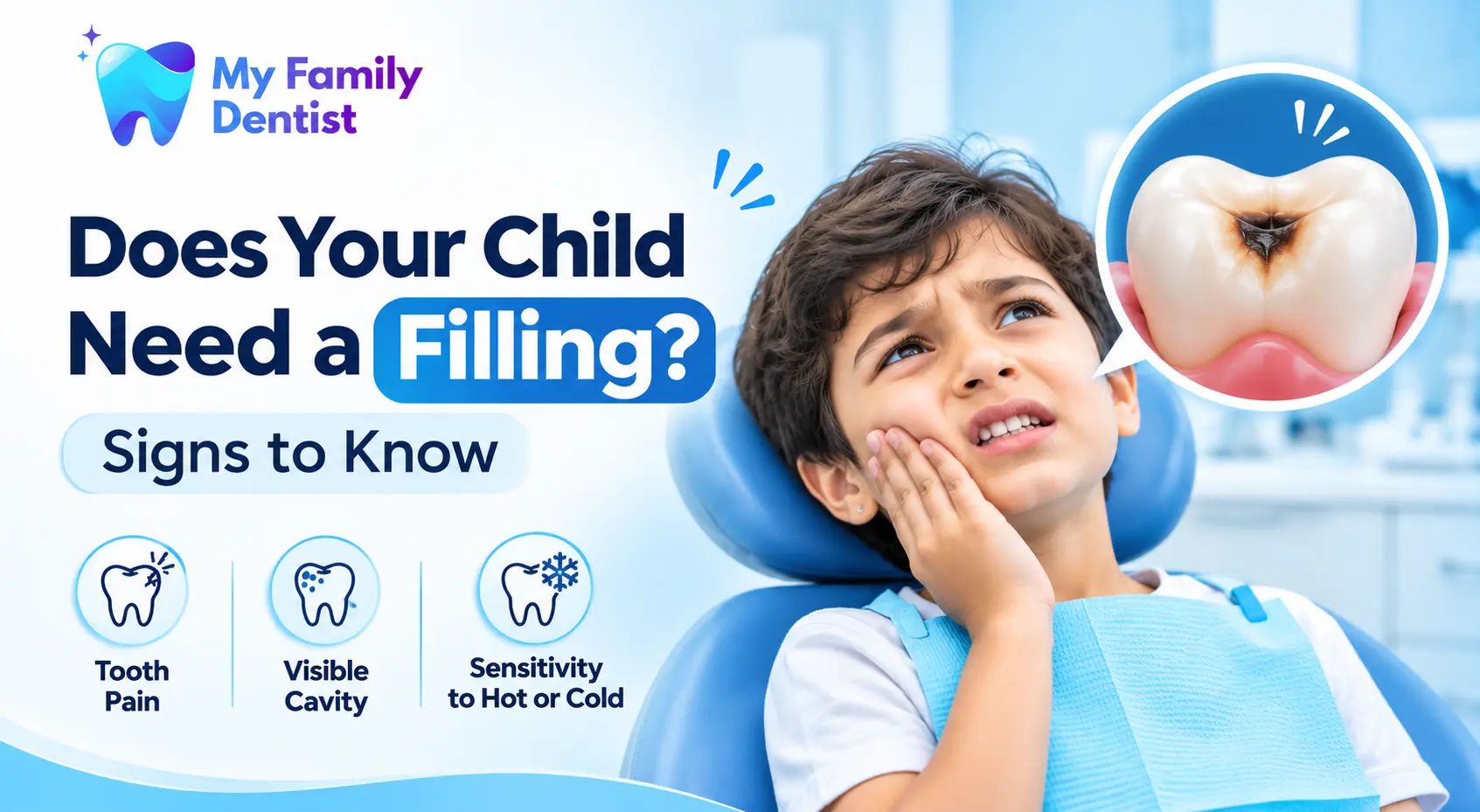
- White, brown or black spots on the tooth surface
- A visible hole or pit in the tooth
- Sensitivity to cold water, hot food or sweets
- Pain while chewing or avoiding one side of the mouth
- Food getting stuck in the same spot again and again
- Bad breath that does not go away after brushing
- A rough or broken edge on the tooth
- Toothache that comes and goes, or wakes your child at night
If you notice any of these, it is a good time to book a dental check-up.
Can a Cavity Be There Without Any Pain?
Yes. Early decay often hides between the teeth or in the deep grooves of back teeth, where you cannot see it. Your child may feel nothing at all. That is why dentists use a careful examination and, when needed, an X-ray such as an OPG X-ray to check for decay in places the eye cannot reach.
What Causes Cavities in Children?
- Frequent sugary snacks, chocolates, biscuits and sweet drinks
- Sipping milk or juice from a bottle during the night
- Not brushing properly twice a day
- Sticky foods that stay on the teeth for a long time
- Deep grooves in the back teeth that trap food
- Not visiting the dentist regularly
How Does the Dentist Decide If a Filling Is Needed?
Your dentist will check the teeth, look at how deep the decay is and take X-rays if required. Small cavities are usually treated with a filling. If the decay is deeper, other treatments may be discussed. The final decision always depends on your child’s age, the tooth and the depth of decay.
What Happens During a Filling Appointment?
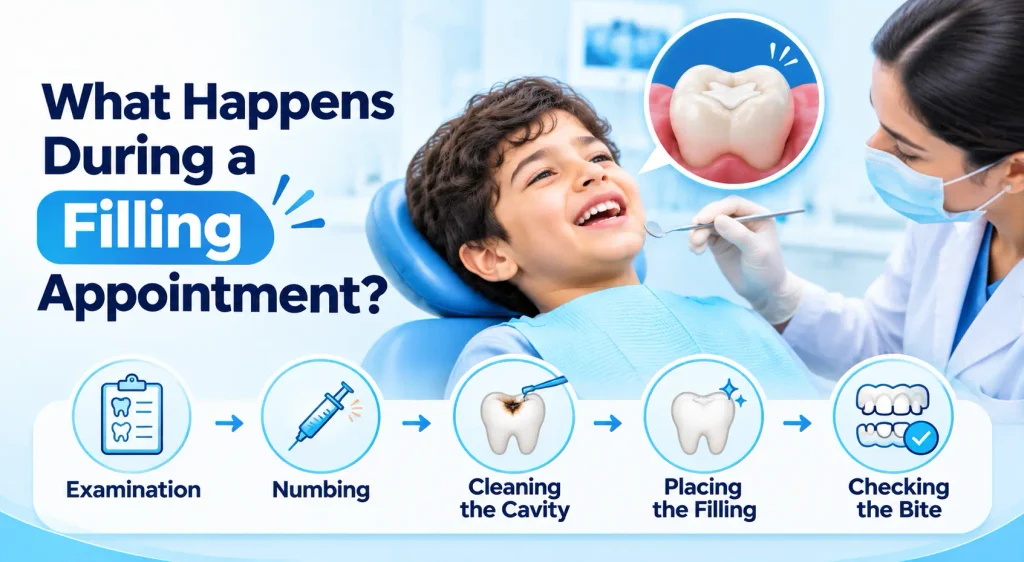
The visit is usually short and simple:
- Examination: The dentist checks the tooth and explains the plan in easy words.
- Numbing: A little numbing gel or local anaesthesia is used so your child does not feel pain.
- Cleaning the cavity: The decayed part of the tooth is gently removed.
- Placing the filling: The tooth-coloured or other suitable material is placed and shaped.
- Checking the bite: The dentist makes sure your child can bite comfortably.
Our clinic also uses modern tools such as laser dentistry where suitable, which many patients find more comfortable. Whether it is the right option depends on the case, and your dentist will advise you.
Types of Filling Materials
Your dentist will choose the material based on the tooth and your child’s needs. Common options include:
- Tooth-coloured (composite) fillings: These blend with the natural tooth and are often used for visible teeth.
- Glass ionomer fillings: These release fluoride and are sometimes used in baby teeth.
- Other materials: For larger cavities or back teeth, your dentist may suggest a different material or a cap.
What If the Cavity Is Very Deep?
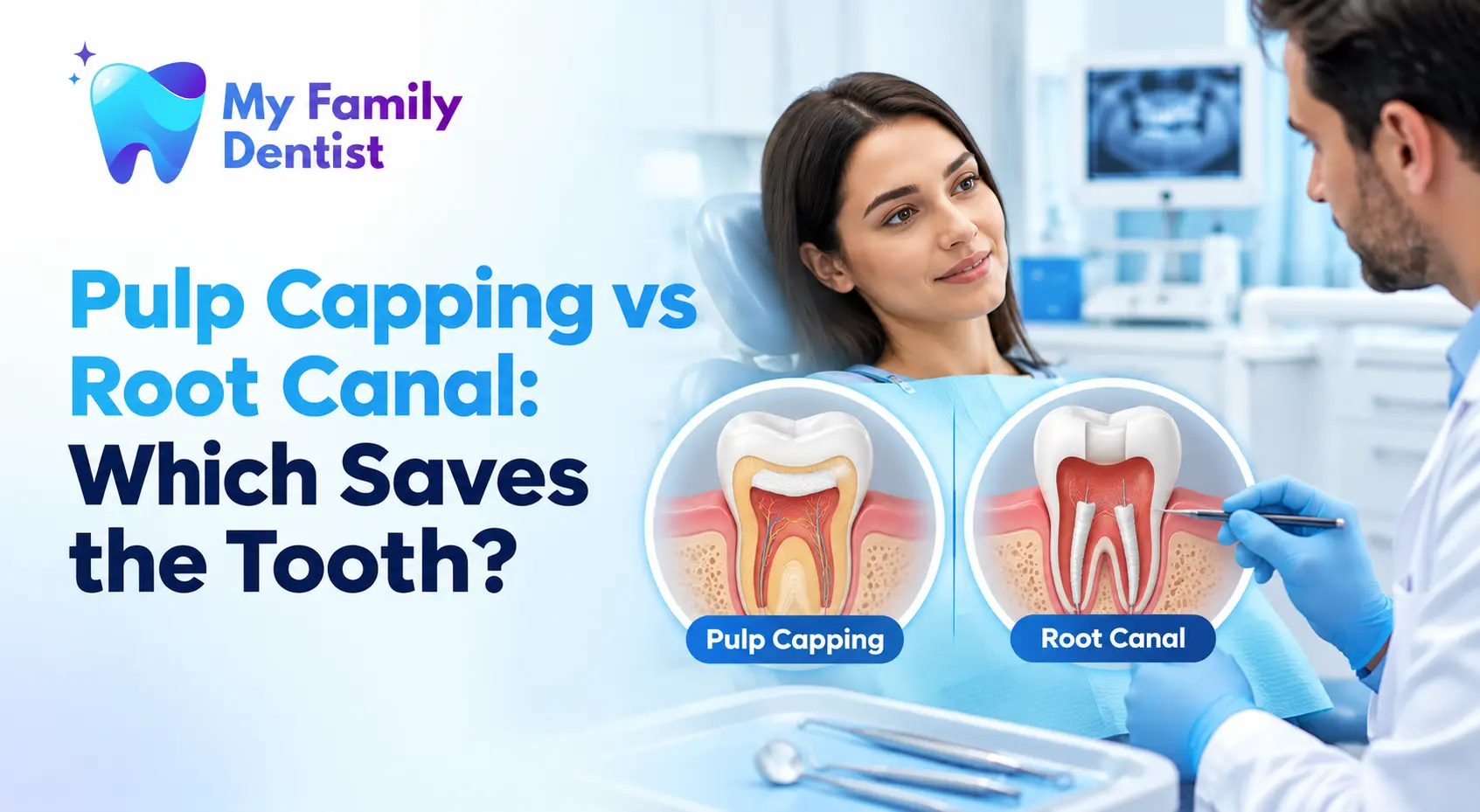
Sometimes decay reaches close to the nerve of the tooth. In such cases, your dentist may suggest a nerve treatment such as a root canal, or a cap (crown) to protect the tooth. If the tooth is too damaged to save, an extraction may be advised. The earlier a cavity is treated, the more likely it is that a simple filling will be enough.
How to Care for Your Child After a Filling
- Wait until the numbness wears off before letting your child eat, so they do not bite their cheek or lip.
- Offer soft foods for the first few hours.
- Mild sensitivity for a few days is common and usually settles.
- Brush twice a day and floss as advised by your dentist.
- Call the clinic if the filling feels high, rough or painful, or if it comes out.
How to Prevent Cavities in Children
Apart from cavities, parents should also watch for other dental concerns. If you notice your child clenching or grinding their teeth at night, read our guide on why children grind their teeth in sleep to understand its common causes, symptoms and when to consult a dentist.
- Brush twice a day with a fluoride toothpaste of the right strength for your child’s age
- Help young children brush until they can do it well on their own
- Limit sweets, chocolates and sugary drinks, and keep them for mealtimes
- Avoid giving sweet drinks in a bottle at bedtime
- Encourage water after meals
- Book regular check-ups and professional teeth cleaning every six months
- Ask your dentist about protective options for deep grooves in the back teeth
Tips for Parents: Keeping Your Child Calm
Dental visits can feel scary to children. A few simple things can help:
- Speak about the visit in a positive and relaxed way
- Avoid words like “pain”, “injection” or “drill”
- Let your child know the dentist is there to help
- Stay close by and praise them after the visit
Disclaimer: This article is for general education and is not a substitute for professional dental advice. Treatment plans and results vary from person to person, so please consult a qualified dentist for a diagnosis.
Frequently Asked Questions
Does a filling hurt my child?
The tooth is numbed before the filling, so your child should not feel pain during treatment. Mild soreness afterwards usually settles in a day or two.
Is it necessary to fill a baby tooth?
Often, yes. A decayed baby tooth can cause pain and infection and may affect the adult tooth. Your dentist will tell you if a particular tooth needs treatment.
How long does a filling take?
A simple filling is usually completed in one visit. The time depends on the size of the cavity and how comfortable your child is.
How long does a filling last in a child’s tooth?
It depends on the material, the tooth and your child’s oral care. Regular check-ups help the dentist keep an eye on it.
Can a small cavity heal by itself?
Very early stage decay may sometimes be managed with fluoride and better care, but once a hole has formed, it usually needs treatment. Your dentist can tell which stage your child is at.
What if my child is scared of the dentist?
This is very common. A gentle, child-friendly approach and a short first visit just to meet the dentist can make a big difference.
Worried About Your Child’s Teeth?
If you have spotted dark marks, sensitivity or any pain, an early check-up gives you the most options. Meet our team of dentists at our Patia clinic in Bhubaneswar, or contact us to book an appointment for your child.