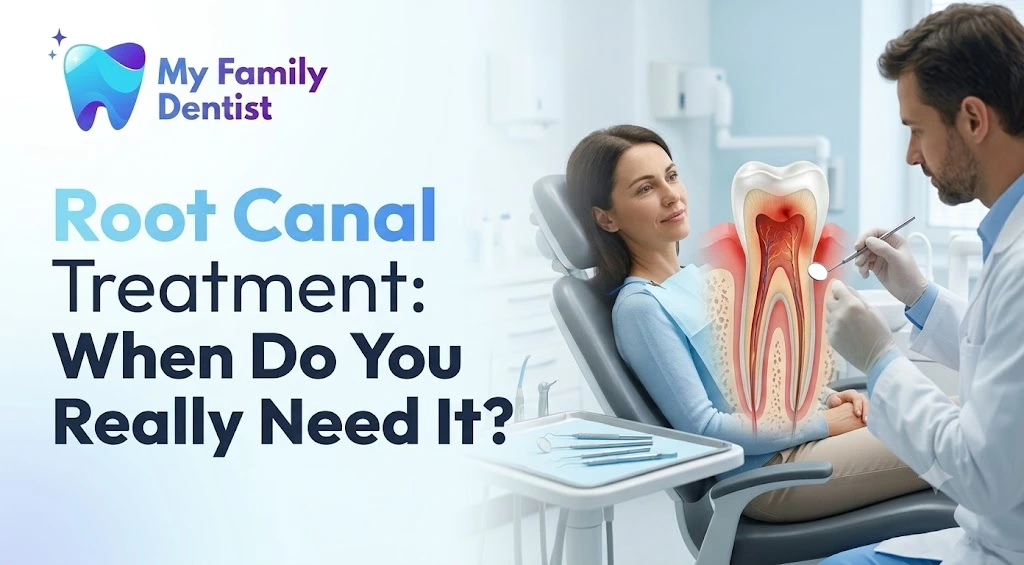

Tooth pain is often a warning sign that something deeper is affecting your dental health. In many cases, persistent symptoms may indicate infection inside the tooth, which may require treatment. Understanding the signs you need root canal treatment can help you seek care early and prevent complications.
A root canal is usually recommended when the tooth pulp (inner tissue) becomes inflamed or infected due to decay, injury, or repeated dental procedures.
What Is a Root Canal and Why Is It Needed?
A root canal is a dental procedure used to remove infected or damaged pulp from inside the tooth.
The goal is to:
- Eliminate infection
- Relieve pain
- Preserve the natural tooth
Dentists recommend root canal treatment when infection reaches the inner part of the tooth and cannot be treated with simple fillings.
5 Signs You Need a Root Canal Treatment
Recognizing symptoms early can help prevent worsening of the condition.
1. Persistent Tooth Pain
Ongoing tooth pain is one of the most common signs.
Characteristics:
- Deep, throbbing pain
- Pain that spreads to the jaw or ear
- Pain that does not go away
This may indicate nerve involvement or infection inside the tooth.
2. Sensitivity to Hot and Cold That Lasts
Temporary sensitivity is common, but prolonged sensitivity can signal a deeper issue.
Warning signs:
- Pain after consuming hot or cold foods
- Sensitivity that lingers for several seconds or minutes
This may suggest damage to the tooth pulp.
3. Swollen or Tender Gums
Swelling near a specific tooth may indicate infection.
Possible symptoms:
- Gum swelling
- Tenderness
- Small pimple-like bump (abscess)
These signs may indicate infection spreading beyond the tooth.
4. Tooth Discoloration
A tooth that becomes darker or greyish may indicate nerve damage inside the tooth.
This can occur due to:
- Trauma
- Infection
- Reduced blood supply
Discoloration may be an early sign that treatment is required.
5. Pain While Chewing or Touching the Tooth
Discomfort when biting or chewing may indicate pressure inside the tooth.
Common experiences:
- Sharp pain when biting
- Sensitivity when touching the tooth
This may suggest infection or inflammation affecting the root area.
What Causes Tooth Infection?
Tooth infections typically occur when bacteria enter the inner layers of the tooth.
Common causes include:
- Untreated cavities
- Cracked or chipped teeth
- Repeated dental procedures
- Gum disease
If left untreated, the infection can spread to surrounding tissues.
Difference Between Cavity and Root Canal Need
Not all dental pain requires a root canal.
Cavity (Early Stage)
- Mild sensitivity
- Localized decay
- Treated with filling
Root Canal Requirement (Advanced Stage)
- Severe or persistent pain
- Infection reaching pulp
- Requires removal of infected tissue
A dentist uses clinical examination and imaging to confirm the condition.
What Happens If You Delay Root Canal Treatment?
Ignoring symptoms can lead to serious complications.
Possible risks include:
- Spread of infection
- Formation of abscess
- Bone damage around the tooth
- Severe pain
- Tooth loss
Timely treatment helps prevent these outcomes.
How Dentists Diagnose the Need for Root Canal
Dentists use multiple methods to confirm diagnosis:
- Clinical examination
- X-rays to detect infection
- Sensitivity tests
- Evaluation of symptoms
This helps determine whether the tooth can be saved.
What to Expect During Root Canal Treatment
Understanding the procedure can help reduce anxiety.
Typical steps:
- Local anesthesia to numb the area
- Removal of infected pulp
- Cleaning and shaping of canals
- Filling and sealing the tooth
The procedure is designed to relieve pain, not cause it.
Safety Considerations and Limitations
Safety
- Root canal treatment is widely performed
- Modern techniques improve comfort
- Helps preserve natural teeth
Limitations
- Severely damaged teeth may not be salvageable
- Delay in treatment reduces success rate
- May require crown placement after treatment
When to Visit a Dentist
You should consult a dentist if you notice:
- Persistent tooth pain
- Swelling or infection
- Sensitivity that does not go away
- Discoloration of a tooth
Medical Disclaimer
This article is for informational purposes only and does not replace professional dental advice. Always consult a qualified dentist for diagnosis and treatment.