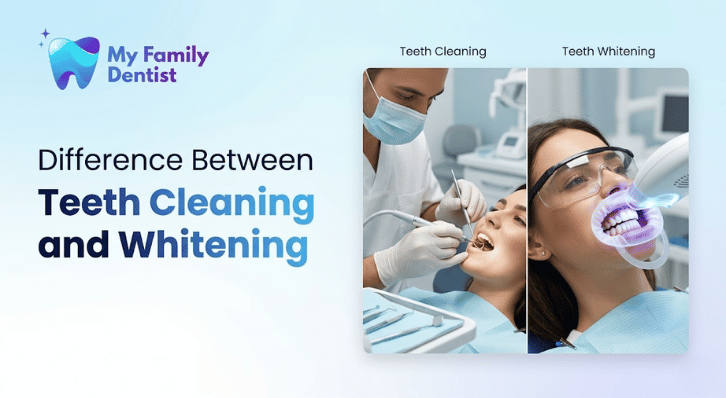
Many patients feel confused about the difference between teeth cleaning and whitening, especially when trying to improve their smile. While both procedures enhance dental appearance, they serve different purposes and are recommended for different conditions.
Understanding how these treatments work can help you choose the right option based on your oral health and cosmetic goals.
What Is Teeth Cleaning?
Teeth cleaning, also known as scaling and polishing, is a preventive dental procedure that removes:
- Plaque (soft deposits)
- Tartar (hardened deposits)
- Surface stains caused by food and beverages
This procedure focuses on oral hygiene and gum health, not changing the natural color of teeth.
Purpose of Teeth Cleaning
- Prevent gum disease
- Remove plaque and tartar
- Maintain oral hygiene
- Improve overall dental health
What Is Teeth Whitening?
Teeth whitening is a cosmetic dental procedure that lightens the natural color of teeth using professional whitening agents.
It targets intrinsic and extrinsic stains, which may be caused by:
- Coffee, tea, or tobacco
- Aging
- Certain medications
- Deep discoloration inside the tooth
Purpose of Teeth Whitening
- Brighten tooth color
- Improve smile aesthetics
- Reduce visible stains
Key Differences Between Teeth Cleaning and Whitening
| Feature | Teeth Cleaning | Teeth Whitening |
|---|---|---|
| Purpose | Oral health | Cosmetic improvement |
| Removes | Plaque & tartar | Deep stains |
| Changes tooth color | No | Yes |
| Procedure type | Preventive | Cosmetic |
| Frequency | Every 6 months | As needed |
Teeth cleaning improves hygiene, while whitening enhances appearance.
Does Teeth Cleaning Whiten Teeth?
A common misconception is that cleaning whitens teeth.
Teeth cleaning can remove surface stains, making teeth appear slightly brighter. However, it does not change the natural color of enamel.
If discoloration is deeper, whitening treatment may be required.
When You Need Teeth Cleaning
Teeth cleaning is recommended when you have:
- Plaque or tartar buildup
- Bleeding gums
- Bad breath
- Early gum disease
- Routine dental maintenance needs
Dentists typically advise cleaning every 6 months.
When You Need Teeth Whitening
Teeth whitening may be suitable if you have:
- Yellow or stained teeth
- Uneven tooth color
- Cosmetic concerns about your smile
- Healthy teeth and gums
Whitening is often chosen for aesthetic improvement rather than medical necessity.
Can Cleaning and Whitening Be Done Together?
Yes, in many cases, dentists recommend teeth cleaning before whitening.
Why?
- Cleaning removes plaque and tartar
- Creates a clean surface for whitening
- Improves effectiveness of whitening treatment
This combination helps achieve better and more uniform results.
Safety, Cost, and Results Comparison
Safety
- Teeth cleaning is considered safe and routine
- Whitening is generally safe when performed under professional supervision
Cost
- Cleaning is usually more affordable
- Whitening may cost more due to cosmetic procedures
Results
- Cleaning improves hygiene and removes deposits
- Whitening enhances tooth brightness
Limitations of Each Treatment
Teeth Cleaning Limitations
- Does not whiten teeth significantly
- Cannot remove deep stains
Teeth Whitening Limitations
- Does not remove plaque or tartar
- May not be suitable for sensitive teeth in some cases
- Results are not permanent
Dentists evaluate oral health before recommending either treatment.
What Causes Yellow or Stained Teeth?
Understanding the cause helps determine the right treatment.
Common causes include:
- Poor oral hygiene
- Smoking or tobacco use
- Frequent consumption of staining foods
- Aging
- Plaque buildup
Surface stains respond well to cleaning, while deeper discoloration may require whitening.
When to Consult a Dentist
If you are unsure whether you need cleaning or whitening, a dental consultation can help.
A dentist will assess:
- Oral hygiene condition
- Type of stains (surface vs deep)
- Gum health
- Sensitivity concerns
Medical Disclaimer
This article is for informational purposes only and does not replace professional dental advice. Consult a qualified dentist for personalized diagnosis and treatment.