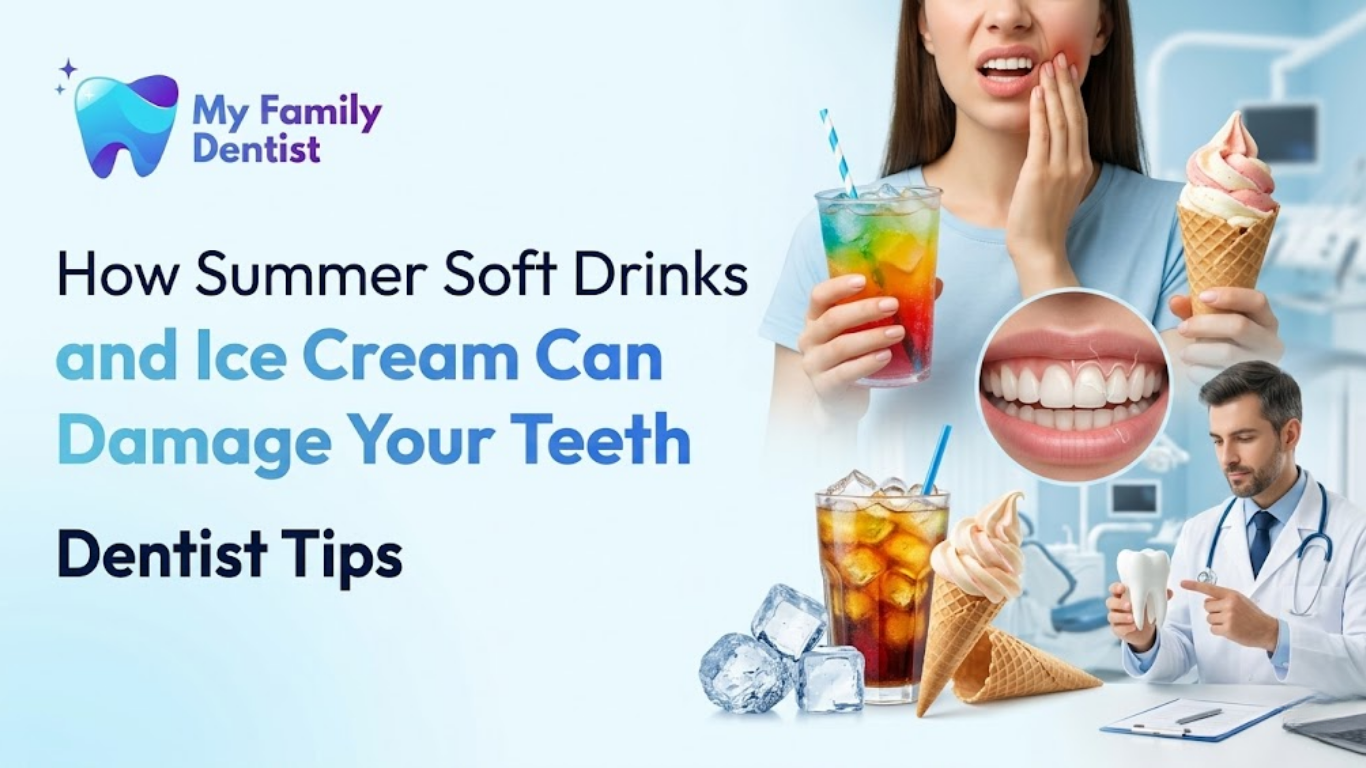
Summer often brings an increase in cold beverages, soft drinks, ice cream, and frozen treats. While these foods and drinks can be refreshing during hot weather, frequent consumption may affect your oral health.
Understanding how summer soft drinks and ice cream damage teeth can help you make informed choices and reduce the risk of cavities, enamel erosion, and tooth sensitivity.
Why Summer Treats Can Affect Your Dental Health
Many popular summer foods contain high levels of sugar, acids, or both.
These ingredients can contribute to:
- Tooth decay
- Enamel erosion
- Increased tooth sensitivity
- Gum irritation
- Higher cavity risk
The effects often become more noticeable when sugary or acidic products are consumed frequently throughout the day.
How Soft Drinks Damage Tooth Enamel
Soft drinks are one of the most common contributors to enamel erosion.
The Role of Acid
Many carbonated beverages contain acids such as:
- Phosphoric acid
- Citric acid
- Carbonic acid
These acids can temporarily soften tooth enamel.
Repeated exposure may gradually wear down the protective outer layer of the teeth.
The Role of Sugar
Sugary soft drinks provide a food source for oral bacteria.
When bacteria break down sugar, they produce acids that can:
- Attack enamel
- Increase cavity risk
- Promote plaque formation
The combination of acid and sugar creates a higher risk environment for tooth decay.
Can Sugar-Free Soft Drinks Damage Teeth?
Many people assume sugar-free drinks are completely safe for teeth.
Although sugar-free beverages may reduce cavity risk compared with sugary drinks, many still contain acids that can contribute to enamel erosion.
Therefore, sugar-free does not necessarily mean tooth-friendly.
How Ice Cream Can Affect Dental Health
Ice cream is a popular summer treat, but it may affect teeth in several ways.
Sugar Content
Many ice creams contain significant amounts of sugar.
Frequent consumption may contribute to:
- Plaque buildup
- Tooth decay
- Increased cavity risk
Cold Temperature and Tooth Sensitivity
Some people experience sharp discomfort when eating ice cream.
This may occur when:
- Enamel becomes thinner
- Tooth roots become exposed
- Existing sensitivity is present
The cold temperature can trigger temporary pain in sensitive teeth.
Why Do Teeth Hurt After Eating Ice Cream?
Tooth sensitivity often develops when the protective layers of the tooth become compromised.
Common causes include:
- Enamel wear
- Gum recession
- Tooth decay
- Cracked teeth
- Worn fillings
If sensitivity occurs frequently, a dental evaluation may help identify the underlying cause.
The Link Between Sugar and Cavities
Cavities develop through a process involving bacteria, sugar, and acid production.
How Tooth Decay Develops
- Sugary foods and drinks are consumed.
- Oral bacteria feed on the sugars.
- Acids are produced.
- Enamel minerals begin to dissolve.
- Cavities may eventually form.
Frequent snacking or sipping sugary beverages throughout the day may increase this risk.
Common Signs of Summer-Related Tooth Damage
Watch for symptoms such as:
- Tooth sensitivity to cold foods
- Pain while eating ice cream
- Visible tooth discoloration
- White spots on teeth
- Frequent cavities
- Rough tooth surfaces
- Increased plaque buildup
- Gum irritation
These symptoms do not always indicate serious disease but may warrant professional evaluation.
Dentist Tips to Protect Your Teeth During Summer
Choose Water More Often
Water helps:
- Rinse away food particles
- Support saliva production
- Reduce acid exposure
Plain water remains one of the most tooth-friendly beverage choices.
Avoid Constant Sipping
Sipping soft drinks over long periods repeatedly exposes teeth to acid and sugar.
Instead:
- Limit exposure time
- Finish beverages during meals when possible
Use a Straw
Drinking through a straw may reduce direct contact between acidic beverages and teeth.
Rinse With Water Afterwards
After consuming:
- Soft drinks
- Sports drinks
- Ice cream
- Frozen desserts
Rinse your mouth with water to help reduce residual acids and sugars.
Maintain Good Oral Hygiene
Daily oral hygiene remains essential.
Recommendations include:
- Brushing twice daily
- Flossing regularly
- Using fluoride toothpaste
- Replacing worn toothbrushes
Schedule Routine Dental Checkups
Regular examinations help identify:
- Early cavities
- Enamel erosion
- Gum problems
- Tooth sensitivity causes
Preventive care may help address issues before they become more complex.
Better Alternatives to Sugary Summer Drinks
Consider options such as:
- Plain water
- Infused water without added sugar
- Milk
- Unsweetened beverages
- Fresh fruits instead of sugary frozen treats
Healthier beverage choices may reduce exposure to sugar and acids.
Summer Dental Care for Children
Children often consume more:
- Ice cream
- Popsicles
- Soft drinks
- Sweetened beverages
Parents can help by:
- Encouraging water consumption
- Limiting sugary snacks
- Supervising brushing habits
- Scheduling regular dental checkups
Good habits established early may support long-term oral health.
When Should You Visit a Dentist?
Consider scheduling a dental examination if you experience:
- Persistent tooth sensitivity
- Pain when eating cold foods
- Frequent cavities
- Visible enamel wear
- Tooth discoloration
- Ongoing discomfort after consuming cold beverages
A dentist can determine whether symptoms are related to enamel erosion, cavities, gum recession, or another oral health concern.
Conclusion
Summer treats can be enjoyable, but frequent exposure to sugary and acidic foods may affect tooth enamel and increase the risk of cavities and sensitivity. Simple preventive habits such as choosing water more often, maintaining good oral hygiene, and attending regular dental checkups can help support oral health throughout the season.
If you are experiencing persistent tooth sensitivity, discomfort, or concerns about enamel wear, consider scheduling a dental consultation to discuss appropriate preventive and treatment options.
Medical Disclaimer:
This article is intended for educational purposes only and should not replace professional dental advice, diagnosis, or treatment. Consult a qualified dentist regarding concerns about your oral health.
FAQs
How do soft drinks damage teeth?
Soft drinks may contribute to tooth damage through their acid content and, in many cases, high sugar levels. Both can increase the risk of enamel erosion and cavities.
Can ice cream cause tooth sensitivity?
Yes. Ice cream may trigger discomfort in people with sensitive teeth, enamel wear, gum recession, or untreated dental conditions.
Are sugar-free soft drinks safe for teeth?
Sugar-free drinks may reduce cavity risk compared with sugary beverages, but many still contain acids that can contribute to enamel erosion.
How can I protect my teeth during summer?
Maintaining good oral hygiene, drinking more water, limiting sugary beverages, and attending regular dental checkups can help protect oral health.
Why do my teeth hurt after drinking cold beverages?
Cold sensitivity may occur due to enamel wear, gum recession, tooth decay, or exposed tooth roots.
When should I see a dentist for tooth sensitivity?
If sensitivity is persistent, worsening, or interferes with eating and drinking, a dental examination is recommended.