
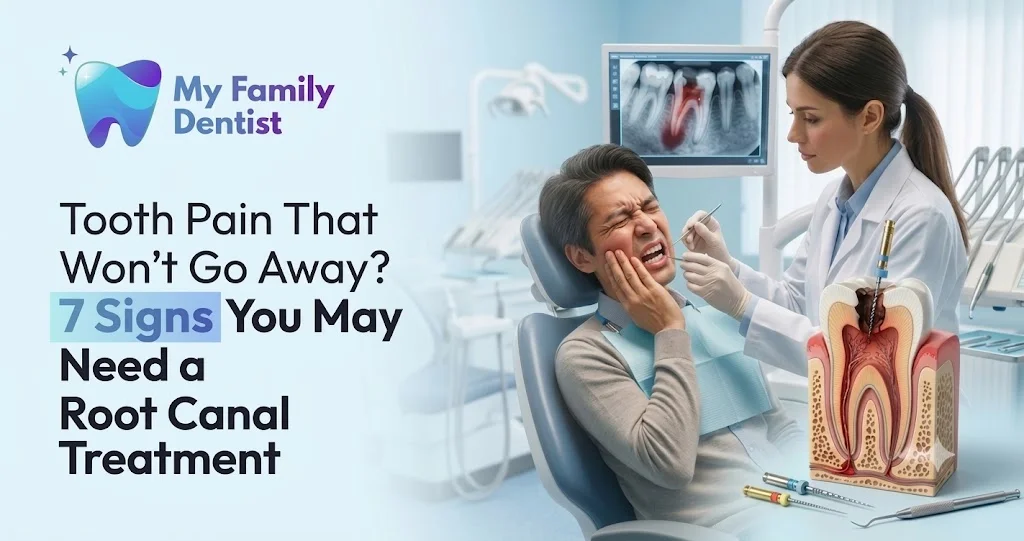
Persistent tooth pain should never be ignored. While some dental discomfort may resolve after treating a cavity or reducing sensitivity, tooth pain that won’t go away can sometimes indicate damage or infection within the tooth’s pulp. Understanding the signs you may need a root canal treatment can help you seek timely dental care and potentially preserve your natural tooth.
This guide explains the common symptoms, causes, diagnosis, treatment process, and when to consult a dentist if you are experiencing ongoing dental pain.
Why Persistent Tooth Pain Should Never Be Ignored
A tooth contains a soft inner tissue called the pulp, which houses nerves and blood vessels. Deep decay, trauma, repeated dental procedures, or cracks can inflame or infect this tissue.
When inflammation becomes irreversible or infection develops, symptoms often worsen without professional treatment. Ignoring these warning signs may increase the risk of abscess formation or tooth loss.
What Causes Tooth Pain That Won’t Go Away?
Several dental conditions may cause ongoing discomfort, including:
- Deep cavities reaching the pulp
- Cracked or fractured teeth
- Dental trauma
- Untreated tooth infections
- Large fillings close to the nerve
- Gum disease affecting surrounding tissues
- Repeated dental procedures on the same tooth
Not every persistent toothache requires a root canal, but evaluation by a qualified dentist is important to identify the underlying cause.
7 Signs You May Need a Root Canal Treatment
1. Persistent Tooth Pain
One of the most common root canal symptoms is pain that continues for days or weeks.
The discomfort may:
- Occur spontaneously
- Wake you during sleep
- Radiate toward the jaw or ear
- Fluctuate but repeatedly return
Pain alone does not confirm the need for root canal therapy, but persistent symptoms warrant dental assessment.
2. Lingering Sensitivity to Hot or Cold
Brief sensitivity after consuming hot coffee or ice cream can be normal. However, pain that continues for several seconds or minutes after the stimulus is removed may indicate pulp damage.
Lingering thermal sensitivity is often associated with inflammation of the tooth nerve.
3. Pain When Chewing or Biting
Pain while applying pressure can suggest inflammation around the root tip or infection within the tooth.
Patients frequently report:
- Sharp pain while chewing
- Tenderness when biting
- Discomfort when releasing pressure
These symptoms should be evaluated promptly.
4. Swollen or Tender Gums Near One Tooth
Localized gum swelling may indicate infection spreading beyond the tooth.
Possible findings include:
- Tender gum tissue
- A small pimple-like bump (draining sinus tract)
- Redness around the affected tooth
- Mild facial swelling
Swelling should always be assessed by a dental professional.
5. Tooth Discoloration
A tooth becoming darker than neighboring teeth may suggest damage to its internal blood supply or pulp tissue.
Although discoloration has multiple causes, a grey or darkened tooth after trauma may indicate nerve injury requiring further evaluation.
6. Throbbing Tooth Pain or Dental Abscess Symptoms
Advanced infection may produce:
- Continuous throbbing pain
- Bad taste in the mouth
- Pus drainage
- Facial swelling
- Fever in severe cases
An abscess is a dental emergency that requires professional treatment.
7. Deep Decay with Ongoing Symptoms
Large untreated cavities can allow bacteria to reach the pulp chamber.
If severe decay is accompanied by spontaneous pain, prolonged sensitivity, or swelling, root canal treatment may be considered depending on clinical findings.
What Happens When a Tooth Nerve Becomes Infected?
The pulp sits at the center of each tooth and contains nerves, connective tissue, and blood vessels.
When bacteria enter through deep decay or cracks:
- Inflammation develops.
- Pressure builds inside the rigid tooth.
- Blood supply becomes compromised.
- The pulp may lose vitality.
- Infection can spread toward the root tip and surrounding bone.
This process explains why many patients experience increasing pain and tenderness over time.
Root Canal Symptoms vs. Temporary Tooth Sensitivity
| Temporary Sensitivity | Possible Root Canal Symptoms |
|---|---|
| Brief discomfort | Lingering pain after hot/cold |
| Improves quickly | Persistent tooth pain |
| No swelling | Gum swelling may occur |
| Mild sensitivity | Severe throbbing pain |
| Triggered occasionally | Pain may occur spontaneously |
Only a dentist can determine the actual cause through examination and testing.
How Dentists Diagnose Whether You Need a Root Canal
Diagnosis typically combines multiple methods rather than symptoms alone.
A dentist may perform:
- Detailed medical and dental history
- Clinical examination
- Percussion and bite tests
- Pulp vitality testing
- Cold testing
- Digital dental X-rays
- Additional imaging when indicated
These assessments help distinguish between reversible inflammation, irreversible pulp damage, fractures, gum disease, or other conditions.
Can a Root Canal Save Your Natural Tooth?
In many cases, root canal treatment aims to remove infected pulp, disinfect the canals, and seal the tooth while preserving its structure.
Saving the natural tooth may:
- Maintain chewing function
- Help preserve jaw alignment
- Avoid unnecessary extraction
- Support long-term oral function when appropriate restoration is completed
However, treatment recommendations depend on the extent of damage and overall prognosis.
What Happens If Root Canal Treatment Is Delayed?
Delaying care may allow infection or inflammation to progress.
Potential complications include:
- Increased pain
- Dental abscess formation
- Spread of infection into surrounding tissues
- Bone loss around the tooth root
- Tooth fracture
- Eventual need for extraction if preservation is no longer feasible
The exact outcome varies from patient to patient.
What to Expect During Root Canal Treatment
Modern root canal therapy is performed using local anesthesia and contemporary dental techniques.
Typical steps include:
- Clinical examination and imaging
- Administration of local anesthesia
- Isolation of the tooth
- Removal of infected pulp tissue
- Cleaning and shaping of root canals
- Disinfection of the canal system
- Sealing the canals
- Placement of a permanent restoration, often including a crown when indicated
The number of appointments depends on tooth complexity and clinical circumstances.
Is Root Canal Treatment Painful?
Many people worry that root canal treatment itself is painful. In reality, modern anesthesia and techniques are designed to keep patients comfortable during the procedure.
Most individuals describe the experience as similar to receiving a dental filling. Mild soreness afterward may occur but is often manageable with guidance from the treating dentist.
Root Canal vs. Filling: What’s the Difference?
A filling repairs damage limited to the outer tooth structure.
A root canal is considered when the pulp inside the tooth has irreversible inflammation or infection that cannot recover on its own.
Your dentist determines the appropriate treatment based on examination findings and diagnostic tests.
Conclusion
Persistent tooth pain, prolonged sensitivity, swelling, or discomfort while chewing should not be dismissed. These symptoms may indicate inflammation or infection affecting the tooth pulp, but only a dental examination can confirm whether root canal treatment is necessary.
If you experience ongoing dental pain or notice changes such as gum swelling or tooth discoloration, arranging a professional evaluation can help identify the cause and discuss appropriate treatment options tailored to your situation.
Medical Disclaimer: This article is for educational purposes only and does not replace professional dental evaluation, diagnosis, or treatment.
Frequently Asked Questions
1. How do I know if I need a root canal?
Persistent pain, lingering hot or cold sensitivity, swelling, pain while biting, or signs of pulp infection may indicate the need for further evaluation. A dentist confirms the diagnosis through examination and imaging.
2. Does constant tooth pain always mean I need a root canal?
No. Tooth pain may result from cavities, gum disease, cracked teeth, sinus issues, or other conditions. Proper diagnosis is essential.
3. Can sensitivity to hot and cold indicate nerve damage?
It can. Lingering sensitivity after the stimulus is removed may suggest pulp inflammation, although other causes are also possible.
4. Is every infected tooth treated with a root canal?
Not always. Depending on the condition of the tooth and surrounding structures, treatment options may include fillings, periodontal therapy, root canal treatment, or extraction.
5. What happens if I avoid a recommended root canal?
Untreated pulp infection may progress, potentially leading to abscess formation, worsening pain, bone involvement, or eventual tooth loss.
6. Can a root canal save my natural tooth?
In many appropriate cases, root canal treatment aims to preserve the natural tooth by removing infected tissue and sealing the canals.