Bad breath persists even after brushing for many people, even when they follow a regular oral hygiene routine. If you find yourself wondering, “Why does my breath smell bad even after brushing?”, the answer may involve underlying dental issues rather than poor brushing habits alone.
Persistent bad breath, also known as chronic halitosis, can affect confidence, social interactions, and overall oral health. In many cases, the root cause is hidden beneath the surface and requires professional dental evaluation and treatment.
This article explains the hidden dental causes of bad breath, why brushing may not be enough, and when to seek professional care.
Why Bad Breath Can Persist Even After Brushing
Brushing your teeth removes food particles and plaque from accessible tooth surfaces. However, brushing alone cannot always eliminate the bacteria, plaque deposits, and dental conditions responsible for chronic mouth odor.
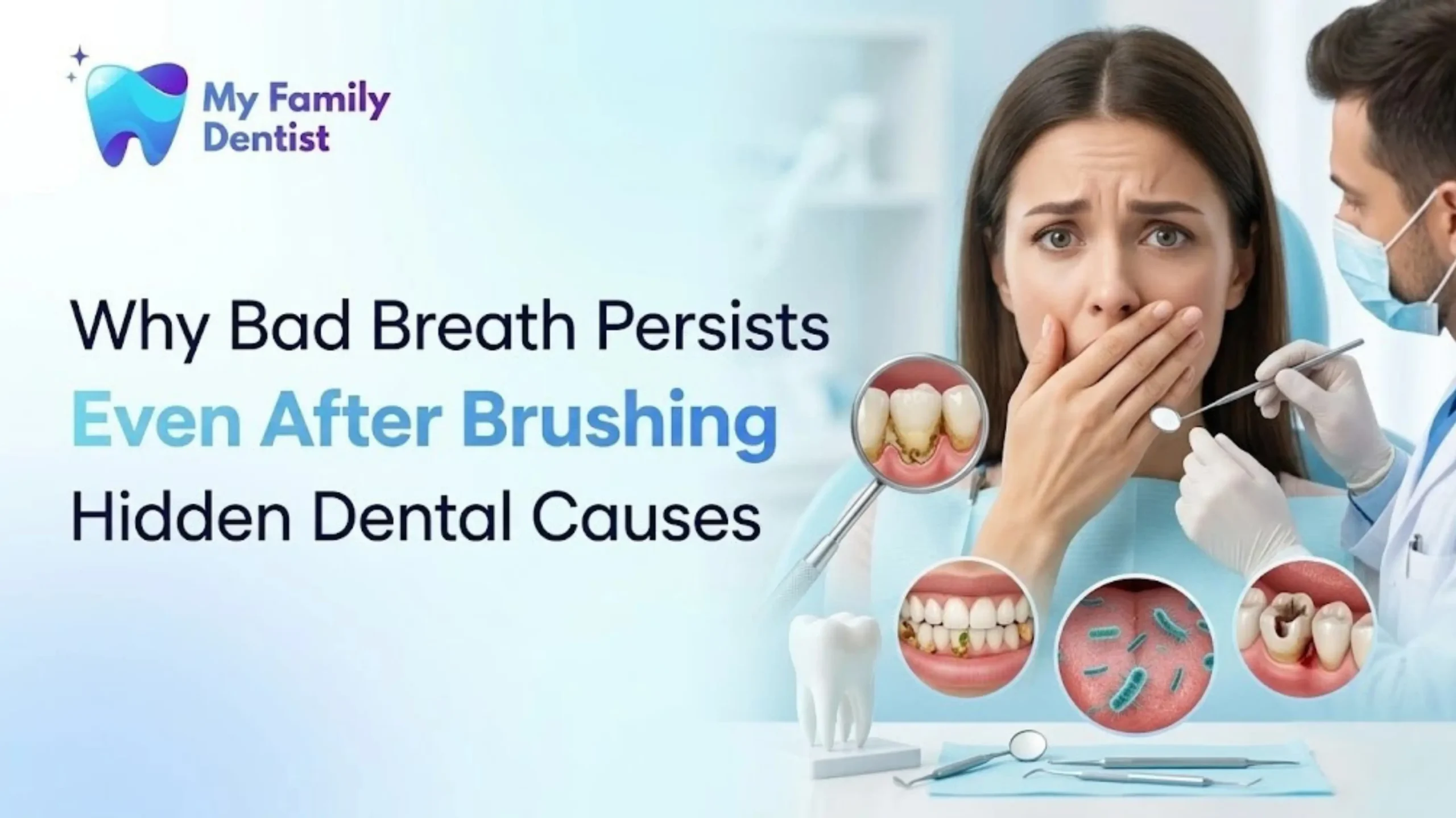
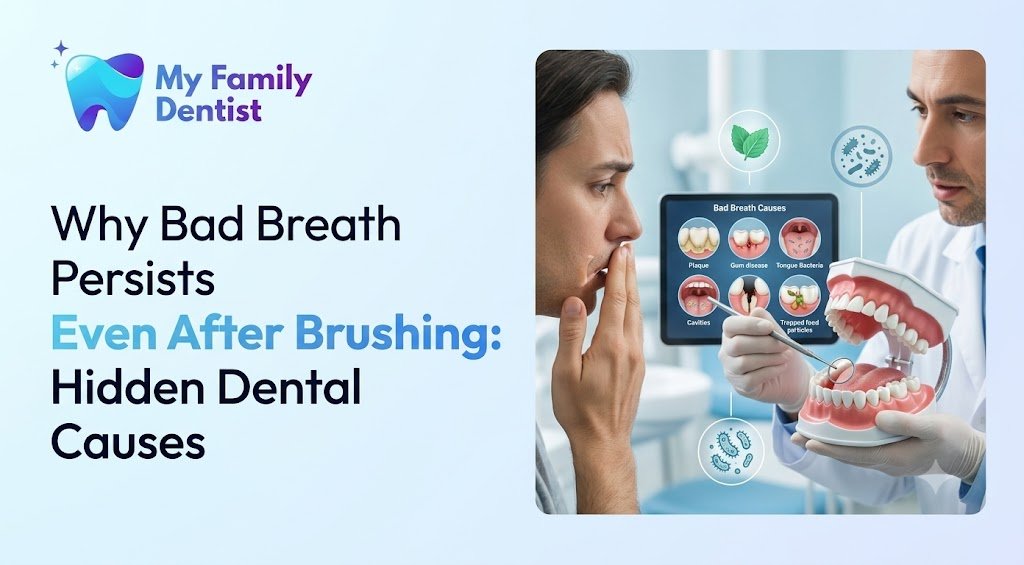
Many odor-causing bacteria thrive in areas that are difficult to clean, including:
- Between teeth
- Along the gumline
- Deep gum pockets
- The tongue surface
- Untreated cavities
- Dental restorations with trapped debris
As a result, bad breath after brushing teeth may continue despite maintaining daily oral hygiene habits.
Hidden Dental Causes of Chronic Bad Breath
1. Gum Disease (Periodontal Disease)
One of the most common hidden dental causes of bad breath is gum disease.
When plaque accumulates around the gums, bacteria multiply and release sulfur-containing compounds that produce unpleasant odors.
Common signs include:
- Bad breath and bleeding gums
- Swollen gums
- Gum tenderness
- Gum recession
- Loose teeth in advanced stages
Why Gum Disease Causes Bad Breath
Bacteria living beneath the gumline produce volatile sulfur compounds (VSCs), which are responsible for foul-smelling breath.
Even diligent brushing may not reach these deep bacterial deposits.
2. Plaque and Tartar Buildup
Plaque is a sticky bacterial film that develops on teeth daily.
When plaque is not removed completely, it hardens into tartar (calculus).
Tartar:
- Harbors bacteria
- Irritates the gums
- Contributes to chronic halitosis
- Cannot be removed with regular brushing
This is why brushing doesn’t fix bad breath in many individuals.
Professional scaling and polishing are often necessary to remove hardened deposits.
3. Tooth Decay and Hidden Cavities
Can cavities make your breath smell bad?
Yes.
Cavities create small openings where food particles and bacteria become trapped.
As bacteria break down these trapped materials, unpleasant odors develop.
Signs of tooth decay may include:
- Tooth sensitivity
- Tooth pain
- Visible holes in teeth
- Food trapping
- Persistent bad taste in the mouth
Tooth decay causing bad breath is particularly common when cavities remain untreated for extended periods.
4. Dental Infections and Abscesses
A dental infection can create a strong, persistent odor.
When bacteria infect the pulp of a tooth or surrounding tissues, pus may develop and produce a noticeable foul smell.
Warning signs include:
- Severe tooth pain
- Swelling
- Facial tenderness
- Bad taste in mouth and bad breath
- Sensitivity to temperature
Dental infections require prompt professional treatment.
5. Tongue Bacteria Accumulation
Does tongue bacteria cause bad breath?
Absolutely.
The tongue contains tiny crevices where bacteria, dead cells, and food debris accumulate.
These bacteria release sulfur compounds that contribute significantly to mouth odor.
Many people brush their teeth thoroughly but neglect tongue cleaning, allowing odor-causing bacteria to remain.
Daily tongue cleaning may help reduce bacterial buildup.
6. Poorly Maintained Dental Restorations
Old crowns, bridges, fillings, or dental appliances can sometimes trap food and bacteria.
This may lead to:
- Persistent bad breath despite brushing and flossing
- Localized gum inflammation
- Increased bacterial growth
Regular dental examinations help identify restoration-related issues.
The Role of Oral Bacteria in Bad Breath
The mouth naturally contains hundreds of bacterial species.
Certain bacteria break down proteins found in:
- Food particles
- Saliva
- Dead cells
During this process, they release sulfur-containing gases such as:
- Hydrogen sulfide
- Methyl mercaptan
These gases are primarily responsible for chronic halitosis symptoms.
When bacterial populations increase due to gum disease, plaque buildup, or tooth decay, breath odor often worsens.
Can Dry Mouth Lead to Persistent Bad Breath?
Yes.
Saliva plays an important role in:
- Washing away food particles
- Neutralizing acids
- Controlling bacterial growth
When saliva production decreases, bacteria can multiply more easily.
Common causes include:
- Dehydration
- Certain medications
- Mouth breathing
- Smoking
- Medical conditions affecting salivary glands
Bad breath and dry mouth often occur together.
Bad Breath from Cavities vs Gum Disease
Bad Breath from Cavities
Typically associated with:
- Food trapping
- Tooth sensitivity
- Localized odor
- Visible tooth damage
Bad Breath from Gum Disease
Often associated with:
- Bleeding gums
- Gum swelling
- Persistent mouth odor
- Deep periodontal pockets
A dental examination helps determine the exact cause.
How Dentists Diagnose Chronic Halitosis
Many patients ask, “How do dentists diagnose halitosis?”
Diagnosis may involve:
Clinical Oral Examination
The dentist checks for:
- Cavities
- Gum disease
- Plaque accumulation
- Tartar deposits
- Oral infections
Periodontal Assessment
Evaluation of gum health includes measuring pocket depths and checking for signs of periodontal disease.
Review of Oral Hygiene Habits
Your dentist may assess:
- Brushing technique
- Flossing habits
- Tongue cleaning practices
Evaluation of Other Contributing Factors
If necessary, additional medical causes may be considered when oral causes are ruled out.
Professional Treatments for Persistent Bad Breath
Treatment depends on the underlying cause.
Professional Dental Cleaning
Scaling and polishing remove:
- Plaque
- Tartar
- Bacterial deposits
This is often one of the most effective treatments when plaque buildup contributes to halitosis.
Gum Disease Treatment
Management may include:
- Deep cleaning procedures
- Periodontal therapy
- Ongoing maintenance visits
Cavity Treatment
Removing decay and restoring damaged teeth can reduce bacterial accumulation and odor production.
Treatment of Dental Infections
Depending on the diagnosis, treatment may include:
- Root canal therapy
- Drainage procedures
- Tooth extraction when necessary
Oral Hygiene Guidance
Dentists may recommend:
- Proper brushing techniques
- Daily flossing
- Tongue cleaning
- Appropriate mouth rinses
Daily Habits That Help Maintain Fresh Breath
Good oral care habits can help reduce bacterial growth.
Recommended practices include:
- Brush twice daily
- Clean the tongue every day
- Floss daily
- Stay hydrated
- Replace toothbrushes regularly
- Attend routine dental checkups
- Schedule professional cleanings as advised
These measures support long-term oral health but may not fully resolve bad breath if an underlying dental problem exists.
When Should You See a Dentist for Bad Breath?
Consider scheduling a dental evaluation if:
- Bad breath lasts for several weeks
- Brushing and flossing do not help
- You have bleeding gums
- You notice tooth pain
- You experience gum swelling
- You have a persistent bad taste in your mouth
- Family members or friends frequently mention mouth odor
Persistent bad breath can sometimes indicate gum disease, cavities, or dental infections that require professional attention.
Risks and Limitations
Not all cases of bad breath originate in the mouth.
In some situations, chronic halitosis may be associated with:
- Sinus conditions
- Tonsil-related issues
- Gastrointestinal disorders
- Certain systemic medical conditions
A dental evaluation can help determine whether the source is dental or whether referral to another healthcare professional may be appropriate.
Medical Disclaimer
This article is intended for educational purposes only and should not be considered a substitute for professional dental diagnosis, treatment, or individualized medical advice. If you have persistent bad breath, dental pain, gum bleeding, or other oral health concerns, consult a qualified dental professional for appropriate evaluation and care.
Conclusion
Persistent bad breath despite brushing is often linked to hidden dental causes such as gum disease, plaque buildup, tartar accumulation, cavities, tongue bacteria, or dental infections. While daily oral hygiene is essential, it may not remove deeper bacterial deposits or address underlying dental conditions.
If bad breath continues despite consistent brushing and flossing, a professional dental assessment can help identify the cause and recommend appropriate treatment options tailored to your oral health needs.
FAQs
1. Why does bad breath persist even after brushing?
Bad breath may persist due to gum disease, plaque buildup, tartar, cavities, tongue bacteria, dental infections, or dry mouth. Brushing alone may not remove all odor-causing bacteria.
2. Can gum disease cause chronic bad breath?
Yes. Gum disease is one of the most common causes of persistent bad breath because bacteria accumulate beneath the gumline and release foul-smelling compounds.
3. Can cavities make your breath smell bad?
Yes. Cavities can trap food particles and bacteria, leading to unpleasant odors and chronic mouth odor.
4. Does plaque buildup contribute to bad breath?
Yes. Plaque contains bacteria that produce sulfur compounds responsible for bad breath. If plaque hardens into tartar, professional cleaning may be required.
5. How do dentists treat chronic halitosis?
Treatment depends on the cause and may include professional cleaning, gum disease treatment, cavity restoration, infection management, and oral hygiene guidance.
6. Does professional teeth cleaning improve bad breath?
Professional cleaning removes plaque, tartar, and bacterial deposits that may contribute to chronic bad breath.
7. Can tongue bacteria cause bad breath?
Yes. The tongue can harbor large numbers of odor-producing bacteria. Regular tongue cleaning may help reduce mouth odor.
8. When should I see a dentist for bad breath?
You should consider a dental evaluation if bad breath persists for several weeks despite proper brushing, flossing, and oral hygiene practices.