A well-aligned smile is about more than appearance. Properly aligned teeth can make brushing and flossing easier, improve chewing, and support long-term oral health. If you’re exploring options to straighten your teeth, you’ve likely come across the debate between braces vs clear aligners.
Both treatments are effective for correcting many orthodontic problems, but they work differently and may be suitable for different patients. The right choice depends on factors such as the complexity of tooth movement, bite alignment, age, lifestyle, and your ability to follow treatment instructions.
This guide explains the differences between traditional braces and clear aligners, helping you understand which option may be more appropriate for your individual needs.
Why Straightening Teeth Is Important
Crooked or misaligned teeth are not only a cosmetic concern. Poor alignment can contribute to several oral health issues, including:
- Difficulty cleaning between teeth
- Increased plaque accumulation
- Higher risk of cavities
- Gum disease
- Uneven tooth wear
- Jaw discomfort in some individuals
- Difficulty chewing certain foods
Orthodontic treatment aims to improve both function and aesthetics by gradually moving teeth into healthier positions.
What Are Traditional Braces?
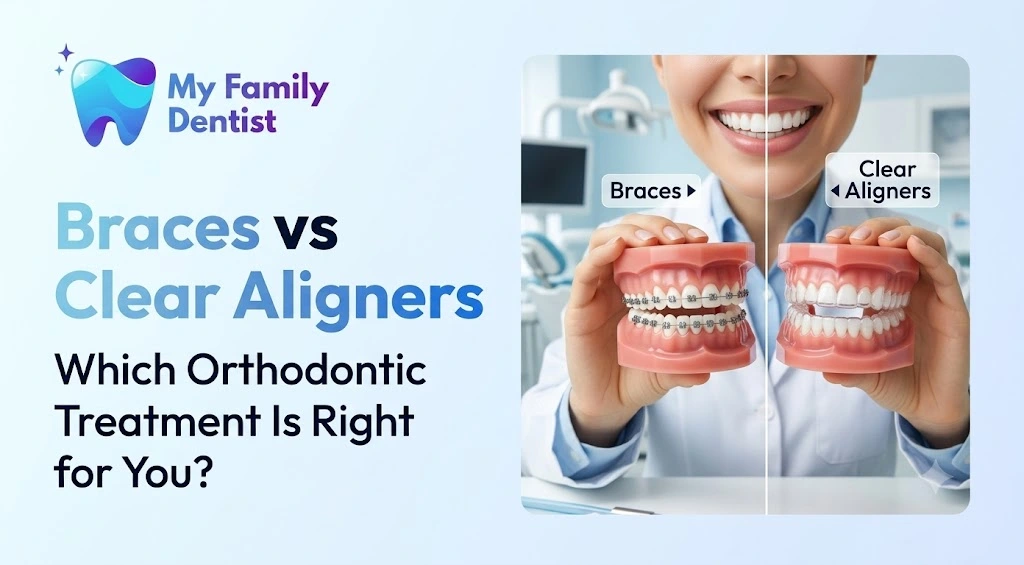
Traditional braces use metal or ceramic brackets attached to the teeth and connected by orthodontic wires. These wires apply gentle, controlled forces that gradually move teeth into their desired positions.
Modern braces are much smaller and more comfortable than earlier designs and remain one of the most reliable methods for correcting a wide range of orthodontic problems.
Braces are commonly recommended for:
- Crowded teeth
- Crooked teeth
- Large gaps between teeth
- Overbite
- Underbite
- Crossbite
- Deep bite
- Complex tooth movement
Since braces remain fixed throughout treatment, they continue working without depending on patient compliance.
What Are Clear Aligners?
Clear aligners are transparent, removable trays that gradually move teeth through a planned sequence of small adjustments.
Each aligner is typically worn for one to two weeks before progressing to the next set.
Treatment usually begins with:
- Digital photographs
- Dental examination
- Digital impressions or 3D scans
- Computerized treatment planning
Because aligners are removable, patients can take them out while eating, brushing, and flossing.
To achieve the planned results, aligners generally need to be worn for 20–22 hours per day.
Braces vs Clear Aligners: Key Differences
| Feature | Traditional Braces | Clear Aligners |
|---|---|---|
| Appearance | Visible brackets and wires | Nearly invisible trays |
| Removable | No | Yes |
| Oral Hygiene | More challenging | Easier |
| Eating | Certain foods should be avoided | Remove before eating |
| Compliance | Not dependent on patient | Requires consistent wear |
| Suitable for Complex Cases | Often yes | Depends on case complexity |
| Clinic Visits | Regular adjustments | Periodic monitoring |
Both treatments can successfully straighten teeth when recommended appropriately by an orthodontist.
Treatment Effectiveness
One of the most common questions patients ask is:
“Are clear aligners as effective as braces?”
The answer depends on the orthodontic problem being treated.
When Braces May Be Recommended
Braces are often preferred for:
- Severe crowding
- Significant bite correction
- Rotated teeth
- Teeth requiring complex movement
- Certain jaw alignment problems
Because braces remain attached to the teeth, they provide continuous orthodontic forces that are less dependent on patient cooperation.
When Clear Aligners May Be Suitable
Clear aligners can be effective for many mild to moderate orthodontic concerns, including:
- Mild crowding
- Small gaps
- Minor bite corrections
- Relapse after previous orthodontic treatment
- Cosmetic alignment improvements
Advances in aligner technology have expanded the range of cases they can treat, but not every orthodontic problem is suitable for aligners alone.
A thorough clinical examination and diagnostic records help determine the most appropriate option.
Comfort During Treatment
Both braces and aligners apply gentle pressure to move teeth, so some temporary discomfort is common after adjustments or when changing to a new aligner.
Braces
Patients may experience:
- Mild soreness after wire adjustments
- Temporary irritation of the cheeks or lips
- Occasional discomfort from brackets
Orthodontic wax often helps reduce irritation while the mouth adapts.
Clear Aligners
Patients commonly report:
- Mild pressure during the first few days of a new aligner
- Smooth edges that are generally comfortable
- Less irritation to cheeks and lips compared with traditional braces
Individual experiences vary, and discomfort usually decreases as treatment progresses.
Appearance and Lifestyle Considerations
Appearance is one of the biggest reasons adults and working professionals consider clear aligners.
Braces
Advantages:
- Effective for many orthodontic conditions
- No need to remember wearing them
- Suitable for younger patients who may forget removable appliances
Limitations:
- More noticeable during conversations and photographs
- Food restrictions may be necessary
Clear Aligners
Advantages:
- Nearly invisible
- Removable for meals
- Easier brushing and flossing
- No dietary restrictions while aligners are removed
Limitations:
- Must be worn consistently
- Misplacing aligners may delay treatment
- Success depends on patient compliance
Oral Hygiene During Treatment
Maintaining good oral hygiene is essential regardless of the treatment method.
With Braces
Patients should:
- Brush after meals
- Clean carefully around brackets
- Use interdental brushes where recommended
- Floss using orthodontic floss aids
Food trapped around brackets may increase the risk of plaque buildup if oral hygiene is not maintained.
With Clear Aligners
Since aligners are removable:
- Brushing is generally easier
- Flossing remains straightforward
- Aligners should be cleaned regularly
- Teeth should be brushed before reinserting aligners whenever possible
Good oral hygiene helps reduce the risk of cavities and gum problems throughout orthodontic treatment.
Treatment Duration
Treatment time varies based on:
- Severity of misalignment
- Bite correction required
- Patient age
- Treatment goals
- Compliance with instructions
Many orthodontic treatments are completed within 12–24 months, although some cases may require shorter or longer treatment.
Patients wearing clear aligners consistently as advised are more likely to stay on schedule.
How Does an Orthodontist Decide?
Choosing between braces and clear aligners is not based on appearance alone.
An orthodontist considers several factors, including:
- Tooth alignment
- Bite relationship
- Jaw position
- Amount of tooth movement needed
- Bone and gum health
- Age
- Lifestyle
- Ability to wear aligners for the recommended duration
- Patient expectations
Digital scans, photographs, X-rays, and a clinical examination help develop an individualized treatment plan rather than a one-size-fits-all recommendation.
Medical Disclaimer
This article is intended for educational purposes only and should not replace professional dental or orthodontic advice. Treatment recommendations vary based on individual clinical findings. Always consult a qualified orthodontist for a comprehensive assessment before deciding between braces and clear aligners.
Conclusion
Both braces and clear aligners are effective orthodontic treatments, but each has distinct advantages and limitations. While braces are often preferred for complex tooth and bite corrections, clear aligners may be an excellent choice for many patients seeking a discreet and removable option.
The most appropriate treatment depends on your oral health, the complexity of your orthodontic condition, and your ability to follow the recommended treatment plan. A detailed orthodontic evaluation can help determine which approach best suits your needs and long-term oral health goals.
Frequently Asked Questions
1. What is the difference between braces and clear aligners?
Traditional braces use brackets and wires fixed to the teeth to move them into the correct position. Clear aligners are removable, transparent trays that gradually shift teeth using a series of custom-made aligners. Both are effective, but the best option depends on the complexity of the orthodontic problem and individual treatment goals.
2. Which is better, braces or clear aligners?
Neither treatment is universally better. Braces are often recommended for complex bite and alignment problems, while clear aligners may be suitable for many mild to moderate cases. An orthodontist can recommend the most appropriate treatment after a detailed examination.
3. Are clear aligners as effective as braces?
Clear aligners can effectively treat many orthodontic concerns when worn as directed. However, severe crowding, complex bite issues, or significant tooth movement may be better managed with traditional braces.
4. Which treatment is faster?
Treatment duration depends on the severity of the orthodontic problem, the amount of tooth movement required, and patient compliance. Many treatments are completed within 12–24 months, although individual timelines vary.
5. Can adults choose braces instead of clear aligners?
Yes. Adults can be treated successfully with either braces or clear aligners. The decision depends on clinical findings, lifestyle preferences, and treatment objectives rather than age alone.
6. Are clear aligners more comfortable than braces?
Many patients find clear aligners more comfortable because they have smooth plastic surfaces without brackets or wires. However, both treatments may cause temporary pressure or soreness as teeth begin to move.
7. Can clear aligners correct severe bite problems?
Some bite problems can be treated with clear aligners, but more complex orthodontic cases may require braces or a combination of treatments. A thorough orthodontic assessment is necessary to determine suitability.
8. Do braces or aligners require better oral hygiene?
Good oral hygiene is essential for both treatments. Braces require extra care around brackets and wires, while aligners should be removed for eating and cleaned regularly before reinsertion.
9. Will I need retainers after treatment?
Yes. Most patients require retainers after completing orthodontic treatment to help maintain the new tooth positions and reduce the risk of teeth shifting over time.
10. When should I consult an orthodontist?
If you have crooked teeth, crowding, spacing, bite problems, difficulty cleaning between teeth, or concerns about your smile, an orthodontic consultation can help determine whether treatment is appropriate.