
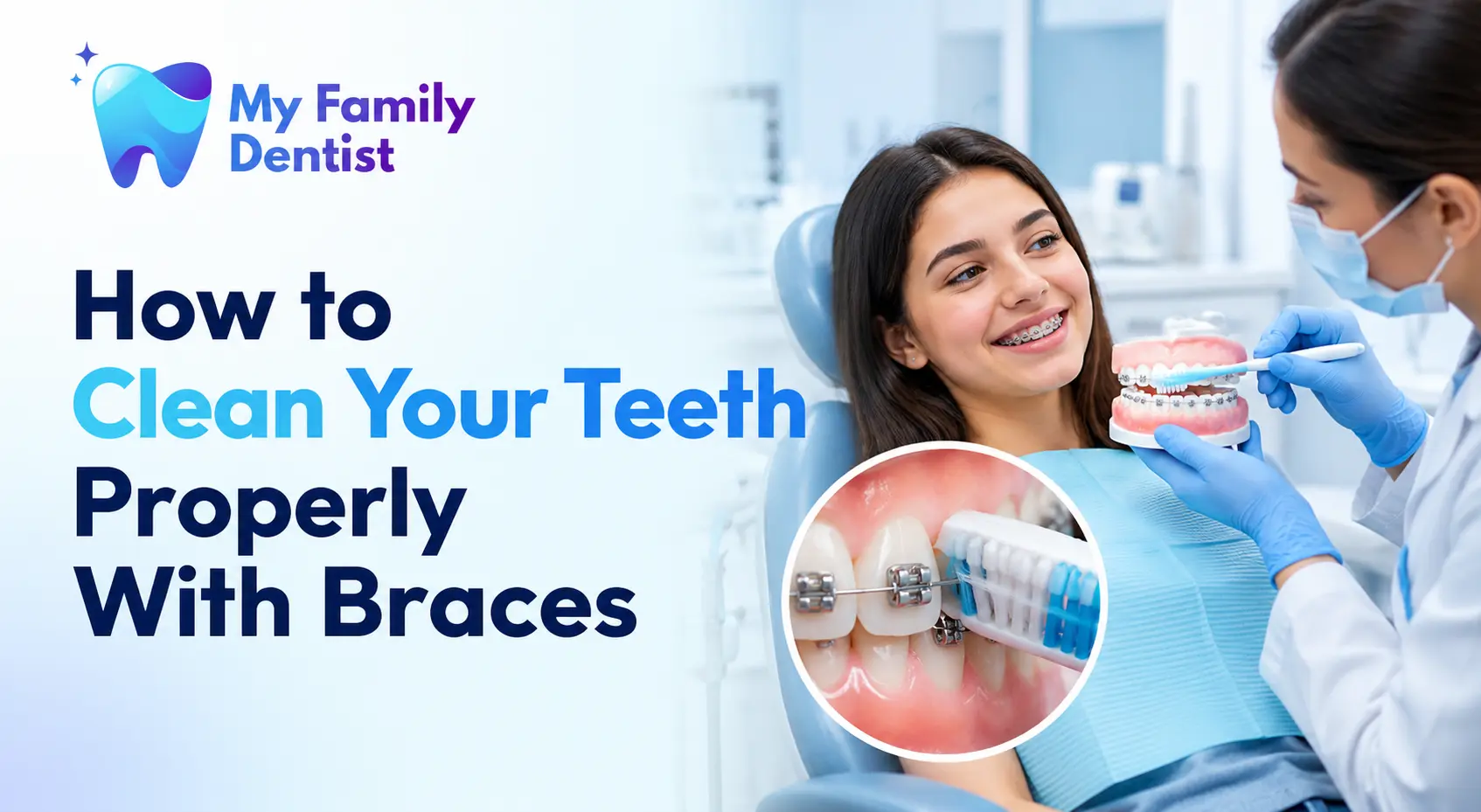
Braces straighten your teeth, but they also create dozens of tiny spots where food and plaque can hide. If these areas are not cleaned well, you may notice swollen gums, bad breath, or white marks on the teeth once the braces come off. The good news is that with the right technique and a few simple tools, keeping your teeth clean with braces is very manageable.
This guide explains how to clean teeth with braces step by step. If you are still exploring treatment, our overview of braces and aligners explains the options available.
Why Is Cleaning Harder With Braces?
Brackets and wires act like small shelves that trap food and plaque. A regular brushing pattern often misses the area around the brackets and along the gumline. Plaque left behind for long can lead to cavities, gum inflammation and white spot lesions, which are chalky marks on the enamel around where the brackets sat. Careful daily cleaning protects your teeth throughout treatment.
Tools You Need for Braces Care
Keep these basics at home and a small kit in your bag:
- Soft-bristled toothbrush (or an electric brush, if your dentist agrees)
- Fluoride toothpaste
- Interdental brushes (small “christmas tree” brushes) to clean around brackets and under wires
- Floss threaders or orthodontic floss to floss under the wire
- Water flosser, which can help flush out loose food
- Orthodontic wax to cover any bracket or wire that irritates your cheek
- Travel toothbrush kit for school, college or work
How to Brush Properly With Braces
Take your time. Brushing with braces should take at least three to four minutes, twice a day.
Step 1: Rinse First
Swish water around your mouth to loosen food particles before you start brushing.
Step 2: Brush Above the Brackets
Angle the bristles about 45 degrees towards the gumline and brush gently in small circles along the top of each bracket. Do this for every tooth, on both the upper and lower jaw.
Step 3: Brush Below the Brackets
Now tilt the brush upwards and clean the area below the brackets in the same gentle circles.
Step 4: Clean the Bracket Surface
Brush directly over the front of each bracket to remove plaque stuck on the surface.
Step 5: Brush the Inner and Chewing Surfaces
Do not skip the back of your teeth or the biting surfaces. Plaque builds up here too, even though braces are not visible on these sides.
Step 6: Clean Between the Teeth and Under the Wire
Use an interdental brush to clean around each bracket and under the archwire. Gently slide it back and forth without forcing it.
Step 7: Floss Daily
Thread the floss under the wire with a floss threader, then move it up and down the sides of each tooth, curving it gently below the gumline. It takes a few minutes, but it removes plaque that brushing cannot reach.
Step 8: Finish With a Final Rinse
Rinse well with water, or with a fluoride mouthwash if your dentist has recommended one. Then check your teeth in the mirror for any food or plaque still stuck on the brackets.
When Should You Brush?
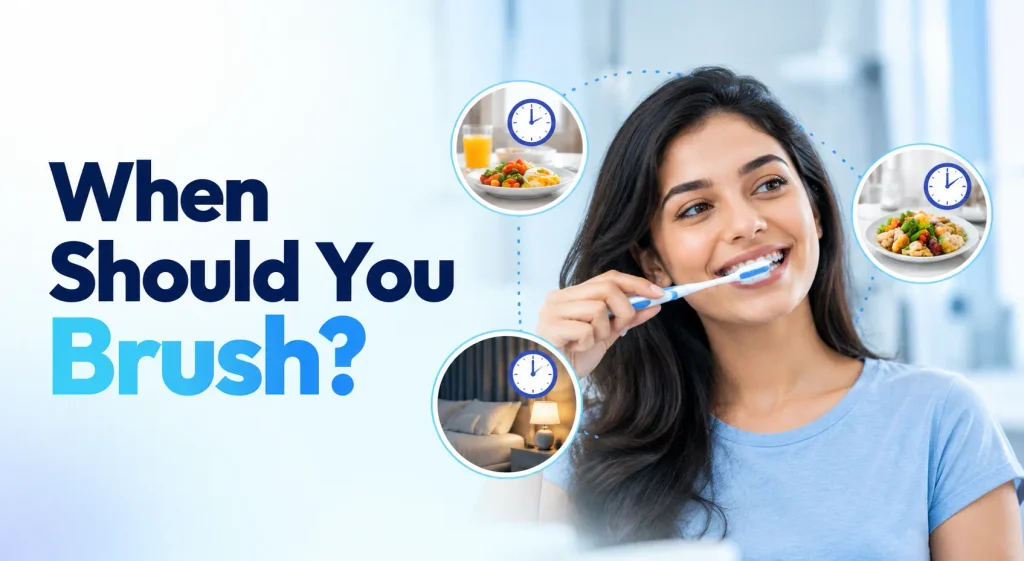
Brush after every meal if you can, and at the very least morning and night. If you are away from home, rinse thoroughly with water after eating and brush as soon as you get the chance. Nighttime cleaning matters most, since bacteria multiply faster while you sleep.
Common Mistakes to Avoid
- Brushing too hard, which can irritate the gums and wear the enamel
- Skipping floss because it feels time-consuming
- Using a worn-out brush. Replace it every two to three months, or sooner if the bristles spread out
- Rinsing only with water and not brushing after meals
- Ignoring bleeding gums instead of mentioning them to your dentist
Your food choices also affect how clean your teeth stay. Our guide on foods to avoid with braces explains which snacks are more likely to stick or damage your brackets.
Do You Still Need Professional Cleaning?
Yes. Even with perfect brushing, some plaque and tartar build up in places that are hard to reach at home. Regular professional teeth cleaning helps keep your gums healthy and lowers the risk of decay during treatment. Your dentist can also check whether your brushing technique needs adjusting.
Cleaning Tips for Clear Aligners
If you wear removable aligners, the routine is a little different. Take the aligners out before eating, brush and floss your teeth before putting them back in, and clean the aligners themselves gently with a soft brush and cool water. Avoid hot water, which can warp the trays. Your dentist will explain the exact care routine for your aligners.
Braces Care for Children and Teens
Younger patients often need extra reminders and a bit of supervision. Parents can help by setting a brushing routine, keeping a kit in the school bag and checking now and then that all surfaces are clean. Our paediatric dentistry team can guide families on healthy habits during orthodontic treatment.
What If Your Gums Bleed or Feel Sore?
Mild gum tenderness can happen in the first few days after braces are fitted or adjusted, and gentle brushing usually helps. However, if your gums keep bleeding, look puffy or feel painful for more than a few days, it may be a sign that plaque is building up. Please do not stop brushing. Instead, contact our clinic so we can check your gums and guide you.
Disclaimer: This article is for general education and is not a substitute for professional dental advice. Treatment plans and results vary from person to person, so please consult a qualified dentist for guidance.
Frequently Asked Questions
How long should I brush with braces?
Aim for at least three to four minutes, twice a day. Brushing after meals is even better.
Can I use an electric toothbrush with braces?
Many patients can. Soft-bristled electric brushes are often effective, but check with your dentist first about the best option for your case.
Is a water flosser enough on its own?
A water flosser is a helpful addition, but it does not replace brushing and flossing. Most dentists recommend using it along with them.
Can I use whitening toothpaste with braces?
It is better to avoid it during treatment. Whitening products can lighten only the exposed enamel, which may lead to uneven shade once the brackets come off. Ask your dentist before using one.
What if I forget to brush at school or work?
Rinse thoroughly with water after eating and brush as soon as you can. Keeping a travel kit with you makes this much easier.
Need Help With Your Braces Routine?
Every patient’s mouth is different, so your dentist can show you the brushing and flossing methods that suit your braces best. Meet our team of dentists at our Patia clinic in Bhubaneswar, or explore our full range of dental services to see how we can support your smile.