A root canal is meant to save a tooth that would otherwise be lost. In most cases it does exactly that, and the tooth can last for many years. But sometimes a treated tooth becomes painful or infected again months or even years later. If that has happened to you, you are not alone, and it is usually treatable.
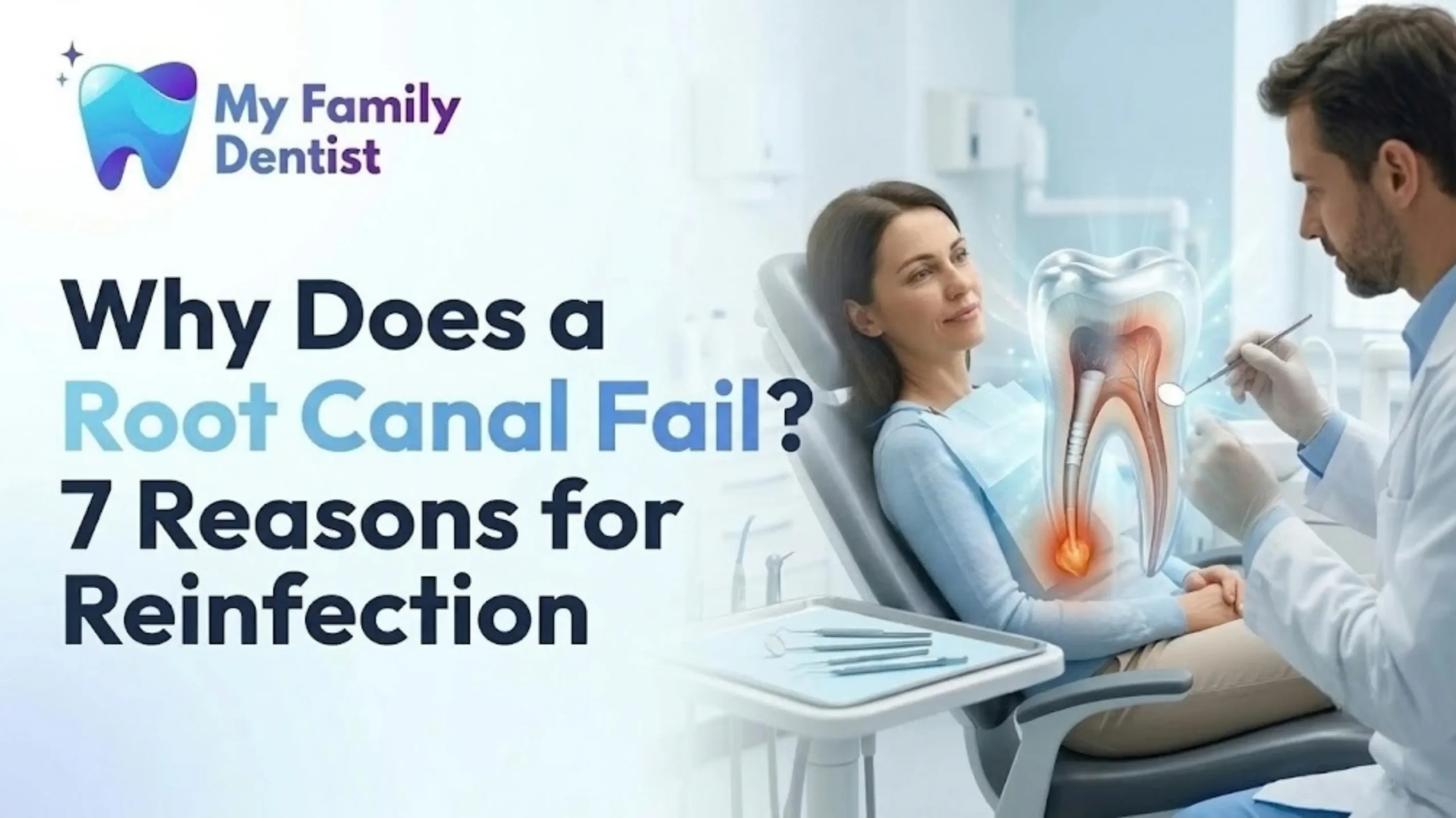
Understanding why a root canal fails can help you protect your tooth and spot problems early. Here are seven common reasons a treated tooth can get infected again.
What Does “Root Canal Failure” Mean?
Root canal failure means the infection was not fully cleared, or bacteria have re-entered the tooth after treatment. The result can be pain, swelling, a gum boil, or a persistent infection at the root tip, often visible on an X-ray. If you want to know how the procedure is meant to work in the first place, our guide to root canal treatment explains each step.
7 Reasons a Root Canal Can Fail
1. A Missed or Hidden Canal
Some teeth, especially molars, have extra or very narrow canals that are hard to find. If one is left untreated, bacteria can survive inside it and slowly cause a reinfected tooth. Careful imaging and magnification help dentists identify these canals during treatment.
2. Incomplete Cleaning and Disinfection
The inside of a tooth is a network of tiny, curved channels. If the infected tissue is not cleaned thoroughly, or the canals are not properly sealed, bacteria can remain and multiply. This is one of the most common causes of root canal failure.
3. Delay in Placing the Permanent Crown or Filling
A root canal is not finished once the infection is cleared. A temporary filling cannot keep bacteria out for long, so delaying the final restoration lets saliva and germs seep back in. This is why most back teeth need a crown soon after treatment to seal and strengthen the tooth.
4. A Crack or Fracture in the Tooth
Teeth that have had a root canal can become more brittle over time. A fine crack in the crown or root can open a path for bacteria, and these cracks are often invisible without an OPG X-ray or other diagnostic imaging. A deep root fracture may mean the tooth cannot be saved.
5. A Loose, Broken or Leaking Crown or Filling
Even a well-done root canal can fail if the restoration on top wears down, loosens or chips. Tiny gaps let bacteria slip in, a problem known as coronal leakage. Regular check-ups let your dentist catch a worn restoration before it becomes an infection.
6. New Decay and Poor Oral Hygiene
A treated tooth can still get cavities. If plaque builds up around the tooth or its restoration, decay can reach the sealed canals again. Brushing twice a day, flossing, and professional teeth cleaning every six months help keep your treated tooth healthy.
7. Persistent Infection or Complex Root Anatomy
In some cases, the infection continues at the tip of the root, forming a cyst or abscess that does not heal with standard treatment. Unusually curved roots or small procedural complications can also make the tooth harder to heal. These cases need a closer look and sometimes a more advanced approach.
Warning Signs a Treated Tooth May Be Infected Again
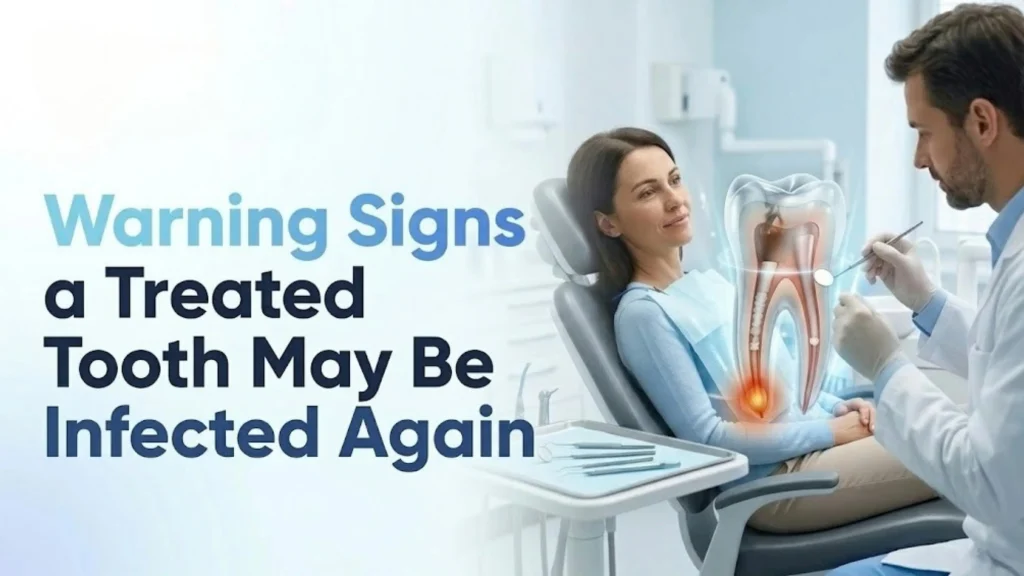
Contact your dentist if you notice any of these:
- Pain or tenderness when biting or pressing on the tooth
- Swelling in the gum or face near the tooth
- A pimple-like bump (gum boil) that comes and goes
- A bad taste or smell in your mouth
- Darkening of the tooth or lingering sensitivity to hot and cold
Sometimes a failed root canal causes no pain at all and is only found on a routine X-ray, which is another reason regular dental visits matter.
What Are the Treatment Options?
The right option depends on your tooth, the cause of the failure and how much healthy structure remains:
- Root canal retreatment: The old filling is removed, the canals are cleaned again and the tooth is resealed. Many teeth can be saved this way.
- Minor surgery at the root tip: If retreatment is not enough, a small procedure can remove the infected tissue at the root end. Our team handles such cases under oral surgery.
- Extraction and replacement: If the tooth is too damaged to save, it may need to be removed, and a dental implant can then be considered to restore your smile and chewing function.
Modern tools such as laser dentistry and an intraoral scanner can support more precise diagnosis and a more comfortable treatment experience.
How to Protect Your Root Canal Treated Tooth
- Get the permanent crown or filling placed as advised, without delay.
- Brush, floss and keep your regular dental check-ups.
- Avoid biting hard objects such as ice, pen caps or packaging.
- Do not ignore mild pain or gum swelling, even if it settles on its own.
- Visit your dentist if the treated tooth feels different in any way.
Concerned About Your Root Canal Treated Tooth?
If your tooth is hurting again or you are unsure about an old root canal, an early check-up can make a big difference. Meet our team of dentists at our Patia clinic in Bhubaneswar, or contact us to book an appointment.
Disclaimer: This article is for general education and is not a substitute for professional dental advice. Treatment outcomes vary from person to person, so please consult a qualified dentist for a diagnosis.
Frequently Asked Questions
Can a root canal fail after many years?
Yes. A new crack, decay or a damaged restoration can let bacteria back in, even years after treatment.
Can a failed root canal be fixed?
Often, yes. Retreatment or a small surgical procedure can save many teeth. Your dentist will advise after examining and imaging the tooth.
Is a failed root canal an emergency?
Pain with swelling, fever or difficulty swallowing needs prompt attention. Otherwise, book a visit as soon as you notice symptoms, because infections do not go away on their own.
Concerned About Your Root Canal Treated Tooth?
If your tooth is hurting again or you are unsure about an old root canal, an early check-up can make a big difference. Meet our team of dentists at our Patia clinic in Bhubaneswar, or contact us to book an appointment.