Getting braces is exciting, but the first question most patients ask is, “What can I still eat?” The good news is that you do not have to give up eating. You just need to know which foods can damage your brackets and wires, and which ones are safe.
This guide explains the foods to avoid with braces, why they cause problems, and what you can eat instead. If you are still deciding on treatment, our overview of braces and aligners explains the options available.
Why Does Food Matter With Braces?
Braces work by applying gentle, steady pressure on your teeth through brackets and wires. Hard, sticky or chewy foods can bend wires, loosen brackets or trap plaque around them. A broken bracket can slow down your treatment, and food stuck around the hardware raises the risk of cavities and gum irritation. Choosing your food carefully helps your treatment stay on track.
Foods to Avoid With Braces
1. Hard Foods
Biting into very hard foods puts sudden force on brackets and can snap them off. Common examples include:
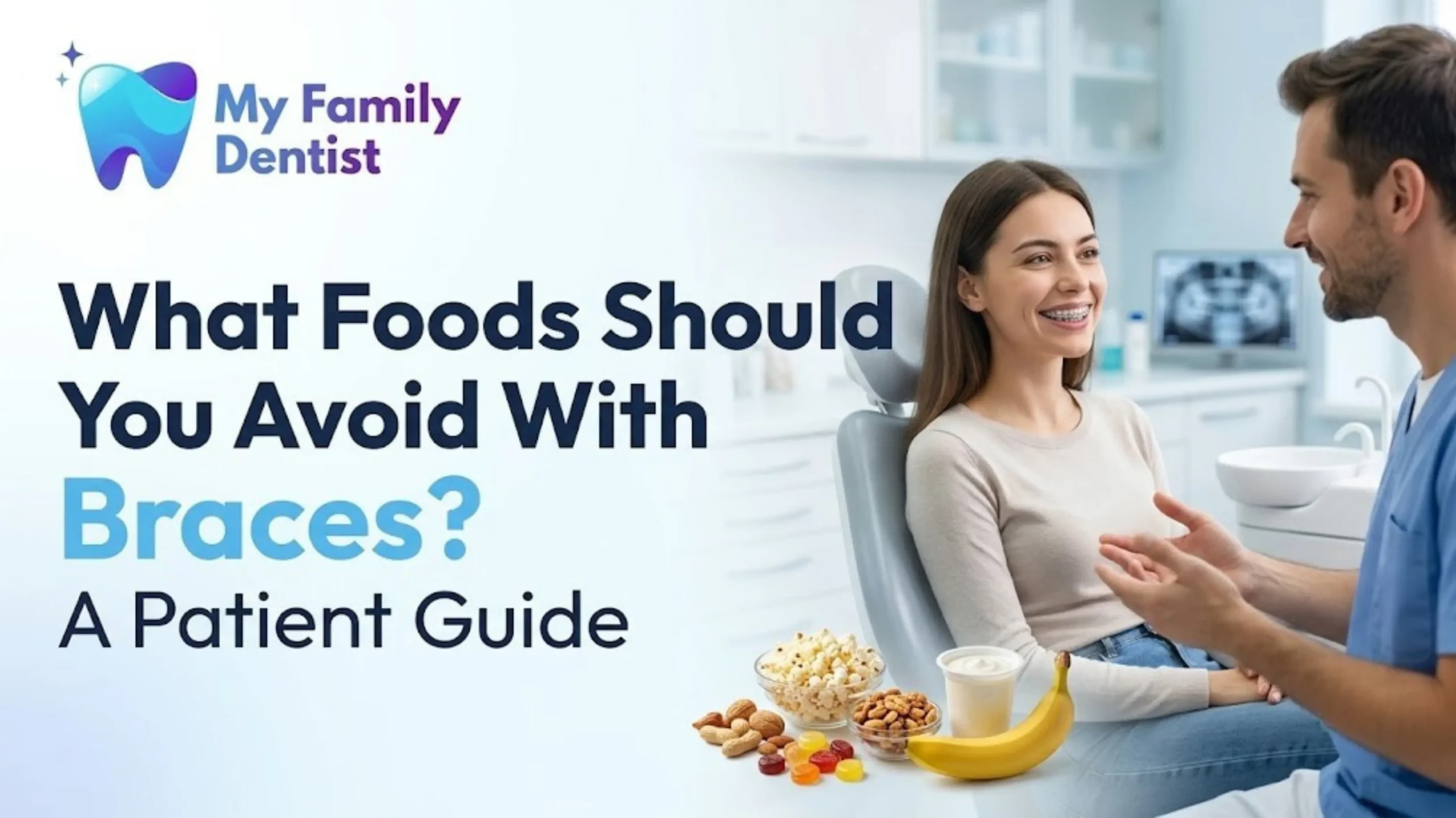
- Ice cubes
- Hard candies and lollipops
- Nuts, especially whole almonds and peanuts
- Chikki and hard brittle
- Raw hard vegetables like whole carrots
Avoid biting or chewing hard foods while wearing braces. Choose softer alternatives instead, and ask your orthodontist if you are unsure whether a particular food is suitable.
2. Sticky and Chewy Foods
Sticky foods cling to brackets, pull on wires and are difficult to clean. Try to avoid toffee, caramel, chewing gum, jelly sweets and sticky mithai made with thick jaggery or sugar syrup. Chewy foods such as hard dried fruit and very tough meat can also loosen the hardware.
3. Crunchy and Brittle Snacks
Many everyday Indian snacks fall into this group. Papad, murukku, namkeen, bhujia, chips and popcorn can crack a bracket or leave tiny pieces stuck in the wires. Popcorn kernels are especially troublesome because the hard husk can lodge under the gumline.
4. Foods You Have to Bite Into
Foods that need a strong front-tooth bite can pull brackets away. Examples include whole apples, corn on the cob, sugarcane, raw cucumber, and tandoori chicken or ribs eaten off the bone. You can still enjoy most of them by slicing the fruit, cutting corn off the cob and removing meat from the bone before eating.
5. Sugary Snacks and Drinks
Braces make it harder to clean your teeth, so sugar sits on the enamel for longer. Frequent sweets, cold drinks, packaged juices and energy drinks can lead to white spots or decay around the brackets, which may show up as marks once the braces come off. Rinsing with water after eating can help remove loose food particles, but it does not replace brushing with fluoride toothpaste and cleaning between your teeth.
6. Hard Bread Crusts and Tough Bakery Items
Hard pizza crust, crusty bread, hard biscuits and thick bagels can put too much pressure on the wires. Softer breads, soft rotis and well-cooked parathas are usually easier on your braces.
Safe Foods to Eat With Braces
You still have plenty of choices. These are generally gentle on braces:
- Soft fruits like bananas, papaya, mango slices and berries
- Idli, upma, khichdi, dalia and soft rice dishes
- Dal, curd, paneer and scrambled or boiled eggs
- Well-cooked vegetables and soups
- Pasta, mashed potatoes and soft noodles
- Smoothies, milkshakes and lassi, preferably without extra sugar
During the first few days after getting braces, or after an adjustment, your teeth may feel sore. Soft foods like these can make eating much more comfortable.
Tips for Eating With Braces
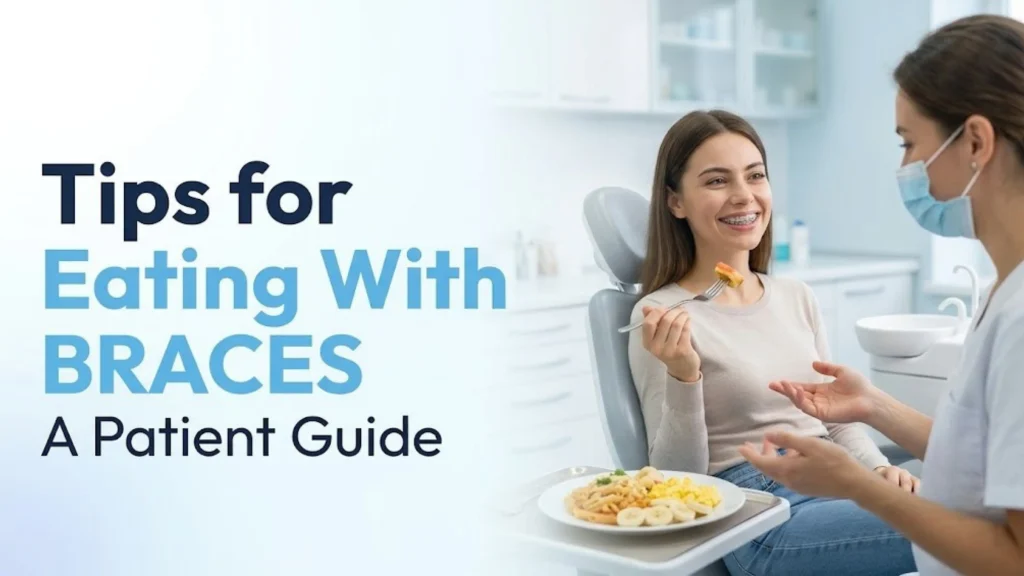
- Cut food into small, bite-sized pieces.
- Chew with your back teeth where possible.
- Rinse with water after every meal and snack.
- Carry a travel toothbrush and interdental brush for school, college or work.
- Do not chew pen caps, nails or ice, which can damage the hardware.
- Keep sweets and cold drinks for mealtimes instead of sipping or snacking all day.
Good cleaning habits matter just as much as food choices. Along with brushing and flossing at home, regular professional teeth cleaning helps remove plaque from places a toothbrush cannot easily reach.
What About Clear Aligners?
If you wear removable aligners, the food rules are more relaxed because you take the trays out before eating. However, you should still remove them for meals, brush before putting them back, and avoid drinking anything other than water while wearing them. Your dentist will explain the correct routine for your aligners.
Braces for Children and Teens
Kids and teenagers often find it hardest to stay away from snacks like chips, candy and fizzy drinks. A little planning helps: pack soft, braces-friendly options in their tiffin and remind them to rinse after eating. Parents can read about early orthodontic care and healthy habits in our paediatric dentistry services.
What If a Bracket or Wire Breaks?
If a bracket comes loose or a wire starts poking your cheek, do not try to fix it yourself. Avoid hard or chewy foods that could worsen the problem, and contact your orthodontist for advice about repair. If a wire is causing significant injury or you have severe pain or swelling, seek prompt dental assessment.
Need Help With Braces or Diet Questions?
Every patient’s treatment is different, so your dentist can give you advice that suits your teeth and braces. Meet our team of dentists at our Patia clinic in Bhubaneswar, or explore our full range of dental services to see how we can support your smile.
Disclaimer: This article is for general education and is not a substitute for professional dental advice. Treatment plans and results vary from person to person, so please consult a qualified dentist for guidance.
Frequently Asked Questions
Can I eat chocolate with braces?
Soft chocolate is usually fine in small amounts, but avoid chocolates with nuts, caramel or hard centres. Rinse or brush afterwards.
Can I eat pizza with braces?
Yes, if you avoid the hard crust edges and cut the slice into small pieces.
How long do I need to follow these food rules?
Usually for the entire time you wear braces, which can be one to two years or more depending on your case. Your orthodontist will guide you.
Is soreness after getting braces normal?
Mild soreness for a few days after fitting or adjustment is common. Soft foods and gentle brushing usually help, but if pain is severe or does not settle, please consult your dentist.