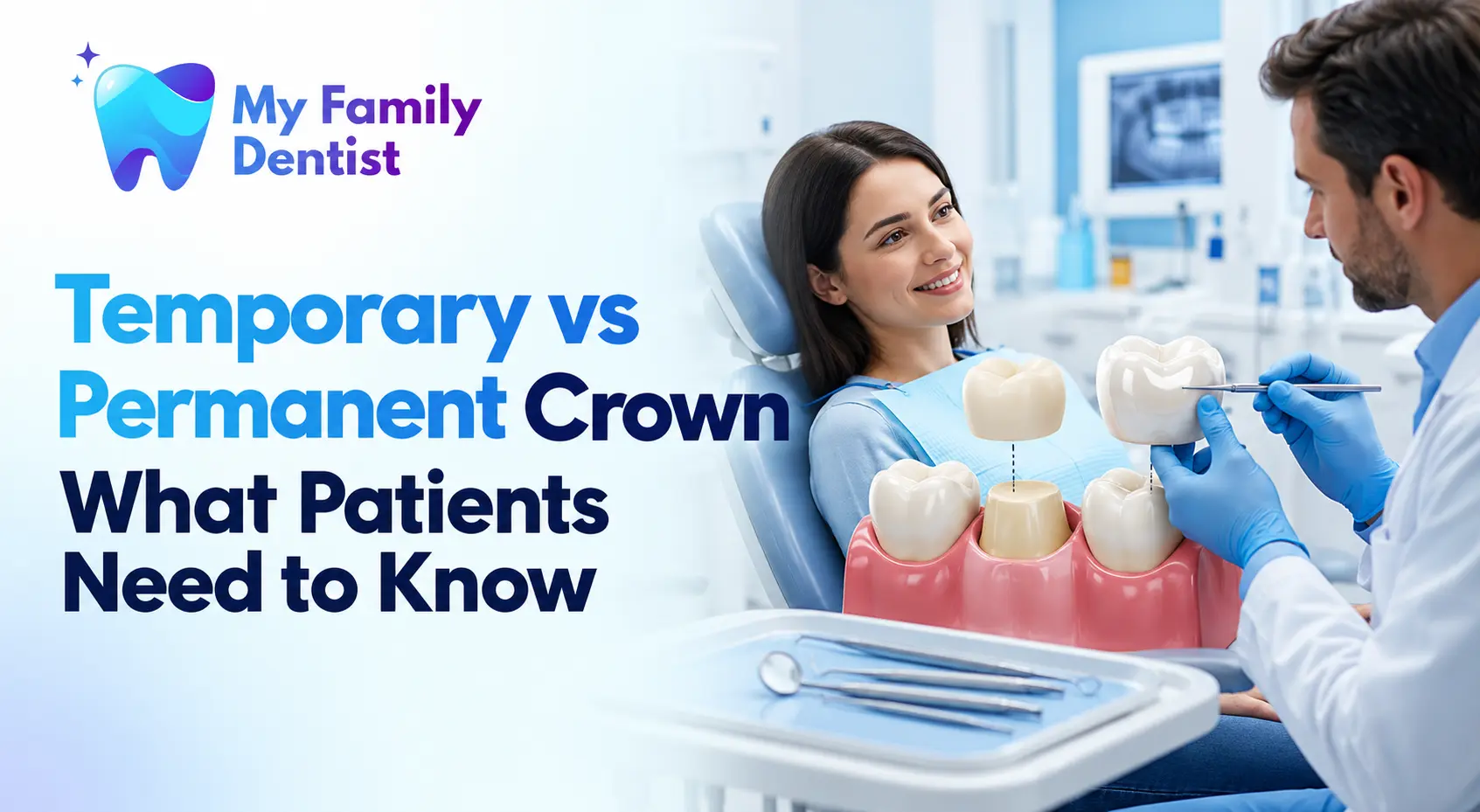
If your dentist has recommended a crown, you will usually leave the first appointment with a temporary one and come back later for the permanent one. Many patients wonder why two crowns are needed, how they differ and what care each one needs in between.
This guide explains the temporary crown vs permanent crown difference in simple terms. For a broader look at how crowns work, you can read about our crowns and veneers treatment.
What Is a Temporary Crown?
A temporary crown is a short-term cover placed over your prepared tooth while the permanent crown is being made. It is usually made of acrylic or a similar resin and is held in place with a weak dental cement so that it can be removed easily later.
Its main jobs are to:
- Protect the shaped tooth from sensitivity and damage
- Keep the gum and neighbouring teeth from shifting
- Let you chew and speak comfortably until the final crown is ready
- Maintain the appearance of your smile in the meantime
What Is a Permanent Crown?
A permanent crown is the final restoration, made specifically for your tooth. Depending on the case, it may be made of ceramic, porcelain-fused-to-metal, zirconia or other dental materials. It is fixed with a stronger cement and is designed to restore the tooth’s shape, strength and bite for the long term.
Temporary vs Permanent Crown: Key Differences
| Temporary Crown | Permanent Crown | |
| Purpose | Short-term protection | Long-term restoration |
| Material | Acrylic or resin | Ceramic, zirconia or metal-based options |
| Strength | Lower, can chip or crack | Higher, built for regular chewing |
| Fit | Basic, may be less precise | Custom-made for accuracy |
| Cement | Weak, easy to remove | Stronger, long-lasting |
| Time in mouth | Usually a couple of weeks | Many years with good care |
Why Can’t You Get the Permanent Crown on the Same Day?
In a traditional process, the tooth is shaped and an impression is sent to a dental laboratory, where the crown is crafted. This usually takes a couple of weeks. A temporary crown protects your tooth during this time.
Digital technology can make this process more comfortable. At our clinic, an intraoral scanner can capture your tooth without the need for messy impression material, which many patients find easier to tolerate.
How Long Can You Wear a Temporary Crown?
Most temporary crowns are meant to stay for around two to three weeks. They are not designed for long-term use. Leaving one in place for too long, or missing your follow-up appointment, can lead to a loose crown, bacteria entering the tooth, gum problems or shifting of the surrounding teeth. If your appointment is delayed for any reason, please call the clinic instead of waiting.
How to Care for a Temporary Crown
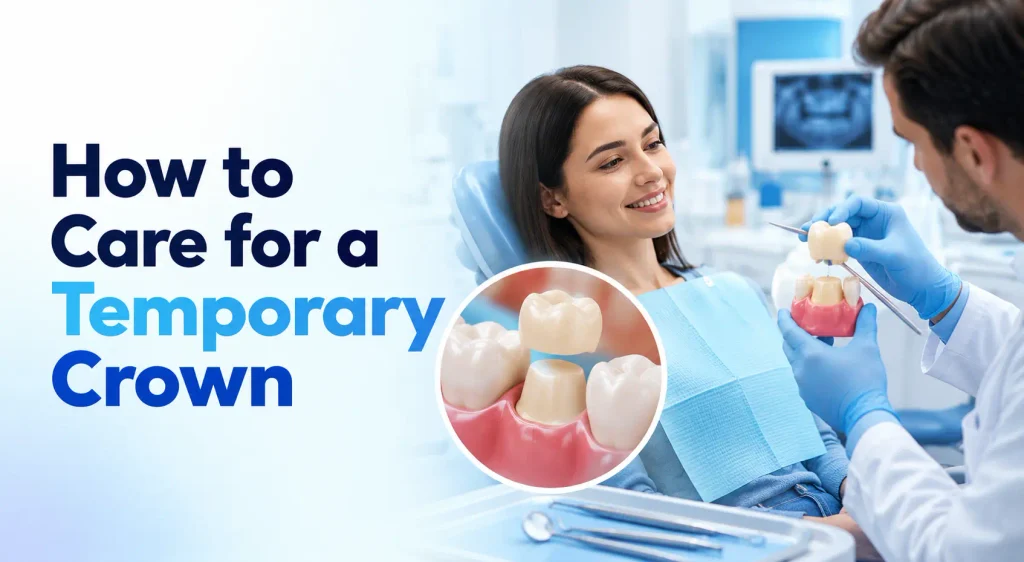
Because it is held with weak cement, a temporary crown needs a little extra care:
- Avoid sticky foods like toffee, chewing gum and sticky mithai
- Avoid very hard foods such as ice, nuts and chikki
- Chew on the opposite side of your mouth where possible
- Brush gently around the crown and avoid pulling floss upwards. Slide it out sideways instead
- Do not use the tooth to open packets or bite hard objects
- Mild sensitivity to hot and cold is common, but let your dentist know if it becomes severe
What If a Temporary Crown Comes Off or Breaks?
This can happen. Keep the crown safe if it falls out, avoid chewing on that side and contact our clinic so it can be refitted. Please do not use household glue to fix it, as this can damage the tooth and affect the final crown.
What Happens When the Permanent Crown Is Ready?
At the next visit, the temporary crown is gently removed and the tooth is cleaned. Your dentist checks the fit, bite and shade of the permanent crown, makes any adjustments and then fixes it in place. You may need a short time to get used to how it feels, and your dentist will explain how to care for it.
Caring for Your Permanent Crown
A crown can last for many years, but this depends on your habits and oral hygiene. To protect it:
- Brush twice a day and floss daily
- Avoid biting hard objects like ice or pen caps
- Attend regular check-ups and professional teeth cleaning every six months
- Tell your dentist if you grind your teeth at night, as a night guard may be advised
When Is a Crown Needed?
Crowns are commonly recommended for a heavily decayed or broken tooth, for protecting a tooth after a root canal treatment, for covering a large filling, or for improving the shape and look of a damaged tooth. Your dentist will examine the tooth and explain whether a crown is the right option for you.
Have Questions About Your Crown?
Whether you have a temporary crown right now or are planning treatment, your dentist can guide you on the right next step. Meet our team of dentists at our Patia clinic in Bhubaneswar, or explore our full range of dental services to see how we can help.
Disclaimer: This article is for general education and is not a substitute for professional dental advice. Treatment plans and results vary from person to person, so please consult a qualified dentist for guidance.
Frequently Asked Questions
Is a temporary crown as strong as a permanent one?
No. It is made of weaker material and is meant only for short-term use, so you need to be careful with what you eat.
Does getting a crown hurt?
The procedure is done under local anaesthesia, so you should not feel pain during treatment. Some mild sensitivity afterwards is common and usually settles.
Can I eat normally with a temporary crown?
You can eat, but stick to soft foods and avoid sticky or hard items.
Will the permanent crown look natural?
Your dentist matches the shade and shape to your neighbouring teeth, so it blends in with your smile. Results can vary from person to person.
How long does a permanent crown last?
With good care it can last many years, but longevity depends on the material, your bite and your oral hygiene.