A deep cavity, a crack or a recent injury can irritate the soft tissue inside your tooth, called the pulp. When this happens, many patients hear two terms from the dentist: pulp capping and root canal. Both aim to save your natural tooth, but they are used in different situations.
This guide explains pulp capping vs root canal in simple terms, so you know what to expect. If you want a full walkthrough of the procedure itself, you can read about our root canal treatment.
What Is the Tooth Pulp?
The pulp is the living part at the centre of your tooth. It contains nerves and blood vessels and sits beneath the hard outer enamel and the layer of dentin. When decay or trauma gets close to the pulp, it can become inflamed, which is what leads to tooth pain and sensitivity.
What Is Pulp Capping?
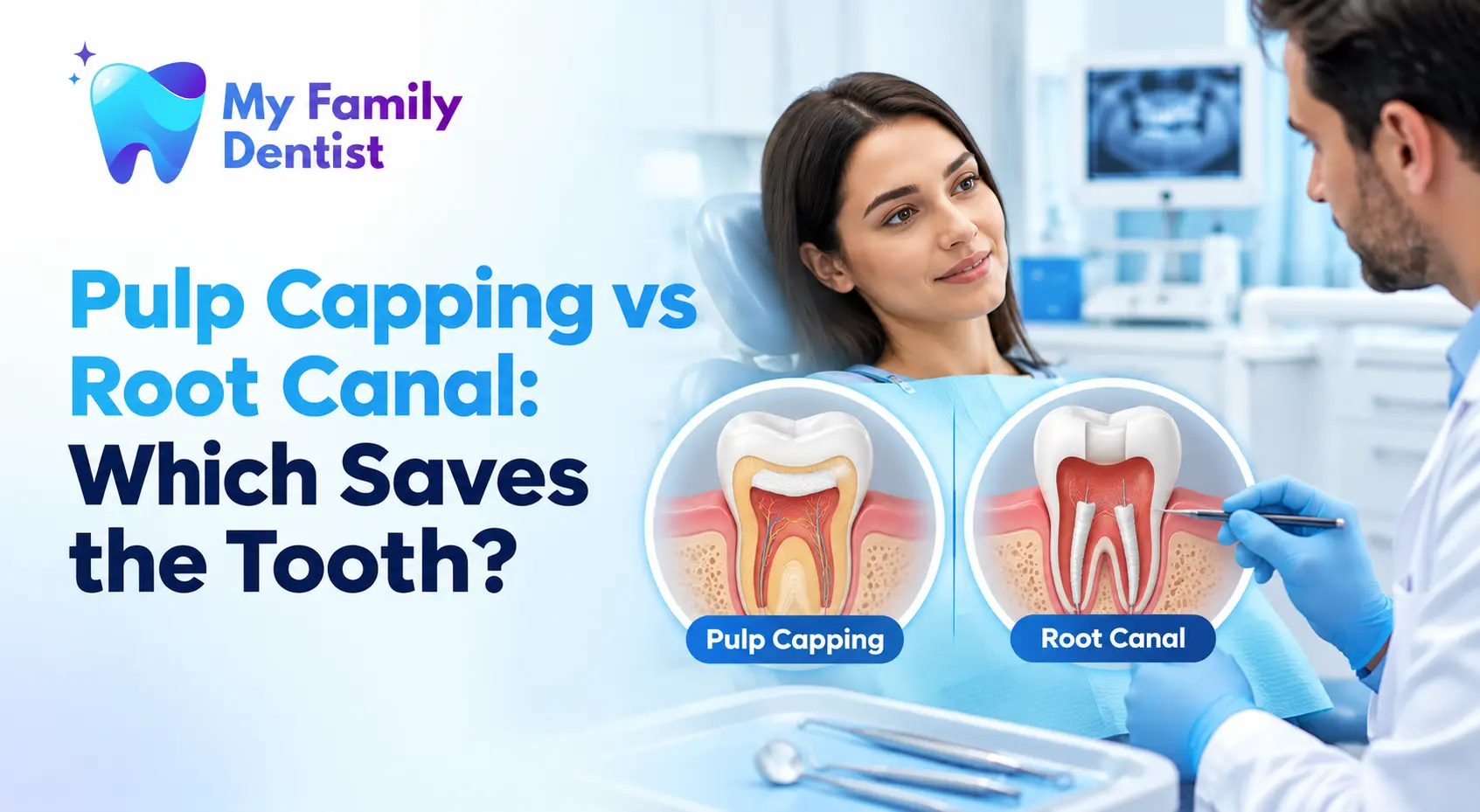
Pulp capping is a conservative treatment that protects a healthy or mildly inflamed pulp so that the tooth can heal and keep its nerve. After the decayed portion is removed, a special protective material, usually a calcium-based or bioactive dental cement, is placed over the pulp. The tooth is then sealed with a filling or crown.
There are two main types:
- Indirect pulp capping: Decay is very close to the pulp but has not reached it. A thin layer of affected dentin is left in place, covered with a protective liner and sealed.
- Direct pulp capping: The pulp is slightly exposed, for example during decay removal or after a small injury. The protective material is placed directly on the exposed area.
What Is a Root Canal?
A root canal is needed when the pulp is too badly inflamed or infected to recover. The infected pulp is removed, the inside of the tooth is cleaned and disinfected, and the canals are filled and sealed. The tooth is then restored, and back teeth usually need a crown for strength. This allows the tooth to stay in your mouth instead of being extracted.
Pulp Capping vs Root Canal: Key Differences
| Pulp Capping | Root Canal | |
| Pulp condition | Healthy or mildly inflamed (reversible) | Severely inflamed or infected (irreversible) |
| What is done | Pulp is protected and left alive | Pulp is removed and canals are sealed |
| Typical symptoms | Short sensitivity to hot, cold or sweets | Lingering or night pain, swelling, tenderness on biting |
| Treatment time | Usually one visit | Often one or more visits |
| Tooth nerve | Stays alive | Removed |
| Best suited for | Early-stage, deep cavities | Advanced pulp damage or infection |
Which Treatment Do You Need?

Only your dentist can decide this after examining the tooth, but these general signs can help you understand the difference.
Signs that may point towards pulp capping:
- Brief sensitivity to cold or sweet foods that settles quickly
- A deep cavity without constant pain
- No swelling and no pain on biting
- An accidental small pulp exposure during cavity removal
Signs that may point towards a root canal:
- Pain that lingers for a long time after hot or cold foods
- Throbbing pain that disturbs your sleep
- Swelling of the gum or face near the tooth
- A gum boil or pimple-like bump
- Pain on biting or pressing the tooth
- Darkening of the tooth
These signs are only a guide. Some infected teeth cause no pain at all, so a proper examination matters.
How Does the Dentist Decide?
Your dentist will usually combine several checks:
- Your symptoms: The type, timing and duration of pain give important clues.
- Clinical tests: Tapping the tooth and testing its response to cold help assess the pulp’s health.
- Imaging: An X-ray or OPG X-ray shows how deep the decay is and whether there is infection around the root.
- Pulp condition during treatment: Sometimes the final decision is made once decay is removed and the pulp is seen directly.
Can Pulp Capping Fail?
Yes, it can. Pulp capping works best when the pulp is still healthy enough to heal. If inflammation continues, if bacteria leak in through a poor seal, or if the pulp was more damaged than it looked, pain or infection may return later. In that case a root canal is usually the next step. This is why follow-up visits and a good final restoration are important.
Why Is Early Treatment Important?
The earlier a deep cavity is treated, the more options you have. A small problem may be managed with a filling or pulp capping, while a long-ignored cavity can end up needing a root canal or even extraction. If a tooth is too damaged to save, your dentist may talk to you about extractions and replacing the tooth later with a dental implant.
Aftercare: What to Expect and How to Protect the Tooth
After either treatment, mild sensitivity or tenderness for a few days is common. To help your tooth recover:
- Avoid chewing hard foods on that side until the tooth is fully restored
- Follow your dentist’s advice about the final filling or crown
- Brush twice a day and floss daily
- Attend regular check-ups and professional teeth cleaning every six months
- Contact the clinic if pain increases, returns after settling, or you notice swelling
What About Children’s Teeth?
Children’s teeth have large pulps and decay can reach them quickly. In some cases, the dentist may treat only the upper part of the pulp to keep the tooth healthy. Our paediatric dentistry team can guide parents on the right approach for a child’s tooth.
Worried About a Painful Tooth?
If you have tooth sensitivity or pain, an early check-up gives you the most treatment options. Meet our team of dentists at our Patia clinic in Bhubaneswar, or contact us to book an appointment.
Disclaimer: This article is for general education and is not a substitute for professional dental advice. Treatment plans and results vary from person to person, so please consult a qualified dentist for a diagnosis.
Frequently Asked Questions
Is pulp capping better than a root canal?
Neither is better in every case. Pulp capping suits teeth whose pulp can still heal, while a root canal is needed when the pulp is too damaged. The right choice depends on your tooth’s condition.
Does pulp capping hurt?
The procedure is done under local anaesthesia, so you should not feel pain during it. Mild sensitivity afterwards is common and usually settles within a few days.
Can pulp capping avoid a root canal completely?
In suitable cases it can help the tooth keep its nerve, but outcomes vary from person to person, and a root canal may still be needed later.
How do I know if my tooth needs a root canal?
Lingering pain, night pain, swelling, a gum boil or pain on biting are common signs. Only a dental examination and X-ray can confirm it.
Do I need a crown after either treatment?
Not always, but back teeth with large fillings or a root canal are often protected with a crown. Your dentist will advise you.