Dental implants are a modern solution for replacing missing teeth. Many patients searching for permanent tooth replacement ask, what are dental implants and how do they work?
A dental implant is an artificial tooth root placed into the jawbone to support a replacement tooth or bridge. Implants are designed to look, feel, and function similarly to natural teeth.
They are commonly used for replacing:
- A single missing tooth
- Multiple missing teeth
- Full sets of missing teeth
Why Dental Implants Are Used
Missing teeth can affect more than appearance. Tooth loss may lead to:
- Difficulty chewing
- Speech changes
- Jawbone shrinkage
- Shifting of nearby teeth
Dental implants help restore both function and aesthetics while supporting jawbone health.
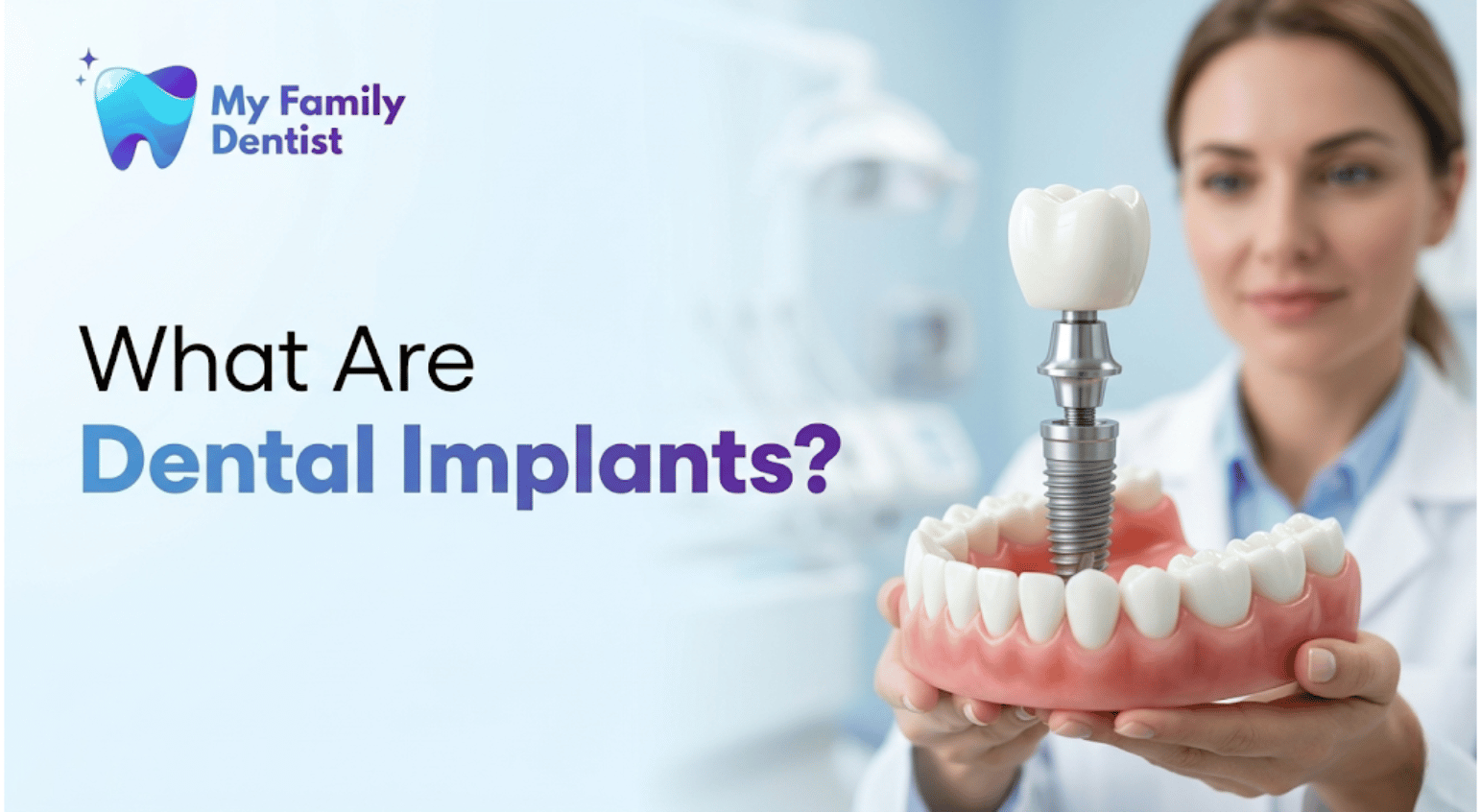
Parts of a Dental Implant Explained
Dental implants usually consist of three main parts.
1. Implant Post
A titanium post placed into the jawbone that acts like an artificial tooth root.
2. Abutment
A small connector placed above the implant post.
3. Crown
The visible replacement tooth attached to the implant.
Together, these components create a stable and natural-looking restoration.
How Dental Implants Work
Dental implants work through a process called osseointegration.
This means the implant gradually fuses with the jawbone, creating strong support for the replacement tooth.
The basic process includes:
- Dental examination and imaging
- Implant placement surgery
- Healing period for bone integration
- Placement of crown or prosthetic tooth
Healing time varies depending on bone condition and treatment complexity.
Types of Dental Implants
Different implant options are available depending on the patient’s needs.
Single Tooth Implant
Used to replace one missing tooth.
Multiple Tooth Implants
Support bridges for replacing several missing teeth.
Full Mouth Implants
Used for patients missing most or all teeth.
A dentist determines the most suitable option after evaluation.
Benefits of Dental Implants
Dental implants offer several long-term advantages.
Common benefits include:
- Natural appearance
- Improved chewing ability
- Better speech support
- Jawbone preservation
- Stability compared to removable dentures
- Long-term durability with proper care
Many patients choose implants because they feel more secure than removable options.
Dental Implants vs Dentures and Bridges
| Feature | Dental Implants | Dentures | Bridges |
|---|---|---|---|
| Stability | High | Moderate | Moderate |
| Bone preservation | Yes | No | Limited |
| Removable | No | Usually yes | No |
| Natural feel | Often closer to natural teeth | May feel bulky | Fixed solution |
Each option has advantages, and suitability depends on oral health, budget, and treatment goals.
Who Is Suitable for Dental Implants?
Many adults can be candidates for implants.
Suitable candidates often include:
- Patients with missing teeth
- Individuals with healthy gums
- People with sufficient jawbone support
- Patients committed to oral hygiene
Additional evaluation may be needed for:
- Smokers
- Patients with uncontrolled diabetes
- Individuals with severe bone loss
A detailed dental assessment helps determine eligibility.
Are Dental Implants Permanent?
Dental implants are designed as a long-term tooth replacement option.
With proper care and maintenance, implants can last many years and may function for decades.
However, long-term success depends on:
- Oral hygiene
- Regular dental checkups
- Gum health
- Avoiding smoking and harmful habits
Is Dental Implant Surgery Painful?
Dental implant procedures are typically performed under local anesthesia.
Most patients report mild to moderate discomfort rather than severe pain.
Temporary symptoms after surgery may include:
- Mild swelling
- Minor soreness
- Temporary chewing difficulty
Recovery varies from person to person.
Recovery and Aftercare After Implant Treatment
Healing after implant placement is an important stage.
Aftercare recommendations include:
- Maintaining oral hygiene
- Eating soft foods initially
- Avoiding smoking
- Following dentist instructions
Routine follow-up visits help monitor healing and implant stability.
Risks and Limitations of Dental Implants
Although implants are widely used and considered safe, they may not be suitable for everyone.
Possible risks include:
- Infection
- Implant failure
- Delayed healing
- Bone integration problems
Modern planning techniques and proper patient selection help reduce complications.
Safety Considerations
Dental implants are generally considered safe when planned and placed by trained dental professionals.
Safety depends on:
- Proper diagnosis
- Bone evaluation
- Sterile surgical protocols
- Long-term oral care
Patients should discuss medical history and treatment expectations with their dentist.
Medical Disclaimer
This article is for informational purposes only and should not replace professional dental advice. Consult a qualified dentist for diagnosis and personalized treatment recommendations.
FAQs
What are dental implants?
Dental implants are artificial tooth roots placed into the jawbone to support replacement teeth.
How do dental implants work?
They fuse with the jawbone through osseointegration, creating stable support for crowns or bridges.
Are dental implants permanent?
They are designed as a long-term solution and may last many years with proper care.
Is dental implant surgery painful?
Most procedures are performed under anesthesia, and discomfort is usually manageable during recovery.
Who is a good candidate for dental implants?
Patients with healthy gums, adequate bone support, and good oral hygiene are often suitable candidates.
Are implants better than dentures?
Implants may offer better stability and jawbone support, though suitability varies between patients.